
Why John Deere and Caterpillar Should Worry About China’s New 1,600-HP Hybrid Heavyweight

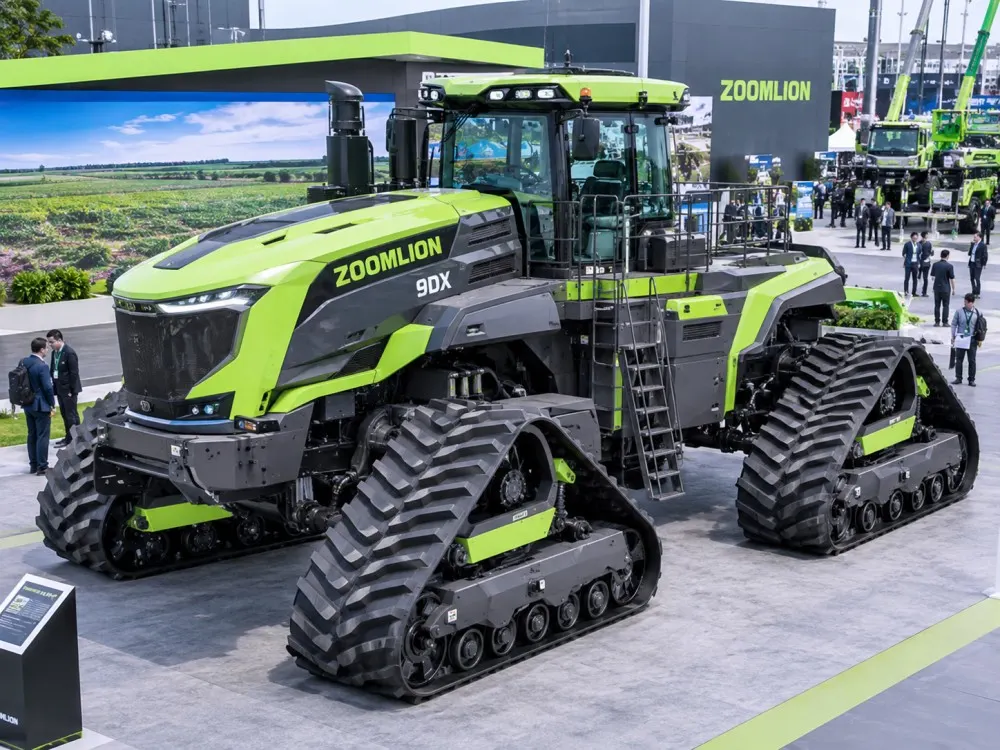
While Western original equipment manufacturers have largely treated heavy industrial electrification as a boutique pilot project constrained by battery energy density, Chinese industrial giant Zoomlion shattered the category ceiling by unveiling the 9DX—a 1,600-horsepower, 800-volt dual-motor hybrid tractor engineered for continuous mega-acreage operations. John Deere and Caterpillar’s defensive moat has long rested on the assumption that pure electrification cannot survive high-draft continuous-duty cycles, creating an executive blind spot toward high-voltage hybrid architectures that cut fuel overhead without stalling in the field. This briefing deconstructs the architectural shift from legacy diesel powertrains to high-voltage industrial hybrids, evaluates the emerging market expansion strategy threatening Western market share across Latin America and Central Asia, and provides an executive playbook for Western industrial OEMs to defend their margins against state-subsidized electrification.
Boardroom Briefing
- Powertrain Paradigm Shift: High-voltage 800V hybrid drivetrains have bypassed pure battery-electric limitations, establishing a workable bridge for continuous, high-draft heavy machinery.
- Export Market Vulnerability: Emerging agricultural corridors in Brazil, Kazakhstan, and Australia represent immediate beachheads for Chinese heavy machinery, directly threatening Western OEM export revenue.
- Dealer Density Defense: Physical distribution networks, field-parts logistics, and 24-hour service uptime guarantees remain the primary operational firewall protecting Western incumbents.
- Total Cost of Ownership Compression: Fleet operators facing diesel volatility will prioritize the 10% to 15% fuel efficiency improvements delivered by multi-motor hybrid architectures over historical brand affinity.
- Supply Chain Asymmetry: China’s domestic dominance in battery chemistry, high-voltage inverters, and power electronics yields a component cost structure that Western manufacturers struggle to match without strategic joint ventures.
- Software Protectionism: The battle for off-highway market share will increasingly hinge on proprietary telematics lock-in versus lower-cost, open-architecture implement control platforms.
The 800V Inflection Point: Deconstructing the Zoomlion 9DX Hybrid Architecture
Industrial heavy hybridization is defined as the integration of internal combustion engines with high-voltage battery-electric drivetrains to deliver immediate electric torque during high-load draft applications while maintaining continuous operational uptime. Unveiled at the China International Agricultural Machinery Exhibition (CIAME), the Zoomlion 9DX represents an aggressive departure from traditional mechanical diesel drivetrains. The machine pairs an internal combustion core with an 800-volt dual-motor electric architecture, producing a reported 1,600 peak horsepower (1,176 kW) and an unprecedented 7,200 Nm of torque. Power delivery is managed via a continuously variable hybrid transmission that routes power across four massive 762-millimeter (30-inch) rubber tracks, distributing ground pressure to prevent deep-soil compaction during high-tonnage field operations.
| Powertrain Stage | Component | Operational Role & Technical Specs | Upstream / Downstream Interfaces |
| 1. Primary Power Source | Internal Combustion Engine (ICE) | Provides baseline continuous mechanical generation; runs at optimized RPM | Feeds: Integrated Generator |
| 2. Electrical Conversion | Integrated Generator | Converts combustion mechanical output into high-voltage direct current (DC) | Feeds: 800V DC Bus |
| 3. High-Voltage Bus | 800V DC Bus | Central electrical conduit; coordinates dynamic high-voltage energy transfer | Interconnects: Integrated Generator, Battery Buffer, and Dual Drive Motors |
| 3a. Energy Buffer | Battery Buffer | High-rate energy buffer; absorbs load spikes and provides peak surge capacity | Interconnects: 800V DC Bus (Bidirectional) |
| 4. Electric Propulsion | Dual Electric Drive Motors | Converts 800V DC power into instantaneous high-torque rotation | Feeds: Continuously Variable Hybrid CVT |
| 5. Torque Management | Continuously Variable Hybrid CVT | Splits and synchronizes dynamic power between tractive drives and hydraulics | Feeds: Final Drive Tracks & Implement Hydraulics |
| 6a. Tractive Output | 4x 762 mm Rubber Tracks | Delivers 7,200 Nm peak tractive effort with low ground soil compaction | Workload: High-draft deep tillage & field pulling |
| 6b. Auxiliary Workload | High-Flow Hydraulic System | Delivers 636 L/min (approx. 168 gpm) auxiliary fluid transfer | Workload: Mega-width air seeders, carts, & implements |
Western incumbents have historically argued that battery chemistry cannot meet the volumetric energy density required for sustained, heavy-draft field work. A standard 600-horsepower tractor running at 85% load factor consumes roughly 110 to 130 liters of diesel per hour; replacing that energy reservoir with current lithium-ion cells would require a battery pack exceeding 15 metric tons, severely limiting implement payload. Zoomlion bypassed this limitation by adopting an automotive-derived series-parallel hybrid design. Rather than carrying the dead weight of an 800-kilowatt-hour battery, the 9DX deploys a modest, high-discharge battery buffer to absorb peak load spikes and power auxiliary systems, while a downsized combustion generator provides continuous baseline wattage.
Hydraulic performance reinforces this mechanical ambition. The 9DX delivers an auxiliary hydraulic flow capacity of 636 liters per minute (approximately 168 gallons per minute), engineered to drive modern mega-width air seeders and deep-ripping tillage implements without bogging down the main drive axles. By commercializing this platform, Zoomlion is driving the rapid electrification of off-highway industrial equipment into power brackets previously thought untouchable by non-traditional drivetrains.
Peak Horsepower vs. Continuous Duty: The TCO Calculations Driving Mega-Fleet CapEx
Off-highway fleet economics dictate that a 10% to 15% improvement in fuel efficiency must be accompanied by an unscheduled downtime rate below 2% during harvest and planting cycles to prevent yield losses from erasing operational savings. In commercial agriculture, nominal peak horsepower is an incomplete performance metric. Enterprise fleet buyers evaluate machinery based on continuous drawbar pull—the sustained tractive effort a machine can deliver for 14 consecutive hours across varied soil horizons without thermal derating of the electronic inverters.
| Operational Metric | Legacy Tier 4 Diesel Flagships | Zoomlion 9DX Hybrid Platform | Enterprise Economic Impact |
| Peak Power Rating | 650 – 715 HP | Up to 1,600 HP (Combined) | Handles extreme soil resistance spikes |
| Peak Torque | 3,000 – 3,400 Nm | 7,200 Nm | Eliminates gear shifting under load |
| Reported Fuel Burn | Baseline (100%) | 85% – 90% (-10% to -15%) | $35,000–$55,000 annual diesel savings |
| Hydraulic Flow | 416 – 435 L/min | 636 L/min | Supports larger seeders; cuts field passes |
| Powertrain Thermal Limit | High (Engine Cooling Managed) | Unproven in Multi-Hour Continuous High-Draft | Risk of electrical inverter derating |
| 5-Year Residual Value | 58% – 65% of Initial CapEx | High Uncertainty (<40% projected) | Substantially raises effective depreciation |
According to financial modeling from Roland Berger’s heavy equipment practice, diesel fuel accounts for 32% to 38% of total operating expenses over a machine’s initial five-year commercial life cycle. A verified 12% reduction in fuel consumption across a corporate fleet operating 1,500 annual engine hours per unit translates to more than $40,000 in direct cash savings per machine every year. The instant torque response of electric drive motors eliminates the turbo lag and transmission shift delays that typically cause diesel tractors to stall in heavy clay pockets, smoothing the engine’s operational profile and reducing mechanical stress on the primary internal combustion block.
The financial vulnerability for early adopters sits in residual asset valuation and unproven continuous-duty thermal endurance. Western machines like the John Deere 9RX 830 or Case IH Quadtrac 715 retain predictable resale liquidity on global secondary markets because their mechanical lifespans and overhaul procedures are universally understood. A dual-motor, 800V hybrid tractor carrying high-voltage power electronics faces steep secondary market discounts until long-term component degradation rates, battery replacement costs, and field inverter durability are documented over tens of thousands of operating hours.
Enterprise capital allocators looking closely at fleet total cost of ownership modeling
must balance upfront operating margin expansion against balance-sheet depreciation risks. If a Chinese hybrid tractor costs 25% less to purchase and burns 12% less fuel, but depreciates twice as fast and risks operational paralysis during a two-week planting window, the net enterprise value remains negative.
The Asymmetric Playbook: How Chinese Industrial Giants Target the Global South’s Agricultural Corridors
Chinese heavy machinery manufacturers bypass North American tariff barriers by targeting high-acreage agricultural export hubs across Latin America, Central Asia, and Africa where dealer entrenchment is less concentrated. Rather than challenging John Deere, Caterpillar, and AGCO on their domestic home turf—where trade tariffs, import restrictions, and dealer exclusivity agreements create insurmountable barriers—Zoomlion is executing an asymmetric international expansion strategy. At CIAME, Zoomlion hosted an international dealer summit, executing distribution pacts with commercial agricultural operators across more than 20 countries, including agricultural export powers such as Brazil, Australia, Türkiye, Spain, and Egypt.
| Powertrain Stage | Component | Operational Role & Technical Specs | Upstream / Downstream Interfaces |
| 1. Primary Power Source | Internal Combustion Engine (ICE) | Provides baseline continuous mechanical generation; runs at optimized RPM | Feeds: Integrated Generator |
| 2. Electrical Conversion | Integrated Generator | Converts combustion mechanical output into high-voltage direct current (DC) | Feeds: 800V DC Bus |
| 3. High-Voltage Bus | 800V DC Bus | Central electrical conduit; coordinates dynamic high-voltage energy transfer | Interconnects: Integrated Generator, Battery Buffer, and Dual Drive Motors |
| 3a. Energy Buffer | Battery Buffer | High-rate energy buffer; absorbs load spikes and provides peak surge capacity | Interconnects: 800V DC Bus (Bidirectional) |
| 4. Electric Propulsion | Dual Electric Drive Motors | Converts 800V DC power into instantaneous high-torque rotation | Feeds: Continuously Variable Hybrid CVT |
| 5. Torque Management | Continuously Variable Hybrid CVT | Splits and synchronizes dynamic power between tractive drives and hydraulics | Feeds: Final Drive Tracks & Implement Hydraulics |
| 6a. Tractive Output | 4x 762 mm Rubber Tracks | Delivers 7,200 Nm peak tractive effort with low ground soil compaction | Workload: High-draft deep tillage & field pulling |
| 6b. Auxiliary Workload | High-Flow Hydraulic System | Delivers 636 L/min (approx. 168 gpm) auxiliary fluid transfer | Workload: Mega-width air seeders, carts, & implements |
These operational theaters are not peripheral; they represent the growth engine of global agricultural machinery. The Brazilian Cerrado contains corporate farm plots regularly exceeding 20,000 hectares, operated by industrial agribusiness enterprises that consume fleets of high-horsepower machines. These commercial operators are less bound by brand heritage and far more responsive to unit economics, equipment availability, and direct manufacturer financing packages.
The strategy mirrors the disruption patterns previously observed in the commercial solar and automotive industries. Chinese OEMs utilize their home market’s scale to refine hardware iterations, partner with sovereign-backed infrastructure lenders, and offer favorable vendor financing terms that Western dealer franchises cannot match. These commercial dynamics tie directly into broader geopolitical shifts in agricultural supply chains
, as South American grain exporters increasingly trade within bilateral currency frameworks that welcome Chinese industrial capital goods.
De-risking Field Uptime: Software Integration vs. Mechanical Redundancy
Modern high-horsepower machinery reliability depends on whether electronic control units and inverter thermal management can match the physical durability of traditional mechanical drivetrains. In an agricultural context, unscheduled downtime during critical operational cycles is catastrophic. When planting a soybean crop in Mato Grosso, a 48-hour mechanical stoppage can reduce final crop yields by 3% to 5% across an entire season due to missed soil moisture windows.
Western machines maintain reliability through mechanical simplicity and redundant field-service capabilities. If a hydraulic line ruptures or a mechanical gear shears on a Case IH Quadtrac, a regional mechanic with basic tools can often execute a temporary field repair. The Zoomlion 9DX, by contrast, relies on high-voltage controllers, direct-drive motor synchronizers, and algorithmic load-sharing firmware. If an 800V inverter suffers a thermal runaway error or software fault in rural Kazakhstan, the machine is immobilized until a factory-trained electrical engineer with proprietary diagnostic tooling arrives on site. Until Chinese manufacturers establish robust, local technical response teams, electronic sophistication introduces significant operational risk.
The Dealership Citadel: Why Spec-Sheet Supremacy Cannot Easily Dismantle Legacy Western Distribution Moats
Spec-sheet horsepower supremacy fails to capture industrial equipment market share because corporate enterprise buyers procure dealer infrastructure, warranty underwriting, and residual secondary liquidity rather than standalone mechanical assets. The real competitive moat defending John Deere and Caterpillar is not engine displacement—it is physical geography. In North America and Europe, an enterprise farmer does not merely buy a machine; they buy an operational uptime contract backed by a dealership located within a 45-minute drive.
| Strategic Defense Pillar | Core Operational Mechanism | Enterprise Value to Fleet Operators | Moat Defensibility vs. New Entrants |
| 1. 4-Hour Parts SLA | Regional warehouse hubs and dealer-stocking programs with overnight inventory delivery | Guarantees 98%+ uptime during time-sensitive planting and harvest windows | Very High: Requires vast regional physical distribution footprint and inventory capital. |
| 2. Dedicated Field Techs | Fleet of mobile service units staffed by factory-certified mechanics with proprietary diagnostic software | Eliminates round-trip transport time by executing complex repairs directly in the field | High: Dependent on decades-old dealer relationships and specialized trade talent. |
| 3. Guaranteed Residuals & Buybacks | Captive financing arms (e.g., John Deere Financial, Cat Financial) underwriting structured trade-in curves | Stabilizes balance-sheet depreciation and secures low-interest lease underwriting | High: Liquid secondary markets for unproven machinery platforms take 5–10 years to mature. |
| Foundation: Unmatched Infrastructure Density | Dense, multi-generational independent dealer coverage within a 45-minute radius of major agricultural regions | Shields enterprise buyers from operational failure risk regardless of machine discounts | CapEx Barrier: Estimated $3B–$5B capital requirement to build comparable logistics and service scale across the Americas. |
A senior director in Roland Berger’s Global Heavy Machinery Practice framed the operational friction:
“Western executives often look at Chinese spec sheets and panic about raw hardware parity. But enterprise farm managers do not write million-dollar checks for horsepower alone; they purchase guaranteed field uptime. If a tractor blows a hydraulic seal during a 10-day planting window, John Deere guarantees a replacement component on site within four hours. Zoomlion cannot replicate that parts logistics infrastructure in the Americas or Australia without investing billions of dollars over a decade. Until that distribution layer exists, spec-sheet victories remain theoretical.”
This reality defines Western OEM market defense strategies. John Deere’s network of independent dealers represents billions of dollars in invested capital, housing certified technicians, standardized diagnostics, and regionally stocked inventory pools. A new foreign market entrant faces a massive structural barrier: establishing equivalent dealer coverage requires enticing multi-generational dealerships to abandon exclusive franchise agreements, or deploying immense balance-sheet capital to build factory-owned distribution hubs from scratch.
Beyond Greenwashing: How Caterpillar and John Deere’s Electrification Roadmaps Compare to China’s Rapid-Iteration Hardware Model
Western OEMs have prioritized gradual diesel-electric efficiency and lower-voltage modular electrification while safeguarding proprietary service channels, contrasting with Chinese manufacturers who leverage domestic high-voltage automotive supply chains for rapid hardware scaling. Caterpillar has focused its electrification investments on underground mining and construction excavators, using low-voltage modular battery systems tailored for urban work cycles. John Deere has pursued a dual-track strategy: investing in autonomous tillage systems while acquiring battery developers like Kreisel Electric to engineer modular, medium-voltage packs for sub-150-horsepower utility tractors.
| Strategic Dimension | Western OEMs (John Deere / Caterpillar) | Chinese OEMs (Zoomlion) | Enterprise Impact & Competitive Friction |
| Architectural Focus | Low-voltage modular systems and incremental diesel-electric efficiency; heavy focus on autonomous diesel-mechanical platforms. | High-voltage (800V) hybrid systems; dual-motor electric drive mated to internal combustion generators (automotive-derived). | High-voltage hybridization bypasses the battery weight and charging downtime constraints that stall pure battery-electric designs in continuous high-draft field operations. |
| Development Cycle | 5 to 7 years driven by multi-season field testing, brand-risk mitigation, and extensive durability validation. | 2 to 3 years enabled by rapid hardware prototyping and compressed industrial testing cycles. | Chinese OEMs bring new powertrain classes to market at tech-hardware velocity, forcing legacy incumbents into protracted reactive cycles. |
| Supply Chain Control | Proprietary internal engineering paired with outsourced, specialized battery modules and Western Tier-1 industrial suppliers. | Direct integration with domestic Tier-1 giants (CATL, BYD) for power electronics, silicon carbide inverters, and battery cells. | China’s scaled electric-vehicle supply base yields an estimated 25% to 35% bill-of-materials (BOM) cost advantage in high-voltage components. |
| Software Strategy | Closed-loop proprietary telematics; recurring subscription models for autonomy/diagnostics; dealer-locked service software. | Open digital chassis architecture; native ISOBUS implement compatibility; commoditized or unbundled diagnostics. | Enterprise fleet operators frustrated by Western subscription pricing and restrictive service locks gain leverage from lower-friction open platforms. |
| Target Power Class | 50 – 300 HP utility tractors, municipal equipment, and medium construction fleets; conservative heavy-draft roadmaps. | 1,000+ HP (up to 1,600 HP peak) aimed squarely at mega-acreage tillage, planting, and high-drawbar draft operations. | Attack directly targets Western OEMs’ highest-margin product category: high-horsepower articulated and tracked flagship machinery. |
The Strategic Wedge: Western manufacturers have focused electrification R&D on low-tonnage utility machines where battery energy density is manageable. Chinese industrial groups have inverted that logic by scaling high-voltage hybrid architectures directly into flagship heavy-draft applications.
The underlying divergence is development velocity. Western equipment makers operate on five- to seven-year product development cycles, constrained by extensive validation programs designed to protect brand reputation. Chinese manufacturers operate closer to consumer electronics cadences, developing new heavy platforms in 24 to 36 months by sourcing directly from China’s scaled electric-vehicle supply base. CATL, BYD, and domestic power semiconductor foundries produce high-voltage inverters, DC-DC converters, and battery modules at production volumes that Western industrial suppliers cannot match.
Software monetization marks the next critical competitive boundary. Western OEMs have shifted their business models toward software-as-a-service, locking implement operations, autonomous navigation, and fleet diagnostics behind proprietary subscriptions. This dynamic makes closed vs. open telematics ecosystems
a central strategic decision for enterprise fleet managers. If Chinese OEMs provide high-output tractors featuring open ISOBUS architectures that interface seamlessly with third-party software—without recurring software unlock fees—they will appeal directly to corporate farm CFOs seeking to reduce lifetime operating costs.
Defending Industrial Market Share: A 4-Pillar Playbook for Western Equipment Executives
Enterprise equipment leaders must counter low-cost hybrid machinery through architecture modularity, performance-based service level agreements, localized supply chain resilience, and aggressive platform hybridization. Resting on brand legacy or lobbying for defensive tariffs will not protect market share in contestable export markets. Western executives must execute an aggressive strategic counter-offensive.
| Strategic Pillar | Immediate Execution Directives | Operational & Economic Mechanism | Defensive Impact vs. New Entrants |
| 1. Accelerate High-Voltage Hybrids | • Reallocate R&D capital from sub-100 HP battery-electric pilots to continuous-duty 800V hybrid platforms. • Integrate dual-motor torque assist into proven heavy-draft chassis (e.g., 800+ HP articulated frames). | Combines continuous combustion power with instantaneous electric torque buffering, eliminating high-discharge battery mass penalties and field overheating during high-drawbar operations. | Closes the platform gap against high-horsepower Chinese hybrid entrants while bypassing the energy-density limitations of pure battery-electric designs. |
| 2. Contractualize Uptime SLAs | • Transition dealer agreements from reactive parts fulfillment to legally binding uptime windows. • Underwrite operational downtime insurance directly into equipment lease agreements. | Mobilizes regional dealer density to guarantee 2-hour technician dispatches and 4-hour parts delivery during critical planting, tilling, and harvest runs. | Renders low-cost hardware discounts unviable for enterprise buyers by monetizing guaranteed field uptime over upfront machine CapEx. |
| 3. Unbundle the Telematics Stack | • Eliminate recurring subscription paywalls for fundamental implement controls and diagnostics. • Provide documented, open API integrations for enterprise farm management systems (FMS). | Replaces closed-loop software locks with open digital interfaces, allowing seamless interoperability with third-party implements and enterprise telemetry. | Strips away customer incentive to defect to lower-cost, open-architecture Chinese platforms to escape Western digital subscription bloat. |
| 4. Secure Emerging Export Moats | • Deploy captive financing hubs (e.g., Cat Financial, John Deere Financial) across Latin America, Australia, and Africa. • Lock in exclusive long-term distribution and service joint ventures with leading regional machinery groups. | Provides low-interest, asset-backed debt, multi-year residual buyback guarantees, and local currency hedging for large-acreage farm conglomerates. | Rings-fences high-growth agricultural corridors in the Global South before foreign competitors can construct local service infrastructure. |
- Pivot Powertrain R&D toward Ultra-High-Voltage Hybrid Platforms. Western engineering teams must stop treating electrification as an all-or-nothing pure BEV endeavor. R&D capital should flow into 800V series-parallel hybrid powertrains that mate existing, emission-compliant diesel engines with high-torque electric motors, targeting the 800-to-1,200 horsepower class where continuous drawbar pull is paramount.
- Contractualize Dealer Uptime into Guaranteed Performance Contracts. To neutralize Chinese hardware price discounting, Western OEMs must convert their dealer networks into legally binding service level agreements (SLAs). Enterprise contracts should guarantee mobile field technicians within two hours and parts delivery within four hours, backed by direct financial compensation for lost operational field time.
- Unbundle Software Monetization Models. Forcing commercial fleet operators into closed, recurring subscription tiers to use basic machine functionality has generated significant customer pushback. Equipment makers must adopt open-access telematics that integrate directly with enterprise fleet software, competing on data intelligence and analytical depth rather than restrictive digital locks.
- Deploy Asymmetric Financing in Contestable Export Markets. Western captive finance arms, such as John Deere Financial and Cat Financial, must create aggressive leasing, residual-value underwriting, and trade-in structures across Latin America and Australia. Offering low-interest asset-backed debt and currency hedging cushions farm operators against macroeconomic volatility, blunting the impact of low-cost Chinese equipment financing.
Western industrial companies should also target strategic industrial M&A and venture capital in alternative powertrains
to acquire specialized power-electronics teams that can shorten their internal engineering timelines.
Executive Outlook: The New Geopolitics of Off-Highway Electrification: 2026–2030
The next five years will determine whether off-highway equipment bifurcates into protected Western domestic markets and Chinese-dominated developing agricultural corridors. Zoomlion’s 1,600-horsepower hybrid tractor is not an isolated mechanical curiosity; it is an industrial warning shot. It confirms that the heavy equipment manufacturing sector is facing the same structural realignment that transformed global consumer electronics, solar manufacturing, and automotive transport.
If Western OEMs rely entirely on protectionist tariffs in North America and Europe, they risk ceding the high-growth agricultural economies of South America, Central Asia, and Africa to agile Chinese conglomerates. Maintaining market leadership requires John Deere, Caterpillar, and AGCO to combine their peerless dealer infrastructure and field reliability with aggressive, high-voltage powertrain innovation. The 800-volt industrial revolution has officially moved into the field—and the window to lead it is narrowing.