
Smart Cities, IoT & Connected Technologies in 2026

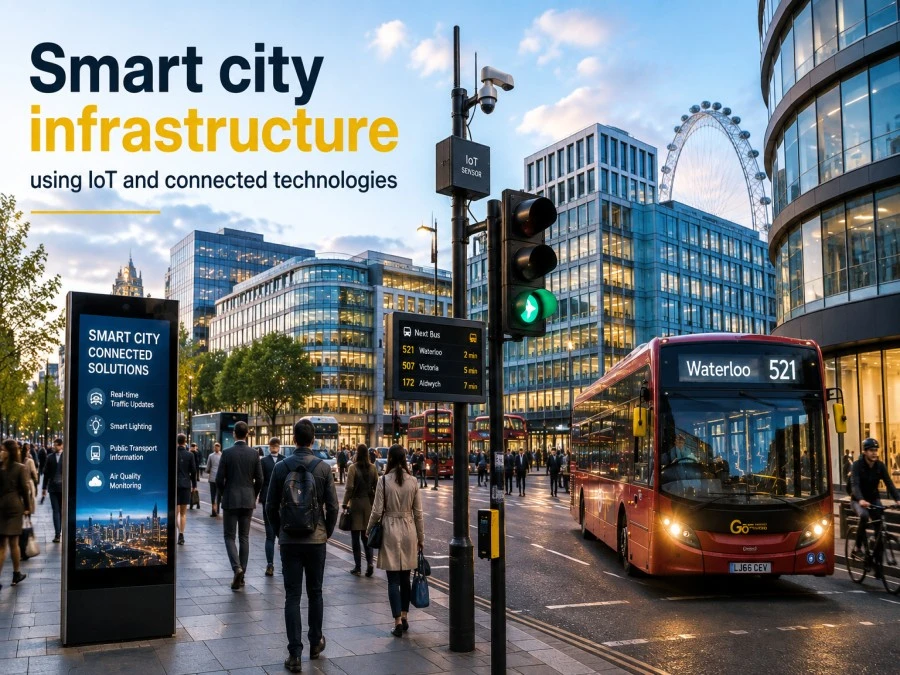
Cities around the world are becoming more connected as technology changes how people travel, communicate, manage energy, and access public services. The growth of the Internet of Things (IoT) is playing a major role in this transformation, allowing connected devices to collect and exchange information in real time.
From intelligent traffic systems and smart buildings to connected public transportation and automated energy networks, smart cities are using technology to make urban environments more efficient and responsive.
The idea behind a smart city is simple: use data and connected technology to understand what is happening across an urban environment and make better decisions. Sensors can monitor traffic, energy consumption, air quality, water systems, public infrastructure, and other services. When this information is analyzed effectively, city authorities can identify problems earlier and allocate resources more efficiently.
However, building a connected city involves much more than installing sensors. It requires reliable infrastructure, strong cybersecurity, data management, investment, and cooperation between governments, technology providers, businesses, and citizens.
What Is the Internet of Things?
The Internet of Things, commonly known as IoT, refers to physical objects equipped with sensors, software, and connectivity that allow them to collect and exchange data.
These devices can range from household appliances and wearable technology to industrial machines, vehicles, utility meters, and city infrastructure.
IoT is already being used in areas such as:
- Smart homes
- Healthcare monitoring
- Industrial automation
- Transportation
- Energy management
- Agriculture
- Retail
- Manufacturing
- Public infrastructure
The value of IoT comes from connecting physical systems with digital information. Instead of relying entirely on manual monitoring, organizations can collect real-time data and use it to improve decisions and operations.
For businesses, this can mean lower operating costs and better asset management. For cities, it can mean more efficient public services and improved resource utilization.
How Smart Cities Are Changing Urban Life
The development of smart cities is closely connected to rapid urbanization. As populations grow, cities face increasing pressure on transportation, housing, energy, water, waste management, and public infrastructure.
Technology can help cities address some of these challenges.
For example, connected traffic sensors can provide information about congestion, while intelligent transportation systems can help authorities understand travel patterns. Smart energy systems can monitor electricity consumption, while connected water infrastructure can help identify leaks.
Public services can also benefit from real-time information. Sensors placed across urban infrastructure can help identify maintenance requirements before problems become major disruptions.
The goal is not simply to make cities more technological. It is to create urban environments that are more efficient, sustainable, accessible, and responsive to the needs of residents.
Smart Infrastructure Is Becoming Essential
Modern smart infrastructure combines physical assets with digital technologies. Roads, buildings, electricity networks, water systems, and transportation infrastructure can increasingly be connected to monitoring and data platforms.
This creates opportunities for predictive maintenance.
Instead of waiting for equipment to fail, operators can monitor performance and identify unusual patterns that may indicate a potential problem. Early intervention can reduce downtime, lower maintenance costs, and improve public safety.
Smart infrastructure can also support sustainability. Connected energy systems can provide better visibility into consumption, while intelligent lighting systems can adjust usage based on conditions and demand.
For rapidly growing cities, these capabilities can become increasingly important as governments look for ways to manage limited resources more effectively.
Connected Devices Are Everywhere
The growth of connected devices is expanding the amount of information available to businesses, governments, and consumers.
Smart watches can monitor health and activity. Connected vehicles can provide information about driving conditions and vehicle performance. Smart appliances can track energy consumption, while industrial sensors can monitor machinery.
As the number of connected devices increases, the volume of data generated by these systems will also grow.
This creates both opportunities and challenges. Organizations need the infrastructure and analytical capabilities to turn large quantities of data into useful insights. They also need to protect that information from unauthorized access and misuse.
How Industrial IoT Is Transforming Businesses
While smart cities often receive the most attention, the Industrial Internet of Things (Industrial IoT) is transforming businesses on an equally significant scale. Manufacturers, logistics companies, energy providers, and other industries are connecting machines and equipment to digital systems to monitor operations in real time.
Industrial IoT can help businesses track equipment performance, identify potential failures, improve production processes, and reduce unnecessary downtime.
For example, sensors installed on industrial machinery can continuously monitor temperature, pressure, vibration, or energy consumption. When the system detects unusual behavior, maintenance teams can investigate the issue before a major failure occurs.
This approach, known as predictive maintenance, can improve operational efficiency while helping companies make better use of their resources.
Industrial IoT is also supporting smarter supply chains. Connected tracking systems can provide businesses with greater visibility into inventory, shipments, warehouses, and logistics operations.
As industries become more connected, IoT is moving from an experimental technology to an important part of modern business infrastructure.
IoT and the Future of Transportation
Transportation is another area where connected technologies are creating significant change.
Connected vehicles, intelligent traffic management systems, smart parking solutions, and real-time public transportation information are helping cities rethink how people and goods move.
Connected transportation systems can collect information about traffic patterns, road conditions, vehicle locations, and public transit demand. Authorities can use this information to improve planning and respond more quickly to disruptions.
For commuters, connected technology can provide more accurate travel information and potentially reduce unnecessary delays.
The development of electric vehicles is also increasing the importance of connected infrastructure. Charging stations, vehicles, energy networks, and digital payment systems can communicate with one another, creating a more integrated transportation ecosystem.
As cities become increasingly connected, transportation will likely become more data-driven and responsive.
Smart Energy Systems Are Supporting Efficiency
Energy management is one of the most important applications of IoT technology.
Traditional energy infrastructure often depends on periodic readings and centralized systems. Smart energy networks can provide much more detailed information about how electricity is generated, distributed, and consumed.
Smart meters and connected equipment can help utilities understand demand patterns and identify potential problems. Businesses and households can also gain better visibility into their energy consumption.
This information can encourage more efficient energy use and support the integration of renewable energy sources.
For cities facing increasing energy demand, smart infrastructure can provide tools for managing resources more efficiently while supporting broader sustainability goals.
Cybersecurity Becomes More Important
The expansion of the Internet of Things also creates new cybersecurity challenges.
Every connected device can potentially become an entry point into a network. A compromised sensor, smart appliance, industrial machine, or connected vehicle could create risks for individuals, businesses, or public infrastructure.
As a result, cybersecurity must be considered from the beginning when organizations design IoT systems.
Important security measures include:
- Strong authentication
- Regular software updates
- Data encryption
- Network monitoring
- Secure device configuration
- Access controls
- Vulnerability testing
Organizations also need clear policies for collecting, storing, and using data generated by connected devices.
The more connected an organization becomes, the more important its cybersecurity strategy becomes.
Data Is the Foundation of Connected Technologies
IoT devices generate enormous amounts of information, but collecting data is only the beginning.
Organizations need systems capable of processing and analyzing that information to produce useful insights. Cloud computing, artificial intelligence, and advanced analytics are increasingly being combined with IoT platforms to turn raw data into actionable intelligence.
For example, a manufacturing company can combine machine sensor data with AI-powered analytics to identify production inefficiencies. A city can analyze traffic information to understand congestion patterns. A utility provider can examine energy consumption to forecast demand.
This combination of IoT and artificial intelligence is creating new possibilities for automation and real-time decision-making.
The most successful connected systems will therefore depend not only on sensors but also on the ability to understand and act on the information those sensors produce.
The Business Opportunity Behind IoT
The expansion of connected devices is creating opportunities for technology companies, infrastructure providers, software developers, manufacturers, and service businesses.
Organizations can develop new products and services around connected technology while existing businesses can use IoT to improve their operations.
The opportunity extends beyond technology companies. Retailers can use connected systems to understand inventory and customer behavior. Healthcare organizations can monitor equipment and patient information. Agriculture businesses can use sensors to track soil conditions and optimize resources.
This broad applicability makes IoT one of the most versatile technologies shaping digital transformation.
The Future of Smart Cities and Connected Technologies
The next phase of smart cities will be defined by greater integration between connected infrastructure, artificial intelligence, automation, and real-time data. Instead of operating individual systems separately, cities are increasingly looking at ways to connect transportation, energy, water, public safety, buildings, and other services.
This interconnected approach can help cities respond more quickly to changing conditions and use resources more efficiently.
Artificial intelligence can also make IoT systems more useful by analyzing large volumes of data and identifying patterns that may not be immediately visible to human operators. For example, AI can help predict traffic demand, identify infrastructure problems, and optimize energy consumption.
However, technology should support people rather than simply increase the number of digital systems in a city. Successful smart-city projects need to focus on measurable improvements in quality of life, efficiency, accessibility, and sustainability.
Challenges Facing Smart Cities
Although connected technologies offer significant opportunities, developing a smart city comes with complex challenges.
High Infrastructure Costs
Installing sensors, communication networks, data platforms, and connected infrastructure requires substantial investment. Cities need long-term strategies to ensure that technology projects deliver measurable value.
Data Privacy
Smart cities can collect information about transportation, energy consumption, public spaces, and connected devices. Governments and technology providers must establish responsible policies for collecting and using this information.
Cybersecurity Risks
As more critical infrastructure becomes connected, protecting systems from cyberattacks becomes increasingly important. A security breach could potentially disrupt essential public services.
Digital Inequality
Not everyone has equal access to digital technologies. Smart-city strategies need to consider affordability, accessibility, and digital inclusion so that technological progress benefits entire communities rather than only certain groups.
Interoperability
Different devices and systems need to communicate effectively. Cities can face difficulties when technologies from different providers use incompatible platforms or standards.
Addressing these challenges will be essential for building connected environments that are secure, reliable, and inclusive.
Why Industrial IoT Will Remain Important
The growth of Industrial IoT is expected to continue as businesses search for ways to improve productivity, reduce waste, and make operations more predictable.
Manufacturers can connect production equipment, warehouses, supply chains, and quality-control systems to create more transparent operations. Energy companies can monitor infrastructure remotely, while logistics businesses can track assets throughout their journey.
The combination of IoT, automation, cloud computing, and artificial intelligence could create increasingly autonomous industrial environments.
For business leaders, the opportunity is not simply to install more connected devices. The greater value comes from using the resulting information to make faster and better decisions.
Key Takeaways
The development of IoT, smart cities, and connected technologies is changing how people live and how organizations operate.
The most important trends include:
- IoT is connecting physical devices with digital systems.
- Smart cities are using real-time information to improve urban services.
- Smart infrastructure can support better maintenance and resource management.
- Connected devices are expanding across homes, businesses, transportation, and public services.
- Industrial IoT is helping companies improve efficiency and monitor equipment.
- Artificial intelligence can make connected systems more intelligent and responsive.
- Cybersecurity and data privacy must remain central to IoT development.
- Digital inclusion will be important as cities become increasingly connected.
Conclusion
The expansion of Smart Cities, IoT & Connected Technologies represents a major shift in how modern societies use technology. Connected devices are moving beyond individual products and becoming part of larger ecosystems that link infrastructure, businesses, governments, and consumers.
For cities, IoT can provide new ways to manage transportation, energy, water, infrastructure, and public services. For businesses, Industrial IoT can improve productivity, reduce downtime, and create greater visibility across operations.
But the success of connected technology will ultimately depend on how responsibly it is implemented. Security, privacy, interoperability, accessibility, and measurable public value must remain central considerations.
The future will not simply be about having more connected devices. It will be about creating smarter systems that use technology and data to solve real-world problems.
As artificial intelligence, automation, and IoT continue to converge, connected technologies are likely to become an increasingly important part of the global digital economy. Organizations and cities that invest strategically today can build the infrastructure needed for a more efficient, responsive, and connected future.