
Scrap Metal Recycling: The Business Case for Recovering Valuable Materials

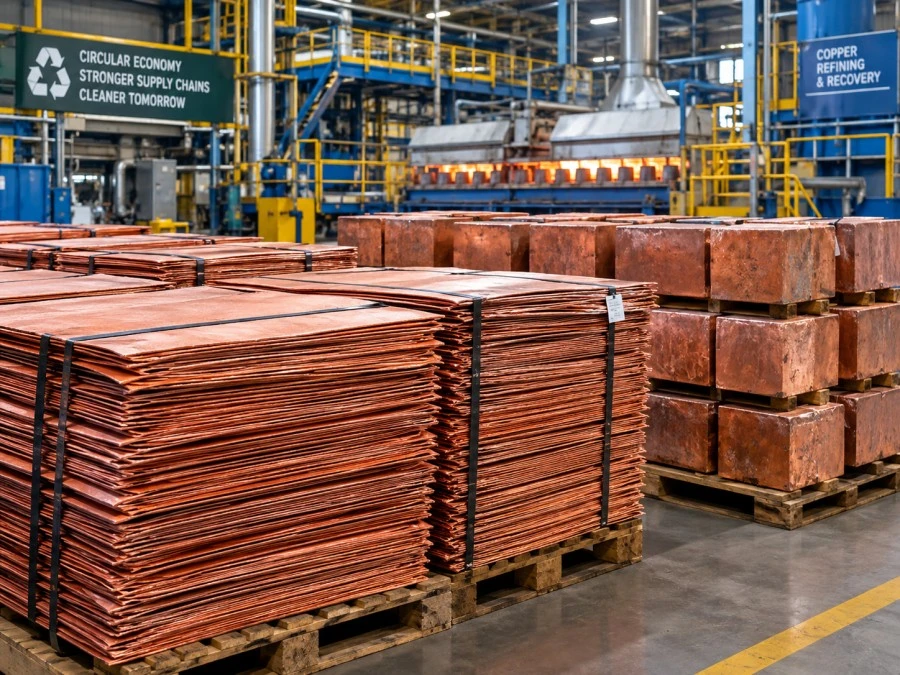
Scrap metal is no longer simply an industrial byproduct; it is a potential source of strategic raw materials for manufacturers facing supply disruptions, volatile commodity prices and growing demand for critical minerals. Yet recycling capacity alone does not guarantee profitable recovery, particularly when processing costs, feedstock quality and market prices move in opposite directions. For business leaders, the priority is to determine when recovered materials offer a measurable economic advantage—and how to build a dependable supply chain around them.
Boardroom Briefing: Key Takeaways
- Secondary materials can diversify industrial supply, but recovered metal must meet buyers’ specifications and compete with alternative feedstocks on delivered cost.
- Recycling infrastructure requires substantial capital, dependable collection networks, efficient processing and established markets for recovered output.
- Commodity exposure can erode margins when scrap acquisition costs rise faster than selling prices or inventory values decline.
- Critical-mineral recovery can support battery, electronics, energy and advanced-manufacturing supply chains, although technology and feedstock requirements vary significantly by material.
- Investment decisions should account for recovery yield, operating costs, working capital, environmental obligations and downside scenarios—not headline processing capacity alone.
- U.S. industrial policy is increasingly focused on retaining and recovering materials with strategic value, making trade rules and domestic processing capacity important variables for manufacturers.
1. Scrap Metal Recycling Is Becoming a Supply-Chain Strategy, Not Just a Waste-Management Function
Scrap metal recycling is the process of collecting, sorting and processing discarded metals into secondary materials suitable for industrial use. For manufacturers, it can create an alternative source of raw materials while reducing waste and diversifying procurement.
The business opportunity spans several material streams. Steel and iron scrap feed established metalmaking operations; copper and aluminum scrap can support electrical equipment, construction and transportation manufacturing. Discarded electronics, industrial equipment and end-of-life batteries may also contain valuable metals, but recovering those materials can require more specialized processing.
The supply-chain rationale is becoming more prominent. The International Energy Agency’s Global Critical Minerals Outlook 2026, published on July 16, 2026, identifies concentrated supply, export restrictions and declining investment as risks to critical-mineral security. The report also examines how recycling and processing capacity can contribute to more diversified supply.
For a manufacturer, the practical question is not whether recycled materials are inherently preferable. It is whether a qualified secondary supplier can deliver the required material, in the required quantity and quality, at a competitive total cost.
That distinction matters when procurement teams assess manufacturing supply-chain diversification. A recycling contract can reduce dependence on one source, but only if collection volumes, processing capability and delivery schedules remain dependable under stress.
2. The Economics of Recovered Metal: Where Margins Are Created—and Lost
The economics of scrap metal recycling depend on the value of saleable recovered output minus the complete cost of acquiring, collecting, processing and delivering it. Gross scrap value is not the same as operating profit.
A recycler may purchase mixed scrap at an attractive price but discover that contamination, sorting losses or transport expenses consume the expected margin. A manufacturer recovering its own production scrap faces a different calculation: the relevant comparison may be the net proceeds from selling scrap versus the cost and quality implications of reusing it internally.
A credible financial model should include:
- Scrap purchase or internal collection costs.
- Sorting, labor, energy, maintenance and processing.
- Transport, storage, insurance and compliance.
- Material losses, contamination and residue disposal.
- Working capital, financing costs and inventory-price exposure.
- Capital expenditure, depreciation and required returns.
Illustrative unit-economics template
The following example is hypothetical and is not an industry benchmark. It demonstrates how a recycler can calculate a preliminary contribution margin for one metric tonne of incoming scrap.
| Metric | Illustrative assumption |
|---|---|
| Incoming scrap | 1.00 metric tonne |
| Saleable recovered metal | 0.90 tonne |
| Realized selling price | $800 per tonne of recovered metal |
| Revenue | $720 |
| Scrap acquisition cost | $400 |
| Collection and transport | $70 |
| Sorting and processing | $100 |
| Energy and consumables | $35 |
| Compliance and residue handling | $20 |
| Contribution before fixed costs | $95 |
Under these assumptions, the operation generates $720 in revenue and $625 in listed variable costs, leaving $95 per incoming tonne before fixed overhead, depreciation, financing, taxes and other unlisted costs.
The model also exposes the sensitivity of the result. If the realized selling price falls by $50 per recovered tonne, revenue declines by $45 per incoming tonne at the assumed recovery yield. The contribution falls from $95 to $50, a reduction of almost 47%.
The correct next step is to test multiple combinations of scrap purchase prices, recovery yields, selling prices and throughput. Executives should distinguish contribution margin from EBITDA, free cash flow and return on invested capital.
3. Build the Feedstock Advantage: How Manufacturers Can Secure Reliable Scrap Supply
A competitive scrap procurement strategy prioritizes reliable, specification-compliant material at the lowest risk-adjusted delivered cost—not simply the lowest quoted purchase price.
Manufacturers can source recovered material through direct supplier contracts, regional recycling partnerships, internal scrap-recovery systems or ownership of processing assets. Each model presents different trade-offs.
Direct procurement limits capital commitments but leaves the buyer exposed to supplier availability and market conditions. Long-term partnerships can improve visibility into volumes and quality. Owning a recycling operation offers greater operational control but adds capital expenditure, staffing, environmental obligations and utilization risk.
Procurement teams should establish clear terms for:
- Material grades, acceptable contamination and inspection procedures.
- Volume commitments, delivery schedules and supplier performance.
- Price adjustments tied to transparent market references.
- Rejected loads, off-specification material and quality disputes.
- Traceability, environmental compliance and ownership of residues.
Supplier concentration also deserves attention. A plant that relies on one major scrap dealer may face production risk if that supplier changes its export strategy, loses access to collection networks or prioritizes another buyer.
Commodity-price risk and procurement strategy should be evaluated together. Hedging can manage certain price exposures, but it cannot compensate for inadequate feedstock, poor material quality or unreliable logistics.
4. From Scrap Yard to Strategic Materials: Where Technology Changes the Business Case
Recycling technology improves commercial performance when it increases saleable recovery, reduces processing costs or produces material that commands a better price.
Automated sorting, sensor-based identification, digital weighing and production tracking can help operators classify materials and monitor losses. The financial benefit must be demonstrated through measurable changes in throughput, recovery yield, labor requirements, contamination or output quality.
The U.S. provides an example of the capital commitment involved in complex metal recovery. Reuters reported in September 2025 that Aurubis had started production at an approximately $800 million copper recycling plant in Richmond, Georgia. The facility was designed to process up to 180,000 metric tonnes of complex recycling material annually and produce around 70,000 tonnes of blister copper, alongside other metals. These are reported design figures, not proof of realized profitability or sustained full-capacity output.
The example illustrates the distinction between a conventional scrap yard and a sophisticated industrial recovery facility. The latter can require substantial capital, specialized processing and dependable markets for multiple recovered products.
When does recycling technology justify the capital investment?
Technology merits investment when its verified incremental benefits exceed its full ownership and operating costs. A business case should compare the current process with the proposed technology using measured recovery rates, contamination levels, throughput, downtime and saleable output.
For example, a sorting system that reduces metal losses may improve contribution margin, but only if the additional recovered value exceeds the system’s energy, maintenance, labor and financing costs. Pilot results should be tested against different feedstock mixes before a facility commits to a major expansion.
AI-assisted industrial sorting and automation should be treated as an investment hypothesis until independently measurable operational improvements support it.
5. The Contrarian Case: Why More Recycling Capacity Does Not Guarantee Better Returns
More recycling capacity does not automatically translate into higher profits because processing facilities require suitable feedstock, competitive operating costs and buyers willing to purchase the recovered material.
The U.S. Environmental Protection Agency estimated in its 2024 recycling infrastructure assessment that modernizing the covered U.S. recycling system would require $36.5 billion to $43.4 billion. The assessment focuses on commonly recycled packaging and organic materials, including ferrous metal cans and non-ferrous beverage containers; it is not an estimate of the investment required for the entire scrap-metal industry.
The wider lesson is that collection, sorting, processing and end markets must develop together. New capacity cannot compensate for inadequate material collection or weak demand.
Several risks can undermine a project:
- Feedstock shortages: A plant may operate below economic utilization when collection volumes fall short.
- Commodity volatility: The selling price of recovered metal may decline after expensive inventory has been acquired.
- Quality failures: Contamination can reduce output value or make material unsuitable for a buyer.
- Logistics costs: Low-value or geographically dispersed scrap may be uneconomic to transport.
- Regulatory exposure: Unsafe processing, poor residue management or inadequate permits can create substantial liabilities.
Recycling also cannot eliminate the need for primary mining and refining. The IEA’s critical-minerals analysis emphasizes recycling’s contribution to supply security while recognizing the continuing need for investment in primary supply. Actual substitution depends on material availability, product lifetimes, collection rates and processing capability.
6. U.S. Recycling Policy and the Global Competition for Strategic Materials
U.S. recycling policy increasingly intersects with industrial resilience, critical-mineral access and competition over where valuable waste materials are processed.
In July 2026, Reuters reported that a presidential determination gave U.S. officials authority to restrict exports of electronic waste containing critical minerals. The reported rationale was to encourage domestic recovery of materials that could otherwise be processed abroad. The practical impact depends on implementing rules, covered material categories and the ability of U.S. processors to compete for feedstock.
Copper scrap offers another example of the tension between domestic supply and global trade. Reuters reported in July 2025 that the United States planned restrictions beginning in 2027 requiring at least 25% of specified high-quality copper scrap to be retained for domestic use. The report also described concerns about defining qualifying scrap and enforcing the proposed requirements. Businesses should verify the current legal position before making procurement or investment decisions based on these measures.
For executives, trade policy can alter the relative economics of exporting scrap, processing it domestically or sourcing recovered metal from international suppliers. A policy that retains feedstock inside one country may improve availability for local processors, but it does not guarantee that their costs or recovered-material prices will be competitive.
International comparison is useful here. India’s ₹1,500 crore critical-mineral recycling incentive scheme, announced in 2025, supports eligible recovery of critical minerals from sources such as electronic waste, spent lithium-ion batteries and certain end-of-life vehicle components. The IEA’s policy record specifies that the scheme targets actual extraction rather than basic collection, shredding or sorting. It should not be presented as a universal subsidy for conventional scrap yards.
The strategic question is whether policy support helps create commercially sustainable processing capacity—or merely shifts feedstock flows and costs between markets.
7. The Strategic Playbook: A 90-Day Plan for Business Leaders
A 90-day recycling assessment should establish the financial baseline, validate supplier and processing economics, and test the commercial case before a company commits significant capital.
Days 1–30: Establish the baseline
- Audit scrap generation, disposal costs, existing recovery contracts and material losses.
- Separate streams by metal type, grade, contamination, volume and potential resale value.
- Calculate the current cost per tonne and identify materials with sufficient volume for a viable pilot.
- Establish traceability and environmental-compliance requirements.
Days 31–60: Validate commercial feasibility
- Request comparable bids from qualified recycling partners and downstream buyers.
- Verify feedstock availability, delivered costs, recovery yields and material specifications.
- Model downside cases for lower selling prices, higher acquisition costs, weaker throughput and delayed payments.
- Compare outsourcing, long-term partnership and asset ownership.
Days 61–90: Make an investment decision
- Pilot the highest-potential material stream and measure saleable output.
- Compare actual results with the unit-economics model.
- Define minimum thresholds for contribution margin, quality, supplier reliability and cash requirements.
- Approve scale-up only if the downside case meets the company’s return and risk requirements.
Leadership teams should monitor net recovery value per tonne, recovery yield, contamination rate, cost per tonne processed, throughput, downtime, inventory days and verified environmental outcomes. These measures connect operating performance to cash flow and supply-chain resilience.
8. Executive Outlook: Treat Recovered Materials as a Qualified Supply Source
Scrap metal recycling creates strategic value when reliable feedstock, efficient processing, qualified buyers and disciplined investment decisions work together. It is not enough to collect more material or announce a larger processing facility.
For manufacturers, the immediate opportunity is to identify where recovered materials can reduce delivered input costs, diversify supply and limit exposure to disruptions. For investors, the priority is to test utilization, feedstock contracts, technology performance, regulatory obligations and downside cash flows.
The strongest business case is specific, measurable and conditional. Recovered materials deserve a place in procurement and capital-allocation decisions when the economics support them—not simply because recycling is environmentally desirable.
Executive decision rule: Invest in recovery capacity only when verified feedstock supply, saleable output quality, total delivered economics and downside-tested cash flows support the proposed return.