
Nintendo’s Switch 2 Strategy Reveals the Business Power of Proprietary IP

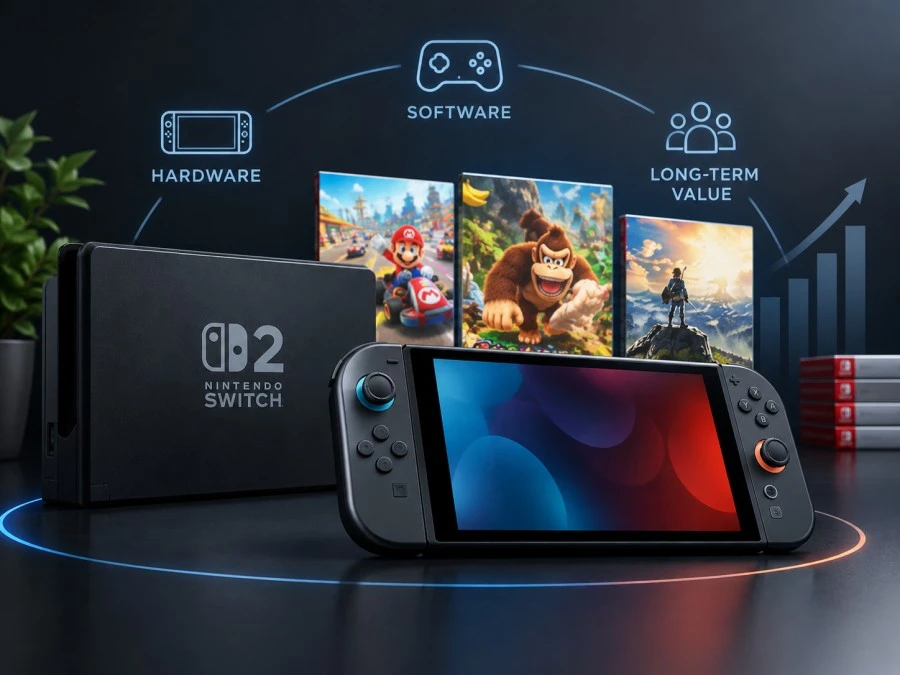
Nintendo’s Switch 2 strategy shows how proprietary intellectual property can become a commercial asset rather than simply a branding tool. Nintendo reported 23.68 million Switch 2 hardware units and 58.17 million software units sold worldwide through June 30, 2026. (Financial Times) The executive question is what companies in other industries can learn from a business that uses exclusive intellectual property to influence product demand, customer retention and monetization.
Boardroom Briefing
- Nintendo has built a platform strategy around proprietary intellectual property and controlled hardware, giving exclusive content a direct role in customer purchasing decisions.
- Switch 2 reached 23.68 million hardware units and 58.17 million software units worldwide through June 30, 2026.
- Proprietary IP can create differentiated demand when customers value experiences that competitors cannot easily reproduce, license or substitute.
- Pricing power depends on perceived differentiation and customer willingness to pay, not brand recognition alone.
- Mario Kart World reached 15.39 million units by June 30, 2026, demonstrating the commercial scale that a major proprietary franchise can achieve within Nintendo’s hardware platform.
- IP concentration creates risks including franchise fatigue, development-cost inflation and dependence on a limited number of high-performing properties.
- Executive strategy should measure proprietary assets through acquisition, retention, lifetime value and pricing outcomes rather than awareness alone.
Nintendo’s Real Switch 2 Advantage Is Bigger Than the Console
Nintendo’s proprietary IP is strategically valuable because exclusive franchises can create demand for both the company’s hardware and the software sold through it. Nintendo reported 23.68 million Switch 2 hardware units and 58.17 million software units sold worldwide through June 30, 2026.
The commercial model differs from a conventional hardware business. A manufacturer competing mainly on specifications, design or price must continually defend its product against comparable alternatives. Nintendo has another source of differentiation: software that customers cannot obtain on competing platforms.
The relationship works in both directions. Hardware expands the addressable audience for Nintendo software, while exclusive software gives customers a reason to purchase Nintendo hardware.
That relationship is visible in Nintendo’s software sales. Mario Kart World had reached 15.39 million units by June 30, 2026, while Donkey Kong Bananza had reached 4.78 million and Pokémon Legends: Z-A – Nintendo Switch 2 Edition had reached 3.99 million.
Those figures do not establish that proprietary IP alone caused Switch 2 adoption. Pricing, hardware specifications, distribution, third-party support and launch timing also influence demand. The narrower strategic conclusion is more defensible: Nintendo owns intellectual property that can directly affect customer demand for its platform.
For CEOs, that distinction separates a recognizable brand from a proprietary asset capable of influencing economics.
How Proprietary IP Converts Brand Equity Into Revenue
Proprietary IP becomes economically powerful when it changes customer behavior across multiple transactions rather than generating attention only once.
The commercial chain is straightforward:
Recognizable franchise → customer attention → product demand → platform adoption → software purchase → repeat engagement.
Nintendo’s Switch 2 results provide a useful case study. Mario Kart World reached 15.39 million units while the Switch 2 platform had reached 23.68 million hardware units by June 30. (Financial Times)
A successful proprietary title does more than generate software revenue. It can increase the perceived value of the hardware required to access that content. The hardware then creates a larger installed customer base for future software releases.
That principle extends beyond gaming. A software company can use proprietary data to make its flagship product more valuable. A cybersecurity provider can use unique threat intelligence to differentiate its platform. A financial-services company can use exclusive distribution or customer relationships to make competing offers less attractive.
Brand equity becomes a competitive moat when it changes measurable customer economics.
Executives should test proprietary assets against five outcomes:
- Lower customer-acquisition cost.
- Higher conversion.
- Stronger retention.
- Greater pricing realization.
- Higher customer lifetime value.
An asset that generates awareness without improving one of those outcomes may be valuable marketing. It is not necessarily a durable competitive advantage.
The IP Flywheel: From One Product to an Entire Ecosystem
The Nintendo IP flywheel is a platform strategy in which proprietary franchises attract customers to hardware, hardware expands the audience for software, and software engagement strengthens the value of the overall platform.
The model can be applied through six operating steps:
- Own or control differentiated intellectual property.
- Embed that asset into a flagship product.
- Use the product to attract customers.
- Create complementary products and experiences.
- Reinvest revenue into new content or capabilities.
- Extend the asset across additional channels.
Nintendo’s historical Switch installed base demonstrates the potential scale of this model. Nintendo reported 156.59 million original Switch hardware units and 1.56 billion software units sold worldwide through June 30, 2026.
A large installed base creates commercial optionality because future products can be marketed to an existing customer population. Proprietary franchises add another layer by giving those customers recurring reasons to engage with the platform.
The transferable principle is not about copying Nintendo’s entertainment franchises. It is about identifying proprietary assets that increase the value of surrounding products.
A founder might own proprietary workflow data. An enterprise technology company might possess specialized algorithms. A cybersecurity company might control unique threat intelligence. Each asset becomes strategically important when it materially improves the customer proposition.
The question for leadership teams is simple: Which proprietary asset can repeatedly increase the economic value of the products surrounding it?
Pricing Power Comes From Differentiation, Not Scarcity Alone
Proprietary IP can create pricing power when customers perceive meaningful differentiation and have limited substitutes for the experience being offered.
Nintendo’s Switch 2 pricing strategy illustrates why differentiation matters. Nintendo has established recommended pricing for certain Switch 2-exclusive digital games that differs from physical editions, reflecting differences in production and distribution costs. The company’s official pricing guidance should be used as the primary reference for individual titles.
The broader strategic point is not that Nintendo can raise prices without consequence. It is that unique products provide more room for differentiated monetization than interchangeable products.
Executives should evaluate pricing power through four variables:
- Differentiation: Is the product materially distinct?
- Substitutability: Can customers obtain an equivalent elsewhere?
- Loyalty: Does the proprietary asset create repeat demand?
- Switching friction: What does the customer lose by leaving?
The distinction matters because strong branding does not guarantee pricing power. Customers can reject higher prices when alternatives improve, product quality deteriorates or monetization becomes excessive.
For CFOs and strategy chiefs, the stronger metric is price realization relative to retention. A price increase that materially damages retention or lifetime value may reduce economic value rather than increase it.
The Contrarian Case: Great IP Can Become a Liability
Strong IP becomes a business liability when management treats franchise recognition as guaranteed demand instead of an asset requiring continuous investment.
Nintendo’s advantage is its ability to deploy globally recognized properties across hardware generations. That strength also creates a high performance bar: customers expect major franchises to deliver experiences that justify continued spending.
The risks are familiar to any company dependent on proprietary assets:
- Franchise fatigue.
- Revenue concentration.
- Rising development costs.
- Dependence on a small number of flagship products.
- Failure to attract new customer cohorts.
- Excessive monetization.
- Underinvestment in new intellectual property.
The economics of the hardware business add another layer of risk. The Financial Times reported in September that DRAM prices had risen fivefold over the previous year as AI-related demand tightened memory supply. The report said Nintendo had previously disclosed ¥100 billion in unexpected costs, citing rising component costs, particularly memory.
That matters because proprietary content does not eliminate input-cost pressure. A company can control its IP while remaining exposed to the economics of the physical products used to deliver it.
The best proprietary-asset strategies combine defensive strength with continuous renewal.
Nintendo’s Switch 2 Shows Why Ecosystem Economics Beat Feature Wars
Nintendo demonstrates that differentiated customer preference can provide a competitive advantage that does not depend entirely on winning every specification comparison.
The same principle appears in other industries, although the business models are not identical. Apple combines proprietary hardware, software and services. Adobe integrates software products around a deeply established creative workflow. Disney monetizes intellectual property across entertainment formats and distribution channels.
Nintendo’s model is distinctive because proprietary franchises can influence demand for the hardware itself while the hardware expands the market for those franchises.
The Switch 2 figures illustrate the commercial scale of that relationship. Nintendo reported 58.17 million Switch 2 software units against 23.68 million hardware units through June 30, 2026.
That ratio should not be treated as a direct customer-lifetime-value calculation. Nintendo’s software-unit methodology includes different forms of software sales and bundled products. The figures are better interpreted as evidence that the hardware platform creates a substantial base for additional software transactions.
The broader boardroom question is:
What does your company own that competitors cannot easily reproduce, license or replace?
The answer could be intellectual property. It could also be proprietary data, technology, distribution, customer relationships or specialized operational knowledge.
The Strategic Playbook: Turning Proprietary Assets Into a Moat
Executives can turn proprietary assets into durable competitive advantages through five disciplines: Audit, Productize, Integrate, Monetize and Defend.
1. Audit
Inventory the company’s proprietary assets.
Include patents and trademarks, but also examine proprietary data, algorithms, specialized expertise, customer communities, distribution relationships, brands and accumulated operational knowledge.
Rank each asset according to its measurable influence on customer behavior.
2. Productize
Convert the strongest proprietary assets into products or features customers directly value.
A proprietary dataset has limited strategic value if it does not improve an outcome. The same dataset can become a moat when it improves forecasting, automation, risk detection or personalization.
3. Integrate
Connect the proprietary asset to the flagship product.
Nintendo integrates major franchises into the products customers purchase rather than treating intellectual property as a standalone marketing asset.
Enterprise companies can apply the same principle by making proprietary technology, data or workflow capabilities central to the customer experience.
4. Monetize
Create multiple economic pathways without damaging customer trust.
Possible models include premium pricing, subscriptions, licensing, cross-selling, bundled products and adjacent services.
The objective is not maximum extraction from one asset. It is sustainable monetization across the customer relationship.
5. Defend
Protect the asset legally, technologically and commercially.
Defending IP also means maintaining product quality, investing in new customer cohorts and preventing competitors from creating sufficiently close substitutes.
Hardware companies face an additional constraint: input costs can rise independently of customer demand. The current memory shortage demonstrates that risk. Financial Times reporting shows that AI infrastructure demand has tightened DRAM supply and pushed prices sharply higher.
For CFOs, proprietary IP strategy must consequently be evaluated alongside long-term capital allocation strategy. A valuable intellectual asset still requires economically viable products, supply chains and investment.
Executive Outlook
Proprietary IP is most valuable when it makes products harder to substitute and creates measurable economic benefits across multiple customer interactions.
Nintendo’s Switch 2 strategy provides a clear case study. The company had sold 23.68 million Switch 2 systems and 58.17 million software units worldwide through June 30, 2026.
Those results should not be attributed exclusively to Nintendo’s franchises. Hardware design, pricing, distribution, third-party content and broader market conditions also matter.
The strategic insight is narrower: Nintendo controls intellectual property that can influence customer choice, software demand and the perceived value of its hardware platform.
That is the standard executives should apply to their own proprietary assets.
A valuable asset should improve at least one measurable business outcome: acquisition, conversion, retention, pricing realization, lifetime value or revenue expansion.
The question for leadership teams is no longer simply, “What intellectual property do we own?”
It is:
“Which proprietary asset can make our products harder to substitute, our customers harder to lose and our next dollar of revenue more valuable?”
That is the business lesson behind Nintendo’s Switch 2 strategy.