
Mount Fuji Child Left Alone: The Definitive Guide to the 2026 Father-Son Incident and Hiking Safety

Summarize this blog post with: ChatGPT | Perplexity | Claude | Grok
Many families visit Mount Fuji hoping to create a memorable hiking experience, but you’ve probably already noticed that a young child can reach their physical limit long before the summit. The recent case involving a 7-year-old boy left alone near the sixth station shows how quickly a family hike can become a serious mountain-safety issue; in this guide, we’ll explain what happened, why the location mattered, and how parents can hike Mount Fuji more safely.
Key Takeaways
- The Mount Fuji child-left-alone incident involved a 48-year-old father who left his exhausted 7-year-old son near the sixth station of the Fujinomiya Trail while continuing upward with his older son.
- The child was found alone by mountain-hut personnel, who contacted police and helped bring him to safety. Police later contacted the father near the eighth station and ordered him to return.
- The sixth station is high altitude, at roughly 2,490–2,500 meters in reports, where fatigue, cold, wind and rapidly changing weather can become significant hazards.
- Mount Fuji is not an easy mountain, despite its popularity, and the official climbing website warns that children and older adults require particular care because of cold and other mountain risks.
- Parents should keep hiking groups together and adjust their pace and plan to the least-capable member rather than separating from a tired child.
- Mountain huts can provide important shelter, but their operating periods, facilities and reservations should be checked before departure.
- The safest summit decision is sometimes turning around, because official guidance emphasizes preparation, weather monitoring and descending when conditions or health deteriorate.
What Is the Mount Fuji Child-Left-Alone Incident?
The Mount Fuji child-left-alone incident refers to a reported August 20, 2026 case in which a 48-year-old father from Nagoya left his exhausted 7-year-old son near the sixth station of the Fujinomiya Trail while continuing toward the summit with his older son.
First, reports say the family was climbing the Fujinomiya route when the younger boy became tired and began crying. The father reportedly told the boy to wait while he continued upward with his older, junior-high-school-aged son.
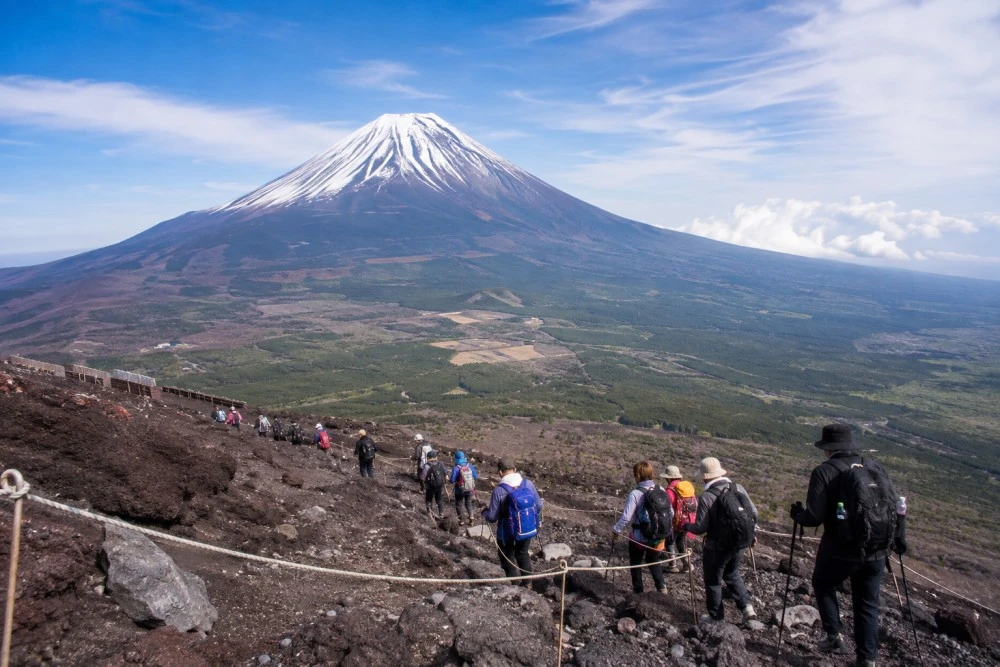
At the same time, the incident occurred at roughly 2,490 meters above sea level, making the location materially different from leaving a child temporarily at a normal roadside or tourist facility. The altitude, exposed terrain and changing mountain weather created additional safety considerations.
[Internal link: “Mount Fuji hiking safety guide” → Suggested target page/topic: comprehensive Mount Fuji safety guide]
Why Does the Mount Fuji Child Safety Incident Matter?
The Mount Fuji child safety incident matters because a tired child at high altitude can face multiple hazards simultaneously, including exhaustion, cold, dehydration, poor visibility and rapidly changing weather. The official Mount Fuji climbing website specifically warns that children are more susceptible to hypothermia and that summit temperatures can be about 20°C lower than at sea level.
Moreover, separation creates a second safety problem because a child who becomes more distressed, confused or physically weak may not be able to manage an emergency independently. For example, official emergency guidance tells hikers who become lost to remain in a safe place and request help rather than continuing to move unnecessarily.
In addition, the official guidance describes Mount Fuji as an isolated peak above 3,000 meters and warns that weather can change rapidly. Kengamine, the mountain’s highest point, reaches 3,776 meters.
What Happened on the Fujinomiya Trail?
The reported Mount Fuji father-son incident unfolded during an early-morning ascent on August 20, 2026, with the younger child becoming exhausted near the sixth station. Multiple reports agree that the child was subsequently found alone and that police intervened.
What Happened to the 7-Year-Old Boy on Mount Fuji?
The 7-year-old boy was found unharmed by mountain-hut personnel after being left alone near the Fujinomiya Trail’s sixth station. The hut staff contacted police, who took responsibility for locating and safely reuniting the child with his father.
First, reports differ slightly on the precise timing and sequence of the discovery, so those details should be treated as reported rather than independently established facts. What is consistent across reporting is that the boy was alone, hut personnel alerted authorities, and police eventually located the father near the eighth station.
Why Was the 7-Year-Old Boy Left Alone on Mount Fuji?
The 7-year-old was reportedly left behind because he had become exhausted and was unable to continue ascending at the same pace as his father and older brother. Reports say the father continued toward the summit with the older child rather than ending or changing the family hike.
At the same time, the exact motivation beyond the reported decision to continue climbing should not be assumed. The important safety lesson is that a child’s inability to continue is a signal to change the plan, not a reason to separate the child from the responsible adult.
Where Was the Child Left on the Fujinomiya Trail?
The child was reportedly left around the Fujinomiya Trail’s sixth station at approximately 2,490 meters above sea level. The Fujinomiya route becomes steep and rocky above this area, increasing the physical demands on hikers.
For context, the official 2026 route information says the Fujinomiya ascent route above the sixth station operates from July 10 through September 10, subject to weather and other operating conditions.
What Did Police Do After Finding the Child on Mount Fuji?
Police became involved after mountain-hut staff reported that a child was alone, and officers subsequently contacted the father near the eighth station. Reports say the father was ordered to return and received a stern verbal warning.
Moreover, police used the incident to reinforce a broader hiking-safety message: groups should adjust their pace to the member with the least stamina and avoid becoming separated. That guidance applies directly to families hiking with children.
Why Is the Sixth Station Important on Mount Fuji?
The Fujinomiya Trail sixth station is important because it sits at high elevation and marks a demanding part of the route toward the summit. Reports place the incident around 2,490 meters, while the official route information shows that the trail continues steeply toward higher stations and the 3,776-meter summit.
First, the Fujinomiya route is the shortest main route to the summit, but the official model plan notes that it is also steep. The route has mountain huts at intervals, yet hikers still need to plan around their own walking pace and physical condition.
At the same time, altitude matters because conditions become progressively colder and thinner-air exposure increases as hikers ascend. The official safety guidance states that temperature generally decreases by about 0.6°C for every 100 meters of elevation gain.
| Mount Fuji safety factor | Why it matters for children |
|---|---|
| Sixth station | Around 2,490–2,500 m in incident reports |
| Summit | 3,776 m at Kengamine |
| Temperature change | About 0.6°C decrease per 100 m |
| Summer summit conditions | Temperatures can approach freezing |
| Weather | Thunderstorms, rain, fog and strong winds can develop quickly |
| Route terrain | Steep, rocky sections increase fatigue and fall risk |
[Insert custom diagram: Mount Fuji elevation profile from fifth station to summit, showing the sixth, seventh, eighth and summit stations | Alt text: “Compare Mount Fuji trail elevations and safety risks”]
What Are the Biggest Mount Fuji Hiking Risks for Children?
Mount Fuji hiking risks for children include exhaustion, altitude-related problems, hypothermia, dehydration, strong winds, rain, lightning, fog, falling rocks and difficult descents. The official climbing guidance specifically warns that weather and temperature can change quickly and that children are particularly vulnerable to cold-related problems.
Why Can Hiking Mount Fuji Be Dangerous for Young Children?
Hiking Mount Fuji can be dangerous for young children because the mountain combines high elevation, steep terrain and rapidly changing weather with a physically demanding ascent. The official Fujinomiya model plan calls for acclimatization at the fifth station and regular breaks, illustrating that the climb requires deliberate pacing.
For example, the official health guidance notes that hypothermia can occur even in summer when hikers are wet from rain or sweat and exposed to wind. Children can be especially vulnerable because they may lose body heat more quickly and may have difficulty recognizing or communicating early warning signs.
How Does Weather Affect Mount Fuji Hiking Safety?
Mount Fuji weather conditions can change rapidly because the mountain rises dramatically above the surrounding terrain and has unstable high-altitude airflow. The official website warns that summer thunderstorms are common and recommends checking weather information before starting.
Moreover, summer does not guarantee warm conditions near the summit. Official guidance says temperatures can fall near 0°C before sunrise, while wind and rain can make conditions feel substantially colder.
What Should Parents Know Before Hiking Mount Fuji With Children?
Parents hiking Mount Fuji with children should assess the child’s fitness, plan conservatively, maintain visual contact and make the entire itinerary flexible enough to turn around. The most important rule is simple: the group should move according to its least-capable member.
Is Mount Fuji Safe for a 7-Year-Old Child to Hike?
Mount Fuji does not have a general official minimum age for climbing, but the official guidance says special care is needed for children and older adults. Therefore, whether a 7-year-old can safely hike Mount Fuji depends on fitness, preparation, weather, route choice, pacing and supervision rather than age alone.
For example, a physically capable child may manage a carefully planned section in stable weather, while the same child could struggle badly during cold rain, strong winds or an overly ambitious summit schedule. Parents should treat turning back as a normal safety decision, not as a failed hike.
What Should Parents Pack for a Mount Fuji Hike?
Parents should pack layered clothing, waterproof rainwear, suitable footwear, food, sufficient fluids and emergency essentials for every child. The official safety guidance recommends warm and windproof protection because summer summit conditions can still become very cold.
In addition, each child should have practical identification and a way to communicate with the responsible adult when appropriate.
Are Mountain Huts Available Along the Fujinomiya Trail?
Mount Fuji mountain huts are available at several points along the Fujinomiya Trail and can provide rest, accommodation and emergency shelter, but hikers should verify each hut’s operating period and reservation status before departure. Official information lists huts at the sixth, seventh, eighth, ninth and 9.5th stations, as well as a summit facility.
First, mountain huts should not be treated as guaranteed emergency hotels available at every hour. The official site specifically recommends checking individual hut information and current reservation availability, while facilities can vary.
Second, huts become particularly important when weather deteriorates. Official emergency guidance says hikers should seek refuge immediately in a safe building, such as a nearby mountain hut, when thunderstorms, strong winds or heavy rain develop.
What Should Hikers Do If Weather Conditions Suddenly Become Dangerous?
Hikers should immediately seek safe shelter when thunderstorms, strong winds or heavy rain develop on Mount Fuji. The official emergency guidance recommends using a nearby mountain hut when available and avoiding unnecessary movement until conditions improve.
Moreover, hikers who are lost should stay in a safe location and request assistance rather than wandering farther. For emergencies on the Fujinomiya Trail, the official website lists 110 for police and 119 for fire or ambulance services.
What Are the Current Mount Fuji Climbing Rules for 2026?
The 2026 Mount Fuji climbing rules require hikers to follow route-specific opening periods and restrictions, with the Shizuoka-side routes operating under designated seasonal rules. The official site lists the Fujinomiya Trail’s upper ascent section as scheduled for July 10 through September 10, 2026, subject to changes caused by weather and trail conditions.
First, hikers should not assume that a published opening date guarantees that every facility will operate normally. The official guidance explicitly says operating periods are subject to change depending on weather and other conditions.
Second, rules vary by trail. For example, the Yoshida Trail has separate 2026 restrictions, including a ¥4,000 hiking fee and a gate-closing period, while Shizuoka-side routes have their own procedures.
[Internal link: “Mount Fuji climbing rules” → Suggested target page/topic: current 2026 Mount Fuji rules and requirements page]
What Mount Fuji Safety Resources and Emergency Options Are Available?
Mount Fuji safety resources include official trail information, weather data, route maps, mountain-hut information and emergency contacts. The official climbing website provides current announcements, trail information and emergency instructions for hikers.
For example, hikers can use official weather information and summit observations before departure, while the official site also provides live-camera information from Kengamine at 3,776 meters.
Practical Mount Fuji Safety Checklist
Parents can use the following preparation sequence before starting a family climb:
- Check official trail status and weather. Confirm that the intended route and facilities are operating.
- Assess the child’s condition. Consider recent activity, sleep, hydration and previous hiking experience.
- Set a turnaround rule. Decide in advance that persistent fatigue, illness or worsening weather ends the ascent.
- Stay together. Keep children within direct supervision and avoid splitting the group.
- Plan rest points. Use suitable stations or huts rather than waiting in exposed terrain.
- Carry appropriate clothing. Pack rain protection and warm layers even during summer.
- Know emergency procedures. Save relevant numbers and identify nearby huts or trail landmarks.
- Respect changing conditions. A route that was comfortable earlier may become dangerous after weather changes.
[Internal link: “family hiking safety checklist” → Suggested target page/topic: family hiking checklist]
[Insert image: Official Mount Fuji emergency-information page showing route-specific rescue instructions | Alt text: “Check Mount Fuji emergency procedures for hikers”]
What’s Next for Parents Planning a Mount Fuji Hike?
Parents planning a Mount Fuji hike should make safety decisions before reaching the trail, rather than waiting until a child is already exhausted. A conservative plan should include the route, weather, clothing, food, water, rest points, mountain-hut options and a clear turnaround rule.
At the same time, families should check official information immediately before departure because Mount Fuji operating conditions can change. The official site maintains current announcements, weather information, route details and facility operating periods.
A Simple Parent Decision Rule
Parents can use one practical rule throughout the climb: if the child is struggling, the plan changes immediately. For example, persistent crying, unusual tiredness, confusion, shivering, dizziness or difficulty walking should trigger rest, reassessment or descent rather than pressure to continue.
In addition, adults should remember that reaching the summit is optional, while protecting a child is not. The official Mount Fuji guidance itself emphasizes being properly equipped and having the courage to descend when you feel unwell.
Conclusion: Mount Fuji Safety Starts With Knowing When to Stop
The Mount Fuji child-left-alone incident involved a 48-year-old father who left his exhausted 7-year-old son near the sixth station while continuing toward the summit with his older son; mountain-hut staff found the child and police later intervened.
Ultimately, the central lesson is broader than this single Mount Fuji father-son incident. Mount Fuji hiking safety requires preparation, constant supervision, weather awareness and the willingness to turn around when conditions or a child’s condition deteriorate.
For families, the summit should never become more important than the people climbing toward it. A successful Mount Fuji hike is not simply reaching 3,776 meters; it is returning safely together.
Written by: Emma — SEO and News Research Writer with 4–5 years of experience in SEO content, news research, travel writing and outdoor-focused content.
Reviewed by: Editorial Fact-Checking Team — Review focus: Mount Fuji climbing guidance, route information, reported incident details and hiking safety.
Disclaimer: This article was initially drafted using AI assistance. However, the content has undergone thorough revisions, editing, and fact-checking by human editors and subject matter experts to ensure accuracy.