
Machine Learning Algorithms: The Hidden Engine Behind Modern Innovation

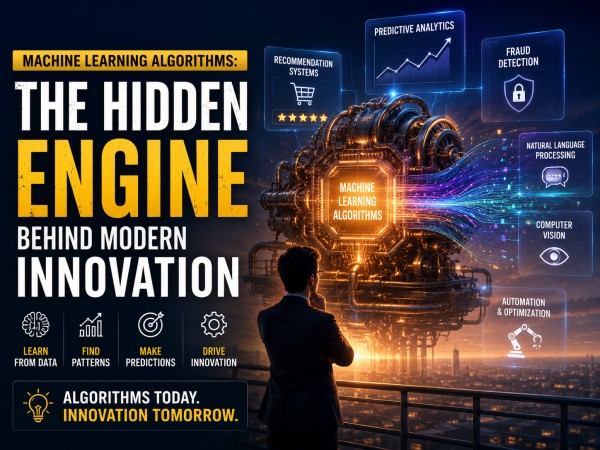
Behind many of today’s most advanced technologies lies a powerful force that often operates unseen: machine learning algorithms.
From personalized recommendations and fraud detection to autonomous systems and predictive analytics, machine learning algorithms are helping organizations solve complex problems faster and more efficiently than ever before.
In 2026, machine learning has become one of the most important drivers of innovation across industries. Businesses are using these algorithms to uncover insights, automate decisions, improve customer experiences, and create entirely new products and services.
While artificial intelligence often receives the spotlight, machine learning algorithms are the engine that powers much of that transformation.
Understanding how they work and why they matter has become essential for business leaders, entrepreneurs, and technology professionals.
What Are Machine Learning Algorithms?
Machine learning algorithms are computational models that learn from data and improve their performance over time without being explicitly programmed for every task.
Instead of following fixed instructions, these algorithms identify patterns, make predictions, and adapt based on new information.
Common applications include:
- Recommendation systems
- Fraud detection
- Customer analytics
- Predictive maintenance
- Image recognition
- Natural language processing
- Financial forecasting
The ability to learn from data makes machine learning one of the most valuable technologies in modern business.
Why Machine Learning Algorithms Matter
Organizations generate enormous amounts of data every day.
Traditional methods often struggle to analyze this information efficiently.
Machine learning algorithms help businesses:
- Discover hidden insights
- Improve decision-making
- Automate complex processes
- Enhance customer experiences
- Increase operational efficiency
- Support innovation
As data volumes continue to grow, machine learning is becoming increasingly important for maintaining competitiveness.
How Machine Learning Algorithms Power Artificial Intelligence
Artificial intelligence and machine learning are closely related, but they are not identical.
Artificial intelligence refers to systems designed to perform tasks that typically require human intelligence.
Machine learning algorithms provide the mechanisms that allow AI systems to learn and improve.
These algorithms enable AI applications to:
- Recognize patterns
- Understand language
- Make predictions
- Adapt to changing conditions
- Improve performance over time
Without machine learning algorithms, many modern AI capabilities would not be possible.
Personalization Is Driven by Machine Learning
Consumers increasingly expect personalized experiences.
Machine learning algorithms analyze customer behavior and preferences to deliver relevant recommendations and services.
Examples include:
E-Commerce Recommendations
Suggesting products based on browsing and purchase history.
Streaming Platforms
Recommending movies, shows, and music.
Marketing Campaigns
Delivering personalized content and offers.
Financial Services
Providing customized financial recommendations.
Personalization helps organizations improve customer engagement and loyalty.
Machine Learning Algorithms Are Transforming Business Operations
Businesses are using machine learning to improve efficiency across multiple functions.
Applications include:
- Demand forecasting
- Inventory management
- Supply chain optimization
- Customer service automation
- Workforce planning
By analyzing patterns and predicting outcomes, machine learning helps organizations make smarter operational decisions.
This can lead to cost reductions, productivity improvements, and stronger business performance.
Predictive Analytics and Smarter Decision-Making
One of the most valuable capabilities of machine learning algorithms is predictive analytics.
These systems can analyze historical data and forecast future outcomes.
Organizations use predictive analytics to:
- Anticipate customer behavior
- Identify market trends
- Manage financial risks
- Forecast sales performance
- Improve strategic planning
Leaders who leverage predictive insights often gain advantages in rapidly changing markets.
Machine Learning in Cybersecurity
Cybersecurity threats continue to evolve.
Traditional security systems often struggle to keep pace with sophisticated attacks.
Machine learning algorithms help organizations:
- Detect unusual activity
- Identify security threats
- Prevent fraud
- Monitor network behavior
- Improve incident response
By continuously learning from new data, machine learning enhances an organization’s ability to protect digital assets.
Industries Being Transformed by Machine Learning
Machine learning algorithms are creating value across a wide range of industries.
Finance
Risk assessment, fraud detection, and investment analysis.
Healthcare
Medical imaging, diagnostics, and predictive patient care.
Retail
Personalization, inventory optimization, and customer analytics.
Manufacturing
Predictive maintenance and process optimization.
Technology
AI development, automation, and advanced analytics.
Virtually every industry can benefit from machine learning applications.
Challenges of Machine Learning Adoption
Despite its advantages, machine learning presents several challenges.
Data Quality
Algorithms require accurate and reliable data.
Privacy Concerns
Organizations must protect sensitive information.
Implementation Costs
Developing and maintaining machine learning systems requires investment.
Transparency
Some machine learning models can be difficult to interpret and explain.
Addressing these challenges is essential for maximizing value and maintaining trust.
What Business Leaders Should Know
Executives do not need to become machine learning experts.
However, understanding the business impact of machine learning algorithms is increasingly important.
Leaders should focus on:
Identifying High-Value Opportunities
Prioritize projects with measurable outcomes.
Building Data Capabilities
Strong data foundations improve algorithm performance.
Encouraging Innovation
Support experimentation and continuous learning.
Balancing Technology and Human Expertise
Machine learning works best when combined with human judgment.
Organizations that take a strategic approach often achieve the greatest benefits.
The Future of Machine Learning Algorithms
Machine learning is expected to become even more influential during the coming decade.
Future developments may include:
- More advanced predictive systems
- Real-time decision-making platforms
- Autonomous business processes
- Enhanced personalization
- Industry-specific AI solutions
As technology evolves, machine learning algorithms will continue to drive innovation across the global economy.
Conclusion
Machine learning algorithms are the hidden engine behind many of today’s most important technological advancements.
From artificial intelligence and predictive analytics to personalization and cybersecurity, these algorithms are transforming how organizations operate and compete.
For business leaders, understanding machine learning is no longer optional. It is becoming a critical component of digital transformation and long-term growth.
The businesses that successfully leverage machine learning algorithms will be better positioned to innovate, adapt, and thrive in the future.