
Leadership, Digital Transformation & the Future of Work in 2026

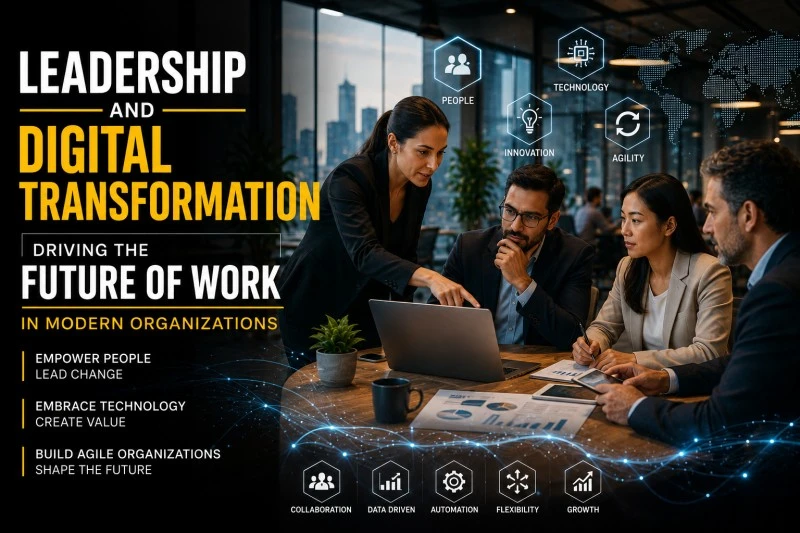
The workplace is evolving at an unprecedented pace. Artificial intelligence, automation, hybrid work models, and rapidly changing employee expectations are redefining how organizations operate and compete. As businesses embrace new technologies, Leadership, Digital Transformation & the Future of Work have become central to long-term success.
Digital transformation is no longer simply about adopting new technology. It is about reshaping business models, improving customer experiences, empowering employees, and creating organizations that can adapt to constant change. Companies that invest in innovation while developing strong leadership capabilities are better positioned to navigate disruption and achieve sustainable growth.
Today’s executives face a unique challenge. They must lead organizations through technological change while maintaining employee engagement, encouraging innovation, and building resilient workplace cultures. This requires a new leadership mindset that combines strategic vision with adaptability, collaboration, and continuous learning.
As industries continue to transform, organizations that embrace the future of work will gain a significant competitive advantage over those that resist change.
Why Leadership Is Changing Faster Than Ever
Modern leadership is no longer defined solely by authority or experience. Today’s business environment requires leaders who can inspire teams, embrace innovation, and make informed decisions in an increasingly complex digital economy.
Business leaders are managing challenges that were almost unimaginable a decade ago. Artificial intelligence is changing workflows, remote collaboration has become standard practice, cybersecurity risks continue to grow, and employees expect greater flexibility and purpose in their careers.
Successful leaders understand that transformation begins with people, not technology. While digital tools improve efficiency, it is leadership that determines whether organizations successfully adapt to change.
Modern executives are expected to:
- Create a clear strategic vision.
- Build high-performing teams.
- Encourage innovation.
- Make data-driven decisions.
- Develop future-ready talent.
- Lead with transparency and trust.
Organizations that invest in leadership development consistently outperform those that rely solely on technological investments.
Digital Transformation Is Reshaping Every Industry
Digital transformation has evolved from a competitive advantage into a business necessity. Companies across finance, healthcare, manufacturing, retail, education, and technology are redesigning their operations to improve efficiency, customer experience, and long-term resilience.
Rather than implementing technology for its own sake, successful organizations align digital initiatives with broader business objectives. This includes modernizing legacy systems, automating repetitive processes, improving data analytics, strengthening cybersecurity, and adopting cloud-based infrastructure.
Some of the most significant drivers of business transformation include:
- Artificial Intelligence (AI)
- Cloud Computing
- Automation
- Big Data Analytics
- Internet of Things (IoT)
- Cybersecurity
- Machine Learning
- Digital Collaboration Platforms
Organizations that effectively integrate these technologies are improving productivity while creating more agile and customer-focused business models.
However, technology alone does not guarantee success. Digital transformation requires cultural change, executive commitment, and employees who are prepared to learn new skills as business needs evolve.
The Future of Work Is Being Defined by Skills
The future of work is shifting the focus from job titles to capabilities. As automation transforms routine tasks, organizations increasingly value employees who possess creativity, critical thinking, communication, adaptability, and digital expertise.
Developing the right employee skills has become a strategic priority for organizations seeking long-term competitiveness. Continuous learning, professional development, and upskilling programs are helping businesses prepare their workforce for emerging technologies and changing market demands.
Key skills shaping the modern workplace include:
- Digital Literacy
- AI Collaboration
- Data Analysis
- Critical Thinking
- Problem Solving
- Emotional Intelligence
- Leadership
- Communication
- Adaptability
- Strategic Decision-Making
Rather than replacing employees, technology is redefining how people work. Businesses that invest in workforce development today will be better prepared for tomorrow’s opportunities and challenges.
Workplace Trends Are Redefining Business Success
The latest workplace trends demonstrate that flexibility, innovation, and employee experience are becoming major drivers of organizational performance.
Hybrid work environments, digital collaboration tools, and AI-powered productivity solutions are enabling teams to work more efficiently regardless of location. At the same time, employees increasingly expect organizations to prioritize well-being, diversity, inclusion, and career development.
Forward-thinking businesses are responding by creating workplaces that encourage collaboration, continuous learning, and innovation rather than relying on traditional management structures.
For executives, adapting to these workplace trends is not simply about attracting talent—it is about building resilient organizations capable of thriving in an increasingly digital economy.
Business Transformation Requires More Than Technology
Many organizations associate business transformation with implementing new software or upgrading digital infrastructure. While technology is an essential component, successful transformation is ultimately driven by leadership, culture, and people.
Organizations that consistently outperform competitors treat transformation as an ongoing business strategy rather than a one-time project. They continuously evaluate market trends, invest in innovation, and empower employees to embrace change.
Successful business transformation typically focuses on five key areas:
Customer Experience
Today’s customers expect personalized, seamless, and digital-first experiences. Organizations are using artificial intelligence, data analytics, and automation to better understand customer behavior and deliver more relevant products and services.
Businesses that place customers at the center of every decision build stronger relationships, improve retention, and strengthen long-term brand loyalty.
Operational Excellence
Digital transformation enables organizations to simplify workflows, reduce manual processes, and improve overall efficiency.
Automation, cloud computing, and intelligent software solutions allow businesses to optimize operations while enabling employees to focus on higher-value work that requires creativity and strategic thinking.
Innovation Culture
Innovation cannot thrive without the right organizational culture.
Companies that encourage experimentation, collaboration, and continuous learning are more likely to identify new opportunities and respond quickly to market disruption.
Leaders who empower employees to share ideas and challenge traditional thinking create organizations that remain competitive even during periods of rapid change.
Data-Driven Decision Making
Modern organizations generate enormous amounts of business data. Leaders who use analytics effectively can identify trends, measure performance, predict customer needs, and make better strategic decisions.
Rather than relying solely on intuition, today’s executives increasingly combine experience with real-time business intelligence.
Workforce Development
Technology continues to evolve, but business success still depends on people.
Organizations investing in employee development, leadership training, digital skills, and continuous learning create stronger, more adaptable teams capable of supporting long-term transformation.
Executive Leadership in the Digital Age
The role of executive leadership has changed dramatically over the past decade.
Executives are no longer responsible only for financial performance. They must also lead digital innovation, strengthen organizational culture, manage technological change, and prepare the workforce for the future.
Modern executive leaders are expected to:
- Develop a long-term digital vision.
- Inspire innovation across teams.
- Encourage collaboration and transparency.
- Build resilient organizations.
- Invest in employee development.
- Make data-driven decisions.
- Balance technology with human leadership.
Organizations with strong executive leadership are often better positioned to navigate economic uncertainty, technological disruption, and changing customer expectations.
Leadership today is less about controlling processes and more about empowering people to succeed.
The Workforce Is Rapidly Evolving
The modern workforce looks very different from just a few years ago.
Hybrid work, remote collaboration, flexible schedules, and digital workplaces have fundamentally changed how organizations attract and retain talent.
Employees increasingly value:
- Career growth opportunities
- Flexible working arrangements
- Purpose-driven leadership
- Mental well-being
- Diversity and inclusion
- Continuous learning
- Modern workplace technology
Organizations that understand these changing expectations are better equipped to build engaged, productive, and loyal teams.
Businesses are also placing greater emphasis on workforce planning, ensuring employees develop the technical and leadership capabilities required for future roles.
Preparing the workforce for tomorrow is becoming just as important as achieving today’s business goals.
Emerging Workplace Trends Shaping the Future
Several workplace trends are expected to influence organizations over the coming years.
Artificial Intelligence at Work
AI is helping employees automate repetitive tasks, analyze large datasets, improve customer service, and enhance decision-making. Rather than replacing workers, AI is increasingly becoming a collaborative workplace tool.
Hybrid Work Models
Flexible working arrangements continue to reshape organizational structures. Businesses are redesigning offices to encourage collaboration while allowing employees greater flexibility in where and how they work.
Skills-Based Hiring
Organizations are placing greater emphasis on practical skills rather than traditional qualifications alone. Employers increasingly value adaptability, digital literacy, communication, and problem-solving abilities.
Employee Well-Being
Well-being has become a strategic business priority. Companies investing in employee health, work-life balance, and supportive workplace cultures often experience higher engagement and stronger retention rates.
Continuous Learning
As technology evolves rapidly, lifelong learning is becoming essential. Businesses are expanding internal training programs, online learning platforms, and leadership development initiatives to help employees remain competitive.
Why Organizations Must Embrace Continuous Transformation
Digital disruption is no longer an occasional challenge—it has become a constant business reality.
Organizations that treat transformation as a continuous process are better positioned to adapt to market shifts, technological advancements, and changing customer expectations.
Successful companies recognize that transformation involves more than adopting new technologies. It requires visionary leadership, an agile workforce, ongoing innovation, and a commitment to developing future-ready skills.
Businesses that continuously evolve are more resilient, more competitive, and better prepared to seize emerging opportunities.
Preparing Leaders for the Future of Work
The future of work will not be defined by technology alone. It will be shaped by leaders who can inspire people, embrace innovation, and build organizations that adapt quickly to change. As businesses continue their digital transformation journeys, leadership will become the most important factor separating organizations that thrive from those that struggle.
Future-ready leaders understand that transformation is an ongoing process rather than a one-time initiative. They invest in people, encourage collaboration, and create environments where employees feel empowered to learn, innovate, and contribute new ideas.
Several leadership qualities will become increasingly valuable in the coming years:
- Strategic thinking
- Emotional intelligence
- Digital literacy
- Change management
- Adaptability
- Effective communication
- Data-driven decision-making
- Continuous learning
These qualities enable leaders to navigate uncertainty while building resilient organizations capable of long-term success.
Employee Skills That Will Define the Next Decade
Technology is changing jobs faster than ever before, making continuous learning essential for every professional. While technical expertise remains important, organizations are increasingly looking for individuals who combine digital capabilities with strong interpersonal skills.
The most in-demand employee skills for the future include:
Digital Skills
Employees are expected to understand cloud platforms, artificial intelligence, automation tools, cybersecurity awareness, and data analytics. Digital literacy is becoming a core requirement across almost every industry.
Critical Thinking
As AI automates repetitive tasks, human decision-making becomes even more valuable. Professionals who can evaluate complex situations and solve business problems creatively will remain highly sought after.
Communication and Collaboration
Modern workplaces rely on cross-functional teams, hybrid work environments, and global collaboration. Strong communication skills help employees work effectively regardless of location.
Leadership and Emotional Intelligence
Leadership is no longer limited to senior executives. Organizations increasingly value employees who demonstrate accountability, empathy, initiative, and the ability to motivate others.
Adaptability
The ability to embrace change, learn new technologies, and quickly adjust to evolving business priorities has become one of the most important workplace skills.
Businesses that invest in developing these capabilities will build stronger, more resilient teams prepared for the future of work.
Key Takeaways
The relationship between leadership, digital transformation, and the future of work is becoming increasingly interconnected. Organizations that successfully combine innovation with people-focused leadership will be better positioned to compete in an evolving global economy.
Some of the most important insights include:
- Digital transformation is about business strategy as much as technology.
- Strong leadership is essential for successful organizational change.
- Continuous learning is becoming a competitive advantage.
- Employee skills will determine future business success.
- Workplace trends are reshaping how organizations attract and retain talent.
- Executive leadership must balance innovation with organizational culture.
- Workforce development should remain a long-term strategic priority.
Companies that recognize these trends early can build stronger organizations while preparing employees for the opportunities of tomorrow.
Conclusion
The future belongs to organizations that embrace change with confidence. Leadership, Digital Transformation & the Future of Work are no longer separate business priorities—they have become the foundation of sustainable growth and long-term competitiveness.
Technology will continue to transform industries, but people will remain at the center of every successful organization. Businesses that invest in leadership development, digital capabilities, employee skills, and continuous innovation will be better equipped to navigate uncertainty and seize new opportunities.
For executives, the challenge is no longer whether transformation should happen, but how quickly organizations can adapt while maintaining a strong culture, engaged workforce, and clear strategic direction. The most successful companies will be those that view transformation as a continuous journey, empowering leaders and employees to innovate together.
As workplace expectations continue to evolve, organizations that combine visionary leadership with digital innovation will define the next generation of business success.