
The Fed’s October Decision: What CFOs Must Prepare for Beyond the Rate Announcement

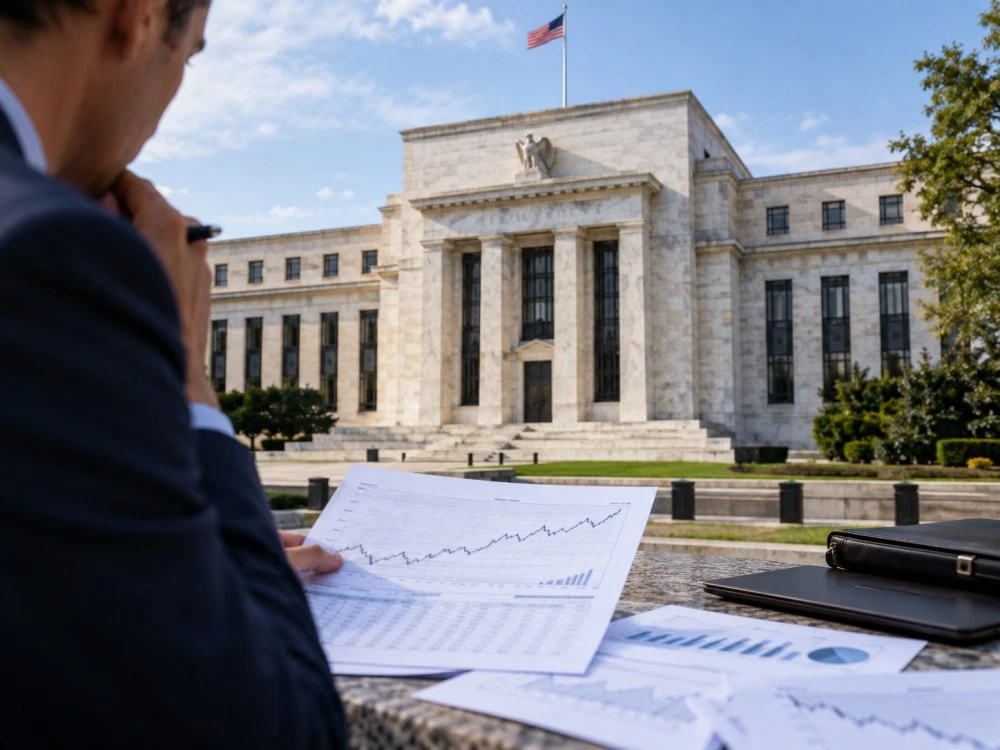
The Federal Reserve’s October 27–28, 2026, meeting will shape expectations for U.S. financing conditions, but the decision alone will not determine what businesses pay to borrow. Treasury yields, corporate credit spreads and lender underwriting can keep financing expensive even if policymakers hold rates steady. CFOs should prepare for three distinct monetary-policy scenarios and establish measurable triggers for refinancing, liquidity management and capital investment before the announcement.
Boardroom Briefing (Key Takeaways)
- Federal Reserve policy influences short-term financing conditions, while longer-term Treasury yields also reflect inflation expectations, government borrowing and investor demand.
- Corporate refinancing exposure depends on debt maturities, fixed-versus-floating-rate composition, credit quality, hedging arrangements and access to committed financing.
- Treasury yields can remain elevated during a policy pause, limiting the borrowing-cost relief businesses might otherwise anticipate.
- Capital allocation should be stress-tested against a rate hold, another increase and a prolonged restrictive-rate environment.
- M&A and startup funding become more sensitive to financing costs, valuation assumptions, cash generation and investment return thresholds when capital becomes more expensive.
- AI infrastructure investment requires financing assumptions that account for construction costs, power requirements, long payback periods and uncertain future cash flows.
- CFO preparedness depends on quantified repricing exposure, adequate liquidity, covenant headroom and predefined management actions—not a single forecast of the Fed’s next move.
The October Fed Decision Is Only One Part of the Cost-of-Capital Equation
The Federal Reserve’s October decision will influence short-term financing conditions, but corporate borrowing costs also depend on Treasury yields, credit spreads and borrower-specific risk.
The Federal Open Market Committee (FOMC) is scheduled to meet on October 27–28, 2026, according to the Federal Reserve’s official meeting calendar. Its decision will reflect policymakers’ assessment of inflation, employment and economic conditions. A hold, an increase and a change in forward guidance can produce different market reactions, depending on what investors have already priced in.
The latest available data must be distinguished from forecasts. The Bureau of Labor Statistics reported that the Consumer Price Index rose 3.4% over the 12 months through August 2026, while core CPI increased 2.4%. Its CPI release page scheduled the September report for October 14 at 8:30 a.m. Eastern Time. The September figures should be inserted only after the official release has been checked.
Long-term yields present a separate financing risk. In an October 13 Reuters report, Federal Reserve Governor Christopher Waller attributed higher Treasury yields to factors including economic growth, government borrowing and investment demand. He also argued that inflation expectations remained well anchored. His assessment reinforces the distinction between the Fed’s short-term policy instrument and the forces influencing long-term borrowing costs. (Reuters, October 13, 2026)
CFOs should monitor five indicators:
| Indicator | What it measures | Why it matters to CFOs |
|---|---|---|
| Federal funds target range | The Fed’s short-term policy target | Helps frame short-term rate expectations |
| Two-year Treasury yield | Market pricing of shorter-term government borrowing and expected policy | Informs short-duration financing analysis |
| Ten-year Treasury yield | Long-term government borrowing yield | Influences long-duration financing and valuation assumptions |
| Corporate credit spread | Additional yield demanded for corporate credit risk over a benchmark | Signals changes in credit pricing and risk appetite |
| Company borrowing rate | The actual rate offered to a specific borrower | Determines the financing cost faced by the business |
The executive implication: monetary policy and a company’s cost of capital are related, but they are not interchangeable. Finance teams need current market observations and company-specific loan terms, not a headline rate alone.
When Is the Fed’s October 2026 Rate Decision?
The Federal Open Market Committee’s October 2026 meeting is scheduled for October 27–28, according to the Federal Reserve’s official calendar. The decision and accompanying communications should be verified against the Fed’s official release when published.
Why a Fed Pause May Not Deliver the Borrowing-Cost Relief CFOs Expect
A Fed pause does not guarantee cheaper corporate financing because benchmark yields, credit spreads and lender-specific risk premiums can remain elevated.
The effect depends on how a company borrows. Floating-rate debt generally reprices as its reference rate changes, subject to contractual terms and hedges. Fixed-rate debt usually avoids an immediate change in coupon expense, but it can become more expensive to refinance at maturity.
Consider a company with $100 million in fully repricing debt. A 100-basis-point increase in its applicable borrowing rate would add approximately $1 million in annualized interest expense:
$100 million × 0.01 = $1 million.
This is an illustrative sensitivity, not a forecast. It excludes fees, taxes, hedges, amortization and timing effects. If only $40 million of the balance reprices, the equivalent annualized increase is $400,000.
Three exposures deserve separate treatment:
- Repricing risk: Floating-rate obligations become more expensive when their reference rates rise.
- Refinancing risk: Maturing debt must be replaced under the credit conditions available at that time.
- Credit-access risk: Lenders can tighten underwriting or widen spreads even when benchmark rates are unchanged.
These exposures affect more than interest expense. Higher financing costs can reduce free cash flow, weaken interest coverage and narrow covenant headroom. A business may also face higher collateral requirements or reduced borrowing capacity when seeking to renew a credit facility.
CFOs should review the debt maturity schedule alongside fixed-versus-floating-rate exposure, interest-rate swaps, committed credit lines and downside cash-flow forecasts. The 12-month stress test should establish whether operating cash flow can cover debt service, essential expenditure and working-capital needs under higher financing costs.
How Does a Fed Rate Decision Affect Corporate Borrowing Costs?
A Fed rate decision influences short-term funding conditions, but a company’s actual borrowing cost also depends on Treasury yields, credit spreads, lender underwriting, maturity and its own creditworthiness. The impact varies by financing instrument and company.
How Much Does a 1% Interest Rate Increase Cost a Company?
A 1-percentage-point increase on $100 million of fully repricing debt adds approximately $1 million in annualized interest expense before fees, taxes, hedges and amortization. The actual cost depends on how much debt reprices and when the change takes effect.
The Three-Scenario Framework Every CFO Should Run Before the Announcement
A CFO interest-rate stress test estimates how changes in benchmark rates, credit spreads and debt repricing affect interest expense, liquidity, refinancing and planned investment.
The objective is not to predict the Fed’s decision with certainty. It is to identify which financial conditions would change management’s decisions and prepare responses before those conditions arise.
Scenario A: The Fed Holds Rates Steady
A rate hold could reduce immediate uncertainty about short-term policy, but it would not guarantee lower bond yields or easier access to credit.
- Trigger: The Fed leaves its policy range unchanged.
- Financing exposure: Floating-rate debt, revolving credit facilities and near-term refinancing.
- Metrics: Benchmark yields, lending spreads, interest coverage and available liquidity.
- Management response: Maintain refinancing options, confirm lender commitments and proceed with investments only when their returns remain acceptable under conservative financing assumptions.
Scenario B: The Fed Raises Rates Again
Another increase would put additional pressure on floating-rate borrowers and could raise the financing hurdle for leveraged acquisitions.
- Trigger: The Fed increases its target range or signals a more restrictive policy path.
- Financing exposure: Unhedged floating-rate obligations, acquisition debt and projects with long payback periods.
- Metrics: Incremental interest expense, debt-service coverage, covenant headroom and forecast free cash flow.
- Management response: Recalculate debt costs, assess hedging or repayment options and reconsider projects whose returns fall below approved thresholds.
Scenario C: Rates Remain Restrictive Longer Than Expected
A prolonged period of restrictive financing conditions can strain corporate budgets without another immediate rate increase.
- Trigger: Borrowing costs and credit spreads remain above the company’s planning assumptions for a sustained period.
- Financing exposure: Debt maturing within 24 months, external fundraising and capital-intensive projects.
- Metrics: Refinancing coverage, liquidity runway, projected cash burn and weighted average cost of capital (WACC).
- Management response: Extend liquidity forecasts, begin refinancing discussions earlier and establish explicit limits for discretionary spending.
The scenarios should not be assigned unsupported probabilities. Management should instead document the assumptions, identify the financial metric that would activate each response, and assign an executive owner to the decision.
For example, a company could set a board-approved minimum liquidity threshold and require an investment review if forecast interest coverage falls below its internal limit. The thresholds must reflect the company’s debt agreements and risk tolerance rather than an industry-wide rule of thumb.
Will a Fed Rate Pause Automatically Lower Treasury Yields?
No. Treasury yields reflect expected future policy rates, inflation expectations, government borrowing, term premiums and investor demand for government debt. They can remain elevated or rise even when the Fed leaves its policy rate unchanged.
How Higher Financing Costs Change M&A, Startup Funding, and AI Investment Decisions
Higher financing costs can weaken debt-funded acquisition economics and capital-intensive project returns by increasing financing expense and raising the return required to justify investment.
For corporate development teams, acquisition models must reflect the cost of debt, expected cash generation, leverage and the price paid for future earnings. A transaction that clears its investment hurdle under one financing assumption may fail when borrowing costs rise.
Consider a hypothetical acquisition financed with $200 million of floating-rate debt. A 100-basis-point increase in the applicable borrowing rate would add $2 million in annualized interest expense if the full balance repriced. That additional expense would reduce cash available for debt repayment and could weaken the transaction’s debt-service coverage. This calculation illustrates sensitivity; it does not predict an actual transaction outcome.
Startup founders face a related challenge. Higher financing costs can increase investor selectivity and place greater emphasis on cash runway, revenue quality and the path to sustainable margins. But fundraising outcomes also depend on growth, sector demand, valuation and investor appetite. Interest rates alone cannot explain a startup’s funding prospects.
AI infrastructure requires another layer of scrutiny. Data centers demand substantial investment in buildings, computing equipment, networking and power. When financing costs and discount rates rise, the net present value of long-duration projects can fall, particularly when expected cash flows arrive years after initial expenditure.
Finance teams should distinguish between strategically essential investments and projects whose economics depend on unusually favorable financing. For every major proposal, compare expected returns with the updated WACC, test lower-revenue and higher-cost scenarios, and quantify the cost of delaying deployment.
How Could the Fed’s October Decision Affect M&A and Startup Funding?
Higher financing costs can reduce debt-funded acquisition capacity, raise investment return hurdles and pressure valuations. Startup funding outcomes also depend on growth expectations, cash runway, investor demand and company-specific risk—not monetary policy alone.
The Contrarian Thesis: An Unchanged Policy Rate Does Not Mean an Unchanged Cost of Capital
The corporate cost of capital is the effective cost a company incurs to finance operations and investments through debt, equity or a combination of both.
The federal funds rate influences short-term funding conditions, but it does not set every Treasury yield or corporate loan rate. Longer-term yields reflect expected future policy, inflation expectations, Treasury supply, term premiums and investor demand. Corporate borrowing costs also incorporate the borrower’s credit quality, collateral, maturity and financing structure.
Nominal and real yields must also be distinguished. A nominal yield is the stated interest rate; a real yield adjusts for inflation expectations or realized inflation, depending on the measure used. Real yields help investors assess inflation-adjusted returns, while nominal yields are directly relevant to many contractual borrowing costs.
Waller’s October 13 comments, reported by Reuters, provide a timely illustration of this distinction. He argued that robust economic growth, government borrowing and investment demand can contribute to higher long-term Treasury yields even when inflation expectations remain anchored. These are factors in the yield equation, not proof that any single factor explains every market movement. (Reuters)
The implications differ across companies. A highly rated borrower with strong collateral may secure more favorable terms than a leveraged business with volatile cash flows, even under the same monetary-policy regime. A company with fixed-rate debt may also be insulated from immediate repricing while remaining exposed to refinancing costs later.
The contrarian thesis is straightforward: a policy pause is not a corporate financing forecast. CFOs must model the rates their businesses can actually obtain, including credit spreads, fees, hedges and contractual repricing terms.
Why Can Corporate Borrowing Costs Stay High After a Fed Pause?
Corporate borrowing costs can remain high when longer-term Treasury yields, credit spreads or lender risk premiums remain elevated. A pause in the policy rate does not guarantee improved financing terms for every borrower.
The Strategic Playbook: Five Actions Finance Leaders Should Take Now
CFOs should establish a practical response plan before the October announcement, with each action tied to a measurable financial indicator.
1. Map the debt maturity wall. Identify all obligations maturing within the next 24 months. Record repricing dates, refinancing windows, covenant terms, collateral requirements and lender commitments.
2. Stress-test interest expense. Model 100-basis-point and 200-basis-point increases in applicable benchmark rates and credit spreads where appropriate. Separate fixed-rate, floating-rate, hedged and unhedged exposures to avoid overstating or understating the effect.
3. Protect liquidity. Review unrestricted cash, committed credit facilities, working-capital requirements and downside cash-flow forecasts. Confirm that available funding covers essential operations and contractual obligations if revenue weakens or refinancing is delayed.
4. Reassess investment hurdles. Recalculate project returns, acquisition financing and capital expenditure economics using current financing assumptions. Separate projects with strategic necessity from those that depend on optimistic revenue growth or unusually cheap borrowing.
5. Define decision triggers. Assign responsibility for refinancing, hedging, spending changes and liquidity preservation. Establish thresholds before the announcement, not after markets move.
CFO Decision Matrix
| Exposure | Indicator | Trigger | Management action |
|---|---|---|---|
| Floating-rate debt | Forecast annual interest expense | Expense exceeds the approved budget or risk tolerance | Review hedging and repayment alternatives |
| Upcoming maturities | Refinancing coverage and committed funding | Financing is not sufficiently secured before maturity | Start lender discussions earlier |
| Liquidity | Downside cash-flow forecast | Cash falls below the board-approved minimum | Preserve cash and review discretionary spending |
| Acquisition pipeline | Expected return versus financing-adjusted hurdle | Returns fall below the required threshold | Reprice, restructure, defer or reject the transaction |
| Capital expenditure | Forecast cash generation and project payback | Downside assumptions undermine project economics | Rephase spending or consider alternative financing |
The matrix should use company-approved thresholds. There is no universal liquidity ratio, debt-service coverage level or interest-coverage threshold appropriate for every business.
How Should CFOs Prepare for Another Interest Rate Increase?
CFOs should quantify repricing exposure, map debt maturities, stress-test interest expense and cash flow, review covenant headroom, and confirm available liquidity. They should also define measurable triggers for refinancing, hedging and discretionary spending.
Which Financial Metrics Should CFOs Monitor Before the Fed Meeting?
CFOs should monitor floating-rate debt exposure, upcoming maturities, interest coverage, debt-service coverage, unrestricted liquidity, covenant headroom and forecast free cash flow. These indicators connect market developments to the company’s actual ability to finance operations and investment.
The Enterprise Application: How a Hypothetical Mid-Market Company Can Prepare
A hypothetical mid-market company with $100 million in debt can translate the Fed’s three scenarios into measurable financing decisions without relying on a single forecast.
Assume the company has $60 million of fixed-rate debt and $40 million of floating-rate debt. If the entire floating-rate balance reprices after a 100-basis-point increase, the annualized interest expense rises by approximately $400,000.
[
$40\text{ million}\times 0.01=$400{,}000
]
A 200-basis-point increase would add approximately $800,000 annually under the same assumptions. These calculations exclude hedges, fees, taxes, amortization and the timing of repricing.
Now assume $25 million of total debt matures within 18 months. Management should compare refinancing before maturity with waiting for potentially more favorable conditions.
- Refinancing earlier may provide greater certainty over funding but could involve fees, call premiums or less attractive terms.
- Waiting may preserve flexibility but expose the company to higher benchmark yields, wider credit spreads or tighter lender requirements.
The acquisition pipeline requires the same discipline. Before approving a debt-funded transaction, finance leaders should recalculate interest expense, free cash flow, debt-service coverage and expected returns under all three scenarios.
The board should establish minimum liquidity and covenant buffers using actual financing agreements and downside cash-flow forecasts. These assumptions are illustrative, not industry averages or a representation of an actual company.
Executive Outlook: Manage the Financing Environment, Not Just the Fed Forecast
The Federal Reserve’s October decision is a policy signal, not a complete forecast of corporate financing conditions.
CFOs should focus on whether their businesses can continue servicing debt, funding essential operations and investing in strategic priorities if financing costs remain elevated. That requires monitoring market yields and credit conditions alongside company-specific debt obligations.
The immediate priorities are to quantify repricing exposure, identify refinancing deadlines, protect liquidity and define capital-allocation triggers. Finance teams should update their assumptions when new inflation data, Treasury yields, credit spreads and Fed communications change the outlook.
The executive mandate is simple: know what the balance sheet can absorb before committing capital to the next investment cycle.
Capsule Answers for Executive Search
When Is the Fed’s October 2026 Rate Decision?
The Federal Open Market Committee’s October 2026 meeting is scheduled for October 27–28, according to the Federal Reserve’s official calendar. The decision and accompanying communications should be verified against the Fed’s official release when published.
How Does a Fed Rate Decision Affect Corporate Borrowing Costs?
A Fed rate decision influences short-term funding conditions, but a company’s actual borrowing cost also depends on Treasury yields, credit spreads, lender underwriting, maturity and its own creditworthiness. The impact varies by financing instrument and company.
Will a Fed Rate Pause Automatically Lower Treasury Yields?
No. Treasury yields reflect expected future policy, inflation expectations, government borrowing, term premiums and demand for government debt. They can remain elevated or rise even when the Fed leaves its policy rate unchanged.
How Should CFOs Prepare for Another Interest Rate Increase?
CFOs should quantify repricing exposure, map debt maturities, stress-test interest expense and cash flow, review covenant headroom, and confirm available liquidity. They should also define measurable triggers for refinancing, hedging and discretionary spending.
How Much Does a 1% Interest Rate Increase Cost a Company?
A 1-percentage-point increase on $100 million of fully repricing debt adds approximately $1 million in annualized interest expense before fees, taxes, hedges and amortization. The actual cost depends on how much debt reprices and when the change takes effect.
How Could the Fed’s October Decision Affect M&A and Startup Funding?
Higher financing costs can reduce debt-funded acquisition capacity, raise investment return hurdles and pressure valuations. Startup funding outcomes also depend on growth expectations, cash runway, investor demand and company-specific risk—not monetary policy alone.
Why Can Corporate Borrowing Costs Stay High After a Fed Pause?
Corporate borrowing costs can remain high when longer-term Treasury yields, credit spreads or lender risk premiums remain elevated. A pause in the policy rate does not guarantee improved financing terms for every borrower.
Which Financial Metrics Should CFOs Monitor Before the Fed Meeting?
CFOs should monitor floating-rate debt exposure, upcoming maturities, interest coverage, debt-service coverage, unrestricted liquidity, covenant headroom and forecast free cash flow. These indicators connect market developments to the company’s actual ability to finance operations and investment.
Editorial Internal Linking Strategy
The following are recommended anchor placements. Link them only when the corresponding LeaderSpheres articles exist; do not create placeholder URLs.
| Exact anchor text | Target editorial topic | Placement |
|---|---|---|
| Federal Reserve monetary policy and interest rate decisions | Global Macroeconomics & Market Trends | Cost-of-capital section |
| Corporate treasury strategies for managing interest-rate risk | Business Operations & Financial Risk Management | Borrowing-cost section |
| CFO liquidity management and cash-flow forecasting | Executive Leadership Strategy & Organizational Management | Strategic Playbook |
| How interest rates influence mergers and acquisitions | M&A & Corporate Development | M&A and investment section |
| Venture capital valuations and startup fundraising conditions | Startup Funding & Venture Capital | Startup funding analysis |
| Calculating weighted average cost of capital for investment decisions | Enterprise Finance & Capital Allocation | Investment hurdle discussion |
| AI infrastructure investment and data-center capital expenditure | Enterprise Technology & AI Implementation | AI investment analysis |
| Corporate debt refinancing and credit-risk management | Business Operations & Enterprise Risk | Strategic Playbook |