
Deutsche Bahn Strategy 2026: Driving Europe’s Rail Future

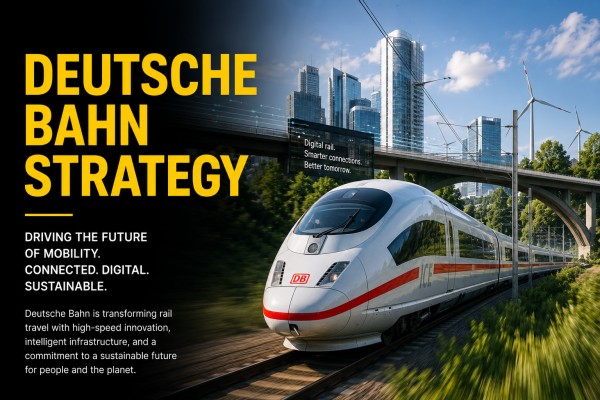
As governments and businesses accelerate investments in sustainable infrastructure, rail transportation has emerged as a cornerstone of Europe’s economic and environmental strategy. At the heart of this transformation is Deutsche Bahn (DB), Germany’s national railway operator and one of Europe’s largest transportation and logistics companies.
The Deutsche Bahn Strategy is focused on modernizing railway infrastructure, expanding digital capabilities, improving customer experience, and supporting Europe’s transition toward low-carbon mobility. With growing demand for efficient passenger services and resilient freight networks, the company is investing heavily in technology, network upgrades, and operational efficiency.
Beyond moving millions of passengers each day, Deutsche Bahn plays a critical role in connecting European economies, strengthening supply chains, and supporting climate goals. Its transformation offers valuable lessons for business leaders on large-scale modernization, digital innovation, and long-term strategic planning.
For executives, investors, policymakers, and infrastructure leaders, understanding the Deutsche Bahn Strategy provides insights into how transportation organizations can adapt to changing customer expectations, technological disruption, and sustainability priorities.
Why Rail Transport Is Becoming More Important
Across Europe, rail transport is gaining renewed importance as countries seek cleaner, more efficient, and more resilient mobility solutions.
Several trends are driving this shift:
- Growing investment in sustainable infrastructure.
- Rising demand for environmentally friendly travel.
- Expansion of cross-border rail networks.
- Digital transformation of transportation systems.
- Increased focus on logistics resilience.
- Government support for low-carbon mobility.
Railways produce significantly lower carbon emissions than many other forms of transport, making them an essential component of Europe’s climate strategy.
As a result, Deutsche Bahn is not only expanding its services but also modernizing its operations to meet future transportation needs.
The Core Pillars of the Deutsche Bahn Strategy
The Deutsche Bahn Strategy is built around four major priorities:
Digital Transformation
The company is deploying digital technologies to improve train operations, passenger information systems, predictive maintenance, and network management.
Infrastructure Modernization
Large-scale investments are being made to upgrade tracks, stations, signaling systems, and rail corridors to improve reliability and capacity.
Sustainability
Deutsche Bahn continues to reduce emissions, improve energy efficiency, and increase the use of renewable electricity in railway operations.
Customer Experience
The company is enhancing ticketing systems, mobile applications, real-time travel information, and service quality to improve the overall passenger experience.
Together, these initiatives position Deutsche Bahn as a leading example of how traditional infrastructure organizations can evolve through innovation and long-term strategic investment.
Digital Transformation Is Modernizing Europe’s Rail Network
A defining feature of the Deutsche Bahn Strategy is its commitment to digital transformation. As passenger expectations evolve and transportation networks become more complex, digital technologies are helping rail operators improve efficiency, reliability, and safety.
Deutsche Bahn is investing in technologies that support:
- Real-time train monitoring
- Predictive maintenance
- AI-powered scheduling
- Digital signaling systems
- Smart ticketing platforms
- Passenger information services
- Network optimization
These innovations reduce operational disruptions, improve punctuality, and enhance the overall travel experience.
For business leaders, Deutsche Bahn demonstrates how digital transformation can modernize even the most traditional infrastructure industries.
Artificial Intelligence Is Improving Railway Operations
Artificial intelligence is becoming an essential tool for managing large transportation networks.
Across its operations, Deutsche Bahn is adopting AI and advanced analytics to improve decision-making and operational performance.
AI applications include:
- Predicting equipment failures before they occur
- Optimizing train schedules
- Managing passenger demand
- Improving freight logistics
- Monitoring infrastructure conditions
- Enhancing operational safety
By analyzing vast amounts of operational data, AI enables faster responses to disruptions while improving the efficiency of railway services.
As Europe’s rail networks continue expanding, AI will play an increasingly important role in supporting smarter and more resilient transportation systems.
Sustainability Is Central to the Deutsche Bahn Strategy
Climate change has become a major driver of transportation policy across Europe.
Rail transport is widely recognized as one of the most environmentally friendly forms of mass transportation because it produces significantly lower greenhouse gas emissions than road or air travel.
The Deutsche Bahn Strategy places sustainability at the center of long-term growth through initiatives such as:
- Increasing the use of renewable electricity
- Improving energy efficiency across operations
- Expanding electrified rail routes
- Modernizing rolling stock
- Reducing carbon emissions
- Supporting Europe’s climate objectives
These investments align with the European Union’s broader goal of promoting sustainable mobility while reducing dependence on fossil fuels.
For organizations pursuing environmental, social, and governance (ESG) objectives, Deutsche Bahn provides a strong example of integrating sustainability into corporate strategy.
Freight Logistics Is Becoming More Strategic
Passenger transportation is only one part of Deutsche Bahn’s business.
The company also operates one of Europe’s largest rail freight networks, supporting manufacturers, retailers, exporters, and global supply chains.
Modern freight operations focus on:
- Faster cross-border transportation
- Digital cargo tracking
- Supply chain visibility
- Intermodal logistics
- Operational efficiency
- Lower transportation emissions
As businesses seek more sustainable logistics solutions, rail freight continues gaining importance as an alternative to long-distance road transport.
This creates new opportunities for Deutsche Bahn to strengthen its position in Europe’s logistics market.
Competing in a Changing Transportation Landscape
The transportation industry has become increasingly competitive.
Deutsche Bahn competes not only with other railway operators but also with airlines, buses, ride-sharing platforms, and private vehicles.
To remain competitive, the company focuses on:
- Improving punctuality
- Enhancing customer experience
- Investing in digital services
- Expanding international connections
- Offering seamless multimodal transportation
- Increasing operational reliability
Rather than competing solely on price, Deutsche Bahn aims to differentiate itself through service quality, sustainability, and technological innovation.
Leadership Lessons from Deutsche Bahn
The Deutsche Bahn Strategy provides valuable insights for executives across industries.
Modernize Legacy Systems
Long-established organizations can remain competitive by embracing digital transformation without abandoning their core strengths.
Invest for the Long Term
Large infrastructure projects require patience, strategic planning, and continuous investment.
Deutsche Bahn’s modernization efforts demonstrate the importance of balancing short-term operational improvements with long-term strategic objectives.
Put Customers at the Center
Technology investments are most effective when they improve customer experiences.
By focusing on reliability, convenience, and digital services, Deutsche Bahn aims to strengthen passenger satisfaction and long-term loyalty.
Build Sustainable Competitive Advantage
Environmental responsibility is no longer simply a regulatory requirement—it has become a strategic differentiator.
Organizations that integrate sustainability into their business models are increasingly better positioned for long-term growth.
For today’s business leaders, Deutsche Bahn illustrates how innovation, resilience, and sustainability can work together to create lasting competitive advantage.
Future Outlook: What’s Next for Deutsche Bahn?
The Deutsche Bahn Strategy is entering a new phase as Europe accelerates investments in sustainable infrastructure, digital mobility, and intelligent transportation systems. Rising urbanization, climate commitments, and growing passenger expectations are reshaping the railway industry, making innovation more important than ever.
Over the next decade, Deutsche Bahn is expected to continue modernizing its rail network, expanding digital services, and investing in technologies that improve operational efficiency and customer experience. These initiatives will help strengthen rail transport as a key pillar of Europe’s economic growth and sustainability agenda.
As governments prioritize green mobility and infrastructure development, Deutsche Bahn is well positioned to play a leading role in the future of European transportation.
Emerging Trends Shaping the Future of Rail Transport
Several trends are expected to influence the long-term direction of the Deutsche Bahn Strategy.
Smart Rail Networks
Advanced sensors, Internet of Things (IoT) devices, and real-time monitoring systems are making railway networks more connected and efficient.
Smart infrastructure enables operators to detect maintenance issues early, reduce delays, and improve service reliability.
AI-Driven Mobility
Artificial intelligence will increasingly optimize scheduling, passenger flow management, infrastructure maintenance, and freight logistics.
AI-powered decision-making will help railway operators improve efficiency while reducing operational costs.
Sustainable Transportation
Governments across Europe continue promoting rail travel as a cleaner alternative to road and air transportation.
Greater investment in electrification, renewable energy, and low-carbon infrastructure will further strengthen rail’s role in achieving climate goals.
Integrated Mobility Services
The future of transportation lies in seamless connectivity.
Passengers increasingly expect integrated travel experiences where trains, buses, metro systems, ride-sharing services, and digital ticketing platforms work together through a single application.
Deutsche Bahn is expected to continue expanding digital mobility solutions that simplify end-to-end travel.
What Business Leaders Can Learn from Deutsche Bahn
The Deutsche Bahn Strategy offers valuable lessons that extend beyond the transportation industry.
Embrace Continuous Transformation
Successful organizations continuously modernize operations rather than waiting for disruption to force change.
Invest in Digital Infrastructure
Technology investments create long-term competitive advantages by improving operational efficiency, customer satisfaction, and business resilience.
Sustainability Drives Business Value
Environmental responsibility has become a strategic business priority.
Organizations that integrate sustainability into core operations are better positioned to meet regulatory requirements, attract investors, and strengthen brand reputation.
Build Resilient Operations
Reliable infrastructure, strong risk management, and operational flexibility help organizations navigate economic uncertainty and unexpected disruptions.
These principles are increasingly relevant across manufacturing, logistics, finance, healthcare, and technology sectors.
Key Takeaways
The Deutsche Bahn Strategy demonstrates how innovation, sustainability, and long-term planning can transform a century-old transportation organization into a leader in modern mobility.
- Digital transformation is improving railway efficiency and customer experience.
- Artificial intelligence is optimizing operations and predictive maintenance.
- Sustainability remains central to long-term transportation strategy.
- Rail freight is becoming increasingly important for resilient supply chains.
- Smart infrastructure is shaping the future of European mobility.
- Long-term investment and strategic leadership remain essential for organizational success.
These insights provide valuable guidance for executives, entrepreneurs, and policymakers navigating digital transformation and infrastructure modernization.
Conclusion
The Deutsche Bahn Strategy is more than a railway modernization initiative—it represents a blueprint for building resilient, technology-driven, and sustainable infrastructure in the 21st century.
By combining digital innovation, artificial intelligence, environmental responsibility, and customer-focused services, Deutsche Bahn is redefining the future of rail transportation across Europe.
For business leaders, the company’s transformation demonstrates that lasting success is achieved through continuous innovation, disciplined investment, and a clear long-term vision. As industries worldwide embrace digital transformation and sustainability, the strategic principles behind Deutsche Bahn’s evolution offer lessons that extend far beyond the railway sector.
The organizations that lead the future will not simply invest in technology—they will integrate innovation, sustainability, and customer value into every aspect of their business strategy.