
Cybersecurity: Why Enterprise Security Is the New Business Imperative

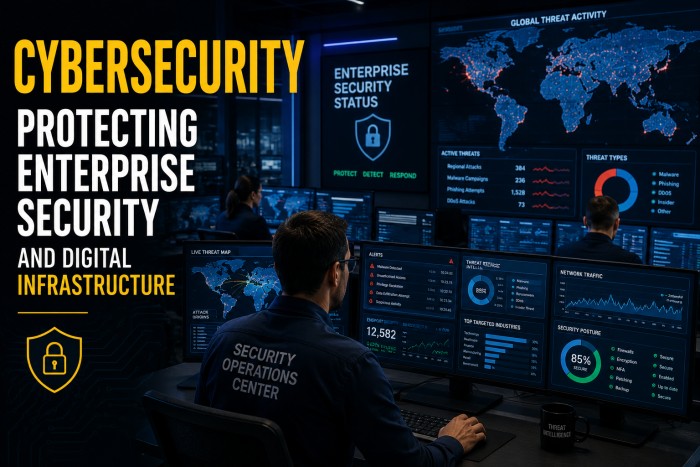
Cybersecurity has evolved far beyond an IT function. In today’s interconnected digital economy, it has become a core business priority influencing operational resilience, customer trust, regulatory compliance, and corporate reputation. As organizations accelerate cloud adoption, artificial intelligence, remote work, and digital transformation, the threat landscape continues to expand in both scale and sophistication.
Cybercriminals are no longer targeting only large multinational corporations. Businesses of every size now face increasing risks from ransomware, phishing campaigns, supply chain attacks, identity theft, insider threats, and cloud vulnerabilities. The financial and reputational consequences of a successful cyber attack can extend well beyond immediate recovery costs, affecting customer confidence and long-term business growth.
For CEOs, boards of directors, investors, and technology leaders, Cybersecurity is no longer simply about protecting systems—it is about protecting the future of the business itself.
Why Cybersecurity Matters More Than Ever
The digital economy depends on secure data, trusted infrastructure, and resilient technology systems.
Organizations now generate enormous volumes of digital information through cloud platforms, connected devices, customer applications, financial systems, and AI-powered services. As digital ecosystems become more complex, protecting sensitive information has become increasingly challenging.
Modern Cybersecurity strategies are designed to secure:
- Customer information
- Financial transactions
- Cloud infrastructure
- Business applications
- Intellectual property
- Supply chain systems
- Employee identities
- Critical operational technology
Failure to secure these assets can result in financial losses, legal consequences, operational disruption, and significant reputational damage.
Cybersecurity has therefore become an essential pillar of enterprise risk management rather than a standalone technology initiative.
The Modern Cyber Threat Landscape
Today’s cyber threats are more sophisticated than ever before.
Attackers increasingly use automation, artificial intelligence, social engineering, and advanced malware to exploit vulnerabilities across digital environments.
Some of the most significant threats facing organizations include:
Ransomware
Ransomware continues to be one of the most disruptive forms of cybercrime. Criminal groups encrypt business data and demand payment for its release, often causing significant operational downtime.
Phishing and Social Engineering
Cybercriminals increasingly target employees through deceptive emails, text messages, and fake websites designed to steal credentials or install malicious software.
Cloud Security Risks
As organizations migrate workloads to cloud platforms, protecting cloud infrastructure, identities, and application configurations has become a critical business priority.
Supply Chain Attacks
Rather than attacking a company directly, threat actors increasingly target trusted software vendors, service providers, or technology partners to gain broader access.
Insider Threats
Not all cyber incidents originate externally. Accidental errors, compromised accounts, or malicious insiders can expose sensitive business information.
These evolving threats demonstrate why Cybersecurity requires continuous monitoring rather than one-time protection.
Cybersecurity Is Becoming a Business Strategy
One of the most significant changes in recent years is the growing recognition that Cybersecurity directly supports business performance.
Organizations with strong security programs often experience:
- Greater customer trust.
- Improved regulatory compliance.
- Faster digital transformation.
- Reduced operational disruption.
- Better investor confidence.
- Stronger business resilience.
As digital services become increasingly central to customer experiences, security is evolving into a competitive advantage rather than simply a compliance requirement.
Many organizations now integrate cybersecurity planning into broader corporate strategy, ensuring security considerations are included in product development, cloud migration, mergers and acquisitions, and innovation initiatives.
Data Privacy and Information Security
Protecting personal and corporate information has become one of the defining challenges of the digital economy.
Governments worldwide continue strengthening privacy regulations, requiring organizations to improve how they collect, store, process, and protect sensitive information.
Effective Cybersecurity therefore extends beyond preventing attacks.
It also includes:
- Data governance.
- Privacy protection.
- Identity and access management.
- Information classification.
- Secure data storage.
- Regulatory compliance.
- Incident response planning.
Organizations that successfully balance innovation with responsible data management are increasingly viewed as trusted digital partners by customers, regulators, and investors alike.
Why Business Leaders Should Care
The evolution of Cybersecurity represents one of the most important leadership challenges facing modern organizations.
Boards and executive teams can no longer delegate cyber risk solely to IT departments. Every major business decision—from adopting AI and cloud services to expanding internationally—now carries cybersecurity implications.
Forward-thinking organizations are investing in security not simply to prevent attacks but to strengthen resilience, protect customer relationships, and enable sustainable digital growth.
For today’s executives, Cybersecurity is becoming just as important as finance, operations, and corporate governance in shaping long-term business success.
Market Analysis: Why Cybersecurity Is Becoming a Boardroom Priority
The rapid evolution of Cybersecurity reflects a much broader shift in how organizations view digital risk. What was once considered a technical issue has become a strategic business concern affecting financial performance, regulatory compliance, customer trust, and corporate reputation.
Digital transformation has fundamentally changed enterprise operations. Cloud computing, artificial intelligence, hybrid work environments, Internet of Things (IoT) devices, and connected supply chains have expanded the number of digital assets organizations must protect.
Every new technology creates business opportunities—but it can also introduce new security vulnerabilities if not managed properly.
As a result, boards of directors are increasingly treating Cybersecurity as an enterprise-wide governance issue rather than simply an IT responsibility.
Organizations that invest in proactive security programs are generally better positioned to minimize operational disruption, reduce financial exposure, and maintain stakeholder confidence during periods of uncertainty.
Cloud Security Is Redefining Enterprise Protection
Cloud adoption has become one of the defining trends in modern business.
Organizations are moving applications, databases, customer platforms, and mission-critical workloads into cloud environments to improve scalability, flexibility, and operational efficiency.
However, cloud transformation also introduces new security challenges.
Effective cloud security requires organizations to protect:
- Cloud infrastructure
- User identities
- Business applications
- Customer data
- Application programming interfaces (APIs)
- Multi-cloud environments
- Third-party integrations
Modern security strategies increasingly rely on Zero Trust principles, which assume that no device, user, or application should automatically receive trusted access.
Continuous authentication, identity verification, encryption, and real-time monitoring have become essential components of enterprise cloud protection.
As cloud adoption accelerates worldwide, Cybersecurity is becoming inseparable from digital transformation strategy.
Artificial Intelligence Is Changing Cybersecurity
Artificial intelligence is transforming both cyber defense and cybercrime.
Security teams increasingly use AI to detect unusual network behavior, identify emerging threats, automate incident response, and analyze enormous volumes of security data in real time.
AI-powered security platforms can:
- Detect suspicious activity faster.
- Identify unknown malware patterns.
- Prioritize critical vulnerabilities.
- Reduce false security alerts.
- Improve threat intelligence.
- Strengthen fraud detection.
However, cybercriminals are also adopting AI.
Attackers now use artificial intelligence to generate convincing phishing emails, automate reconnaissance, improve social engineering campaigns, and develop increasingly sophisticated malware.
This growing technological competition means organizations must continuously modernize their Cybersecurity capabilities to stay ahead of evolving threats.
Cyber Resilience Is Replacing Traditional Security Thinking
Modern organizations recognize that preventing every cyber incident is unrealistic.
Instead, many are shifting toward cyber resilience—the ability to continue operating before, during, and after a cyber attack.
Cyber resilience combines prevention with rapid detection, effective response, and business recovery.
Key elements include:
- Incident response planning.
- Business continuity strategies.
- Disaster recovery systems.
- Secure data backups.
- Continuous threat monitoring.
- Executive crisis management.
- Regular security testing.
Organizations that recover quickly from security incidents often experience significantly lower financial and reputational damage than those relying solely on preventive controls.
For business leaders, cyber resilience has become an essential component of enterprise risk management.
Security Awareness Is the First Line of Defense
Technology alone cannot eliminate cyber risk.
Employees continue to play one of the most important roles in protecting organizational information.
Many successful cyber attacks begin with human error, including:
- Clicking malicious links.
- Weak passwords.
- Sharing confidential information.
- Falling victim to phishing emails.
- Using unsecured personal devices.
For this reason, cybersecurity training and security awareness programs have become strategic investments rather than compliance exercises.
Leading organizations regularly educate employees on:
- Phishing recognition.
- Password management.
- Multi-factor authentication.
- Secure remote working.
- Data handling policies.
- Privacy responsibilities.
- Incident reporting procedures.
Creating a security-conscious workplace significantly reduces organizational risk while strengthening overall digital resilience.
Leadership Lessons from Cybersecurity
The evolution of Cybersecurity offers valuable insights that extend beyond technology.
1. Security Enables Innovation
Organizations can adopt emerging technologies more confidently when security is integrated into business strategy from the beginning.
2. Trust Is a Competitive Advantage
Customers increasingly choose organizations that demonstrate responsible data protection and transparent privacy practices.
3. Risk Management Requires Continuous Improvement
Cyber threats evolve daily. Businesses must regularly assess vulnerabilities, modernize defenses, and adapt security strategies.
4. Leadership Drives Security Culture
Executive commitment influences how seriously cybersecurity is embedded across every department—not just within IT teams.
These principles demonstrate why Cybersecurity has become one of the defining leadership priorities of the digital economy.
Challenges Shaping the Future of Cybersecurity
As digital transformation accelerates, organizations face increasingly complex Cybersecurity challenges. While businesses continue investing in advanced security technologies, cybercriminals are becoming equally sophisticated, using automation, artificial intelligence, and coordinated attack strategies to exploit new vulnerabilities.
One of the biggest challenges is the expanding attack surface. Cloud computing, hybrid work, Internet of Things (IoT) devices, mobile applications, and connected supply chains have dramatically increased the number of systems that organizations must secure.
Another major concern is the global cybersecurity talent shortage. Many organizations struggle to recruit experienced security professionals capable of managing complex enterprise environments. As cyber threats continue evolving, demand for skilled analysts, incident responders, cloud security specialists, and digital forensics experts continues to grow.
Regulatory compliance also presents ongoing challenges. Governments worldwide are strengthening data privacy and information security requirements, requiring businesses to continuously update governance frameworks, reporting processes, and security controls.
Supply chain vulnerabilities remain another significant risk. Modern organizations rely on extensive networks of third-party software providers, cloud platforms, and technology partners. A weakness anywhere within this ecosystem can expose multiple organizations simultaneously.
The future of Cybersecurity will depend on balancing technological innovation with governance, workforce development, and proactive risk management.
Future Outlook for Cybersecurity
The outlook for Cybersecurity points toward continuous innovation and increasing strategic importance.
Artificial intelligence, machine learning, behavioral analytics, and automation will continue transforming how organizations detect and respond to cyber threats. Security operations centers are becoming more intelligent, allowing businesses to identify suspicious activity faster while reducing response times.
Several trends are expected to shape the future of enterprise security:
- Wider adoption of Zero Trust security architectures.
- Greater investment in cloud-native security platforms.
- Expansion of AI-powered threat detection.
- Increased use of identity-first security strategies.
- Stronger privacy and data governance regulations.
- Greater focus on cyber resilience and business continuity.
- Increased investment in cybersecurity training and security awareness.
- Stronger collaboration between governments and private industry.
Organizations that embrace these developments will be better positioned to protect critical assets while enabling innovation and digital growth.
Cybersecurity is no longer simply about defending against attacks—it is becoming a strategic capability that supports business transformation.
Executive Takeaways
The evolution of Cybersecurity provides several important lessons for executives, investors, and business leaders.
1. Cybersecurity Is a Business Investment
Security should be viewed as an investment that protects revenue, operations, customer trust, and long-term enterprise value rather than as an operational expense.
2. Cyber Resilience Matters More Than Perfection
No organization can eliminate every cyber threat. Success depends on the ability to detect, respond, recover, and continuously improve.
3. Employees Are Critical to Enterprise Security
Technology alone cannot prevent cyber incidents. Continuous cybersecurity training and security awareness programs help create a culture where every employee contributes to organizational protection.
4. Data Privacy Builds Customer Confidence
Responsible management of customer information strengthens brand reputation while supporting regulatory compliance and long-term business relationships.
5. Leadership Drives Security Success
Boards, executives, technology leaders, and business managers must work together to ensure cybersecurity becomes an integral part of corporate strategy rather than an isolated IT initiative.
These principles demonstrate why Cybersecurity has become one of the most important strategic priorities for organizations operating in today’s digital economy.
Conclusion: Cybersecurity Is the Foundation of Digital Business
The rapid expansion of digital technologies has made Cybersecurity one of the defining business challenges of the modern era. As organizations embrace cloud computing, artificial intelligence, connected infrastructure, and data-driven decision-making, protecting digital assets has become essential to maintaining operational resilience and customer trust.
Modern cybersecurity extends well beyond preventing cyber attacks. It encompasses data privacy, cloud security, enterprise risk management, employee awareness, regulatory compliance, and business continuity. Organizations that integrate security into every stage of digital transformation are better equipped to innovate confidently while minimizing operational and financial risks.
The rise of ransomware, sophisticated cybercrime, and increasingly complex digital ecosystems reinforces the need for proactive leadership. Businesses can no longer rely solely on reactive security measures. Instead, they must adopt continuous risk assessment, advanced threat intelligence, and resilient security architectures capable of adapting to evolving threats.
For executives, the message is clear: Cybersecurity is no longer an IT issue—it is a strategic business imperative. Companies that prioritize cyber resilience, invest in security awareness, protect customer privacy, and embrace innovation responsibly will be best positioned to thrive in an increasingly connected global economy.
As technology continues reshaping industries, Cybersecurity will remain the foundation that enables sustainable digital growth, competitive advantage, and long-term business success.