
Augmented Reality: The Future of Spatial Computing and Enterprise Innovation

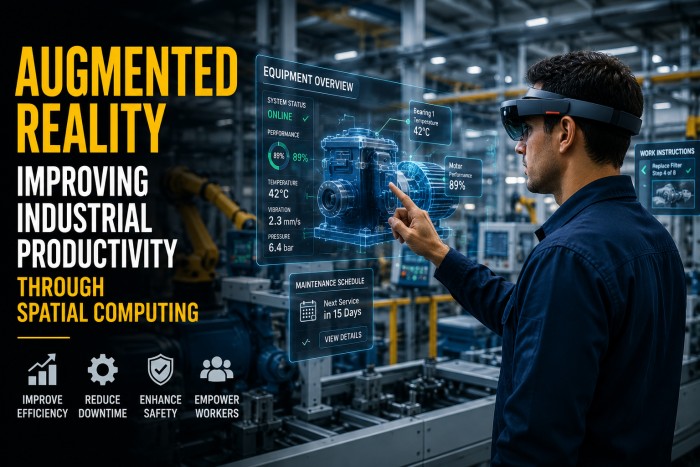
Augmented Reality is rapidly moving beyond gaming and entertainment to become one of the most transformative technologies shaping the future of business, education, healthcare, manufacturing, and digital collaboration. Combined with advances in Virtual Reality (VR), Mixed Reality (MR), and Spatial Computing, immersive technologies are changing how people interact with digital information and the physical world.
Global investments in AR, VR, and XR continue to grow as organizations seek new ways to improve productivity, customer engagement, workforce training, and operational efficiency. Technology companies are developing next-generation headsets, smart glasses, AI-powered interfaces, and immersive software platforms that blend digital content seamlessly into real-world environments.
For executives and business leaders, Augmented Reality is no longer an emerging experiment—it is becoming a strategic technology capable of reshaping entire industries.
Why Augmented Reality Matters Today
Digital transformation has changed how organizations collect, analyze, and use information. The next phase of innovation focuses on making that information more intuitive and interactive.
Augmented Reality overlays digital content onto the real world, allowing users to interact with information without leaving their physical environment.
Unlike traditional screens, AR enables users to visualize complex information in context, improving understanding, collaboration, and decision-making.
Modern Augmented Reality applications support:
- Product visualization
- Remote collaboration
- Employee training
- Equipment maintenance
- Retail experiences
- Healthcare diagnostics
- Manufacturing operations
- Education and learning
As computing becomes increasingly immersive, AR is evolving into an important productivity platform for both enterprises and consumers.
Understanding AR, VR, MR, and Spatial Computing
Although often grouped together, these technologies serve different purposes.
Augmented Reality (AR)
Augmented Reality enhances the physical world by adding digital objects, information, or interactive experiences through smartphones, tablets, smart glasses, or wearable devices.
Virtual Reality (VR)
Virtual Reality creates a fully digital environment where users interact within immersive virtual spaces using specialized headsets.
VR is widely used for:
- Simulation training
- Education
- Gaming
- Product design
- Virtual collaboration
Mixed Reality (MR)
Mixed Reality combines elements of both AR and VR, allowing digital and physical objects to interact dynamically.
Spatial Computing
Spatial Computing integrates AR, VR, artificial intelligence, sensors, and computer vision to enable computers to understand physical environments in three dimensions.
Together, these technologies form the broader XR (Extended Reality) ecosystem that is expected to define the next generation of digital experiences.
The Rise of Spatial Computing
One of the most exciting developments in modern technology is Spatial Computing.
Instead of interacting with flat screens, users engage naturally with three-dimensional digital objects integrated into real-world environments.
Spatial Computing combines:
- Artificial intelligence
- Computer vision
- Machine learning
- Environmental mapping
- Gesture recognition
- Voice interaction
- Advanced sensors
This creates highly intuitive experiences where users can manipulate digital information as though it were physically present.
For enterprises, Spatial Computing has the potential to redefine workplace collaboration, industrial operations, customer engagement, and product development.
How Businesses Are Using Augmented Reality
Organizations across multiple industries are already deploying Augmented Reality to improve efficiency and enhance customer experiences.
Manufacturing
AR assists technicians by displaying equipment instructions directly within their field of view, reducing maintenance time and improving accuracy.
Healthcare
Hospitals increasingly use AR for surgical planning, medical education, and patient visualization.
Retail
Retailers allow customers to preview furniture, clothing, cosmetics, and home improvements before making purchases through Augmented Reality apps.
Logistics
Warehouse employees use AR-guided picking systems to improve inventory management and operational efficiency.
Education
Interactive learning experiences help students visualize scientific concepts, engineering models, and historical environments.
These examples demonstrate that Augmented Reality is delivering measurable business value across diverse industries.
Why Business Leaders Should Pay Attention
The rapid advancement of Augmented Reality represents more than technological innovation—it signals a shift in how organizations communicate, collaborate, and deliver value.
Companies investing early in immersive technologies are exploring new business models, improving employee productivity, enhancing customer experiences, and accelerating digital transformation.
For executives, the question is no longer whether immersive technology will influence business, but how quickly organizations can prepare to leverage its full potential.
Market Analysis: Why Augmented Reality Is Becoming a Strategic Business Technology
The rapid growth of Augmented Reality reflects a broader transformation in how organizations interact with information, customers, and employees. What was once viewed primarily as a consumer technology is now becoming a valuable enterprise tool across industries.
Businesses are increasingly investing in Augmented Reality to improve operational efficiency, reduce training costs, strengthen customer engagement, and accelerate digital transformation initiatives.
Several factors are driving enterprise adoption:
- Increasing demand for immersive digital experiences.
- Advances in AI and computer vision.
- More powerful mobile devices and wearable technology.
- Faster 5G connectivity.
- Growth of cloud computing.
- Improved enterprise software integration.
As these technologies mature, Augmented Reality is becoming an important competitive advantage rather than simply an innovation experiment.
Organizations that successfully integrate immersive technologies into their operations are positioning themselves for long-term digital leadership.
Enterprise Applications Are Expanding Rapidly
Modern Augmented Reality applications extend far beyond entertainment.
Businesses now use AR to improve productivity, reduce operational risks, and support faster decision-making across multiple departments.
Common enterprise use cases include:
Employee Training
Interactive AR experiences allow employees to learn complex procedures in realistic environments without disrupting live operations.
Remote Technical Support
Experts can guide field technicians remotely using live visual overlays, reducing travel costs while improving service quality.
Product Development
Engineering teams visualize digital prototypes before manufacturing begins, helping identify design improvements earlier.
Customer Experience
Retailers use Augmented Reality apps that allow customers to virtually try products before purchasing, improving engagement while reducing product returns.
Industrial Maintenance
Technicians receive real-time maintenance instructions directly within their field of view, improving accuracy and minimizing equipment downtime.
These practical applications demonstrate why Augmented Reality is becoming an increasingly valuable business technology.
Virtual Reality and Mixed Reality Are Creating New Opportunities
While Augmented Reality enhances the physical environment, Virtual Reality and Mixed Reality are expanding immersive experiences even further.
Virtual Reality enables organizations to create fully digital environments for:
- Workforce training.
- Product simulations.
- Safety exercises.
- Design collaboration.
- Virtual meetings.
- Customer demonstrations.
Mixed Reality takes this concept further by allowing digital objects to interact intelligently with real-world environments.
Together, AR, VR, and MR form the broader XR ecosystem, giving organizations multiple ways to improve collaboration, innovation, and operational performance.
As immersive technologies become more accessible, businesses are increasingly selecting solutions based on specific operational needs rather than viewing AR and VR as competing technologies.
Artificial Intelligence Is Accelerating Spatial Computing
Artificial intelligence has become one of the most important drivers behind Spatial Computing.
Modern AR systems increasingly rely on AI to understand physical environments, recognize objects, interpret voice commands, and personalize user experiences.
AI-powered capabilities include:
- Object recognition.
- Gesture tracking.
- Voice interaction.
- Real-time language translation.
- Predictive recommendations.
- Environmental mapping.
- Intelligent workflow automation.
The combination of AI with Augmented Reality enables users to interact naturally with digital information while improving productivity across enterprise environments.
This convergence is expected to significantly expand commercial adoption during the coming years.
Leadership Lessons from the Rise of Augmented Reality
The evolution of Augmented Reality offers important strategic lessons for modern business leaders.
1. Innovation Should Solve Real Business Problems
The most successful AR deployments focus on measurable improvements in productivity, customer experience, and operational efficiency rather than adopting technology for its own sake.
2. Digital Transformation Is Becoming More Human-Centered
Immersive technologies simplify access to information, making complex workflows easier for employees and customers alike.
3. Competitive Advantage Comes from Early Adoption
Organizations that begin experimenting with immersive technology today are developing valuable expertise before widespread market adoption.
4. Cross-Functional Collaboration Drives Success
Successful AR implementation requires cooperation between technology teams, operations, engineering, product development, marketing, and executive leadership.
These leadership principles demonstrate why Augmented Reality is evolving into a strategic business capability.
Why Executives Should Invest in Spatial Computing
Forward-looking organizations increasingly view Spatial Computing as the next evolution of digital transformation.
Instead of relying exclusively on traditional screens, businesses are exploring immersive interfaces that improve collaboration, visualization, and decision-making.
Potential benefits include:
- Faster employee onboarding.
- Improved engineering design.
- Better remote collaboration.
- More engaging customer experiences.
- Reduced operational errors.
- Higher workforce productivity.
- Greater innovation capabilities.
As hardware becomes lighter, software becomes smarter, and enterprise adoption expands, Augmented Reality is expected to become a standard component of modern digital workplaces.
For executives, preparing for immersive technologies today can create long-term strategic advantages as the next generation of computing continues to evolve.
Challenges Facing Augmented Reality and Spatial Computing
Despite rapid innovation, Augmented Reality still faces several barriers before reaching widespread enterprise and consumer adoption. While hardware and software continue to improve, organizations must overcome technical, financial, and operational challenges to unlock the full value of immersive technology.
One of the biggest challenges is hardware accessibility. Although AR headsets and smart glasses have become more advanced, many devices remain expensive for large-scale deployment. Battery life, comfort, field of view, and processing power also continue to influence user adoption.
Another challenge is content development. Building high-quality Augmented Reality applications requires expertise in 3D modeling, user experience design, artificial intelligence, computer vision, and software engineering. Developing enterprise-ready AR solutions often requires significant investment and cross-functional collaboration.
Data privacy and security are becoming increasingly important as Spatial Computing devices collect real-time environmental information, user interactions, location data, and visual content. Organizations must ensure strong governance frameworks to protect sensitive information while maintaining compliance with evolving privacy regulations.
Integration with existing enterprise systems presents another hurdle. Businesses often need AR platforms to work seamlessly with cloud infrastructure, enterprise resource planning (ERP), customer relationship management (CRM), and digital collaboration tools.
Addressing these challenges will determine how quickly Augmented Reality becomes a mainstream business technology.
Future Outlook for Augmented Reality
The future of Augmented Reality is exceptionally promising.
Advances in artificial intelligence, 5G connectivity, cloud computing, wearable devices, and spatial computing are creating the foundation for a new generation of immersive digital experiences. As technology matures, AR is expected to become more affordable, more intuitive, and more widely integrated into everyday business operations.
Several trends are expected to shape the future:
- AI-powered spatial computing platforms.
- Lightweight smart glasses replacing traditional mobile interfaces.
- Greater adoption of enterprise AR solutions.
- Expansion of immersive remote collaboration.
- Increased investment in digital twins and industrial visualization.
- Growth of AR-powered education and workforce training.
- Enhanced retail and e-commerce experiences.
- Stronger integration between AR, VR, and XR ecosystems.
Technology companies are also investing heavily in developer platforms, software ecosystems, and enterprise tools that will make immersive applications easier to build and deploy.
Over the next decade, Augmented Reality is expected to become a standard interface for interacting with digital information across multiple industries.
Executive Takeaways
The evolution of Augmented Reality provides valuable lessons for executives, entrepreneurs, and technology leaders.
1. Immersive Technology Is Becoming a Competitive Advantage
Organizations adopting AR strategically can improve customer engagement, workforce productivity, and operational efficiency while differentiating themselves in increasingly digital markets.
2. Innovation Must Deliver Business Value
The most successful Augmented Reality initiatives focus on solving practical business challenges rather than showcasing technology alone.
3. Artificial Intelligence Will Accelerate Adoption
The combination of AI, computer vision, and spatial computing will make immersive experiences smarter, more personalized, and easier to use.
4. Workforce Transformation Is Underway
AR-supported learning, remote collaboration, and digital assistance will continue changing how employees work, train, and share knowledge.
5. Early Investment Creates Long-Term Opportunities
Organizations that begin developing immersive capabilities today will be better prepared as spatial computing becomes an integral part of enterprise technology strategies.
These insights demonstrate why Augmented Reality is emerging as one of the most influential technologies driving the future of digital business.
Conclusion: Augmented Reality Is Shaping the Next Era of Computing
The rise of Augmented Reality marks a significant evolution in how people interact with technology. Moving beyond traditional screens, AR enables users to experience digital information within real-world environments, creating more intuitive, engaging, and productive ways of working.
Across industries, businesses are already using Augmented Reality to improve employee training, streamline maintenance, enhance customer experiences, accelerate product development, and strengthen collaboration. Combined with Virtual Reality, Mixed Reality, and Spatial Computing, immersive technologies are redefining digital transformation.
While challenges related to hardware, privacy, integration, and scalability remain, continuous innovation is rapidly improving the maturity of the ecosystem. Advances in AI, cloud computing, 5G, and wearable devices will continue expanding enterprise adoption over the coming years.
For business leaders, the message is clear: Augmented Reality is no longer a niche technology—it is becoming a strategic platform for innovation, operational excellence, and competitive differentiation.
As organizations prepare for the next generation of digital experiences, Augmented Reality will play a central role in shaping the future of work, customer engagement, and enterprise transformation.