
Alternative Energy Sources in the USA: Costs, Investments, and Business Opportunities in 2026

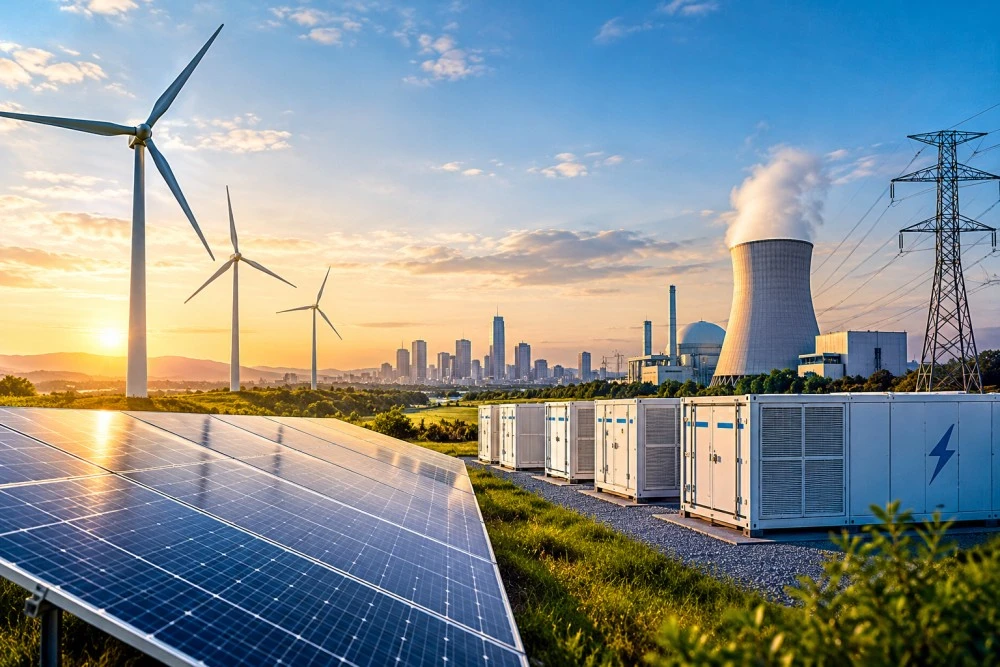
The U.S. energy market is entering a period of rising electricity demand, accelerated generation investment, and growing pressure on grid infrastructure. Yet the lowest-cost power source on paper may not deliver the best commercial outcome once financing, transmission, storage, and project delays are included. For executives, the priority is to identify which energy technologies can deliver dependable power at an acceptable total cost—and which investments can withstand changing market conditions.
Boardroom Briefing (Key Takeaways)
- Generation capacity: The U.S. Energy Information Administration (EIA) projected 86 gigawatts (GW) of new utility-scale generating capacity for 2026, led by planned solar, battery storage, and wind additions. These are planned additions, not a confirmed total of completed projects.
- Electricity demand: The EIA projected U.S. electricity generation would reach 4,368 billion kilowatt-hours in 2026, a 2.2% increase year over year. Data-center development and manufacturing activity are important demand drivers.
- Technology economics: Solar and onshore wind remain competitive new-generation options, but project costs have risen as financing, equipment, and supply-chain pressures affect investment decisions.
- Grid infrastructure: On October 20, 2026, the Department of Energy announced approximately $967 million in additional grid-resilience funding, underscoring the importance of infrastructure reliability and modernization.
- Storage economics: Batteries can reduce peak-demand costs and shift electricity to more valuable hours, but profitability depends on charging prices, storage duration, degradation, and market rules.
- Capital allocation: CFOs and investors should assess delivered electricity cost, deployment schedules, financing requirements, contractual risk, and dependable output before committing capital.
The U.S. Energy Expansion Is Reshaping Where Businesses Can Secure Power
Alternative energy sources are becoming a strategic business consideration because electricity demand is growing while infrastructure, permitting, and delivery constraints affect where new capacity can operate.
The EIA’s September 2026 outlook projected U.S. electricity generation of 4,368 billion kilowatt-hours for the year, up 2.2% from 2025. It also projected an additional 1.7% increase in 2027. Data centers and manufacturing are contributing to the demand outlook, with regional pressures varying considerably.
The investment pipeline reflects that demand. In February, the EIA reported that developers planned 86 GW of new utility-scale generating capacity for 2026: 43.4 GW of solar, 24 GW of battery storage, and 11.8 GW of wind. Whether those additions arrive on schedule remains a separate question.
Solar, Wind, Nuclear, Geothermal, Hydropower, and Storage Serve Different Commercial Roles
The main alternative energy technologies serve different operational and financial needs:
- Solar: Suitable for utility-scale generation and commercial rooftops, particularly where solar resources and site economics are favorable.
- Wind: Offers utility-scale generation where wind resources, transmission access, and project economics support development.
- Nuclear: Provides firm, low-carbon electricity, but new projects can require substantial capital, complex licensing, and long development periods.
- Geothermal: Can provide firm electricity in suitable locations, although resource assessment and drilling create project-specific risks.
- Hydropower: Can provide dispatchable or flexible electricity where geography, water availability, environmental requirements, and existing infrastructure permit.
- Bioenergy: Can generate electricity from eligible organic feedstocks, with economics dependent on fuel supply, logistics, emissions, and plant configuration.
- Battery storage: Stores electricity produced elsewhere and discharges it later. It improves flexibility but does not independently create an energy supply.
For a manufacturer operating around the clock, a low-cost daytime solar contract may not resolve nighttime demand. A data center may need a combination of grid supply, contracted generation, storage, and backup systems. The appropriate technology is the one that fits the operating load—not necessarily the one with the lowest headline cost.
The Real Cost of Alternative Energy Extends Beyond the Generation Price
The true commercial cost of alternative energy is the cost of obtaining usable electricity at the required location and time, not simply the cost of generating one megawatt-hour.
The levelized cost of energy (LCOE) estimates the average lifetime cost of electricity production per unit of output. It helps compare technologies, but it does not necessarily capture a business’s retail tariff, connection costs, backup arrangements, contract structure, or exposure to peak prices.
Lazard’s 2026 analysis reported that utility-scale solar LCOE had risen 18% year over year, to approximately $40–$98 per megawatt-hour (MWh). Onshore wind ranged from $37–$99/MWh. Lazard still assessed renewables as competitive among new-build generation options, despite higher costs. These are modeled generation-cost ranges, not guaranteed corporate electricity prices.
Compare Technologies on an Apples-to-Apples Financial Basis
The EIA’s Annual Energy Outlook 2026 estimated the following average LCOE values for new resources entering service in 2031, expressed in 2025 dollars per MWh. These are modeled estimates under the report’s assumptions, not quotations for projects being built today. The estimates include modeled tax-credit effects for eligible technologies.
U.S. Energy Information Administration
| Technology | EIA modeled LCOE for 2031 | Dispatchability | Principal commercial risk |
|---|---|---|---|
| Geothermal | $40.38/MWh | Generally firm where resources are suitable | Drilling and resource uncertainty |
| Onshore wind | $56.75/MWh | Weather-dependent | Transmission, resource variability, and curtailment |
| Solar PV | $58.33/MWh | Weather- and daylight-dependent | Output timing, interconnection, and storage requirements |
| Hydroelectric | $64.77/MWh | Site- and water-dependent | Geographic constraints and water availability |
| Advanced nuclear | $87.81/MWh | Firm when operating | Construction, licensing, and financing |
| Offshore wind | $118.79/MWh | Weather-dependent | Construction, equipment, and project execution |
| Battery storage | $152.61/MWh | Dispatchable within available stored energy | Charging costs, duration, degradation, and utilization |
Source: EIA, Annual Energy Outlook 2026. These figures are not directly interchangeable with Lazard’s 2026 LCOE ranges: the reference years, assumptions, methodologies, and modeled systems differ. Battery storage is a storage technology, so its cost metric should not be interpreted as the cost of primary generation.
Executives should use this table as a screening tool, not as a final investment ranking. Project-specific analysis must account for financing costs, local transmission, grid connection, capacity factors, storage, operating expenses, contract terms, and any incentives for which the project qualifies.
Illustrative financial calculation: A business purchasing 100,000 MWh of electricity annually would incur an additional $500,000 per year if its effective electricity price increased by $5/MWh, assuming consumption and all other charges remained unchanged.
That simple sensitivity is useful for treasury planning. Actual savings from an energy project will depend on its delivered output, contract structure, operating costs, financing, and the electricity purchases it displaces.
For related editorial coverage, consider linking the discussion to How CFOs Evaluate Infrastructure Investment Returns.
Five Investment Opportunities Are Emerging Across the U.S. Energy Value Chain
The strongest energy investment opportunities span generation, storage, grid infrastructure, firm low-carbon power, and technologies that help businesses use electricity more efficiently.
The commercial case differs by category. A mature solar project with a contracted buyer presents a different risk profile from an advanced nuclear venture, an early-stage geothermal developer, or a battery software company. Investors should distinguish operating assets from development pipelines and technology concepts.
1. Utility-scale solar and wind. These technologies can offer competitive generation costs and scalable project opportunities. Key diligence questions include interconnection status, construction pricing, equipment availability, curtailment exposure, and the creditworthiness of contracted buyers.
2. Battery storage and flexible demand. Storage can earn revenue or create savings through price arbitrage, peak-demand management, ancillary services, and improved use of renewable output. The investment case depends on market access, dispatch rules, charging costs, cycle life, and revenue durability.
3. Nuclear power and advanced nuclear development. Existing nuclear assets and credible restart projects can offer firm low-carbon generation. New reactor designs require separate scrutiny of licensing, construction schedules, financing, supply chains, and commercial readiness.
4. Geothermal and other firm low-carbon generation. Geothermal development may provide power that is less dependent on weather conditions. Resource quality, drilling costs, exploration outcomes, and access to transmission are critical investment variables.
5. Transmission, grid modernization, and energy-management software. Grid-enhancing technologies, advanced power electronics, transmission upgrades, and load-management systems can address constraints that generation projects alone cannot solve.
Grid Access and Time to Power Can Matter More Than Technology Selection
A project with secure grid access and a credible commissioning schedule may be commercially more attractive than a theoretically cheaper project that cannot deliver electricity on time.
On October 20, 2026, the U.S. Department of Energy announced approximately $967 million in additional funding for grid-resilience improvements through its state and tribal grant program. The announcement reinforces the policy attention being given to reliability, infrastructure modernization, and electricity affordability. It does not establish that every proposed grid project will be funded or completed immediately.
For investors, delays can defer revenue, increase interest during construction, and leave capital tied up for longer than planned. For electricity buyers, a delayed connection can postpone facility expansion or require more expensive interim supply.
Diligence should prioritize interconnection milestones, transmission availability, permits, equipment orders, construction schedules, and contracted delivery obligations. A project’s megawatt rating is not proof that the power will be available when a business needs it.
For further editorial coverage, the natural internal-link placements are Grid Modernization and U.S. Infrastructure Investment and How Interest Rates Affect Renewable Energy Project Financing.
Match Energy Procurement to the Company’s Load, Balance Sheet, and Risk Tolerance
Corporate energy procurement is the process of securing electricity through a combination of utility supply, contracts, on-site generation, storage, and demand management that fits a company’s operating requirements and financial risk tolerance.
A company with predictable daytime consumption may benefit from a different strategy than a data center with continuous demand or a factory exposed to expensive peak-demand charges.
The main options have different implications:
- Grid electricity: Avoids direct ownership of generation assets, but costs and reliability depend on local tariffs, market structures, and utility conditions.
- Power purchase agreements (PPAs): Can provide contracted energy pricing or renewable attributes, but expose buyers to contract, settlement, counterparty, and volume risks.
- On-site solar: May reduce grid purchases and exposure to some tariff charges, subject to site suitability, installed cost, and the timing of consumption.
- Battery storage: Can shift electricity use away from expensive periods and help manage peak demand, provided savings exceed storage and operating costs.
- Hybrid supply portfolios: Combine multiple sources and contracts to balance cost, flexibility, and reliability.
Use a Five-Factor Decision Matrix Before Committing Capital
Executives should assess each proposal against five criteria:
| Decision criterion | Key question |
|---|---|
| Delivered cost | What is the expected lifetime cost after relevant fees, losses, and operating expenses? |
| Reliability | Does the arrangement match the site’s hourly load and resilience requirements? |
| Deployment timeline | When can the project realistically begin delivering usable power? |
| Capital and downside exposure | How much capital is committed, and what happens if costs rise or output falls? |
| Regulatory and contract flexibility | Which incentives, permits, contractual obligations, and exit provisions apply? |
The CFO should own the financial case with treasury and tax support. The COO should assess operational continuity, while the CTO or infrastructure team validates load forecasts, technical integration, and redundancy requirements. Procurement and legal teams should scrutinize contract pricing, credit support, termination rights, and performance obligations.
A PPA can reduce exposure to certain price movements without eliminating every electricity-market risk. Likewise, on-site solar can reduce some grid purchases without making a facility independent of the grid.
A useful related internal link is How Corporate Power Purchase Agreements Work.
The Alternative Energy Investment Myth: Low Generation Costs Do Not Guarantee High Returns
The lowest-cost generation technology does not automatically deliver the highest investment return because project economics depend on when, where, and how electricity can be sold or consumed.
Solar output may peak when wholesale electricity prices are low. Wind projects may face transmission bottlenecks or curtailment. Battery operators may earn less than projected if price spreads narrow, market rules change, or degradation reduces usable capacity.
Financing also matters. Higher interest rates increase the cost of capital for projects with substantial upfront expenditure. Delays can add construction-period financing costs, while equipment-price changes can weaken returns even when projected generation remains unchanged.
Executives should distinguish four measures:
- Nameplate capacity: The maximum rated output under specified conditions.
- Capacity factor: Actual energy generated over a period divided by the energy that would have been generated at continuous full output.
- Capacity credit: An estimate of how much a resource contributes to meeting system demand during periods when reliability is most important.
- Dependable output: The power expected to be available under the operating conditions relevant to the buyer.
These measures answer different questions. None alone establishes whether a project will deliver the required power at an acceptable cost.
Policy and Tax Incentives Must Be Modeled as Conditional Inputs
Tax credits can change project economics, but eligibility depends on applicable law, project timing, technology, and specific compliance conditions. Companies should verify current IRS guidance and obtain project-specific tax advice before incorporating an incentive into an investment case.
A robust model should test returns both with and without uncertain incentives, alongside scenarios for delayed commissioning, higher financing costs, reduced output, and lower revenues. Where an incentive is material to project viability, the investment committee should require documented evidence of eligibility rather than rely on a developer’s headline estimate.
The principle is straightforward: a project should be evaluated on the cash flows it can credibly deliver, not on incentives or market assumptions that have not been verified.
Enterprise Energy Strategies Show Why One Technology Rarely Solves Every Power Problem
Enterprise energy strategies combine generation, contracts, infrastructure, and risk management because individual technologies address different parts of a company’s electricity requirements.
Nuclear power illustrates the commercial value—and complexity—of securing firm low-carbon generation. In October 2026, reporting highlighted efforts to restart shuttered U.S. nuclear plants amid rising electricity demand and interest in supplying large corporate customers. Such projects require scrutiny of licensing, plant condition, financing, refurbishment, restart schedules, and contractual commitments before their prospective output can be treated as available supply.
Solar and battery storage offer a different approach. A manufacturer with substantial daytime demand could evaluate on-site solar to reduce grid purchases, then assess storage to shift some output into higher-cost periods. The investment case would depend on the facility’s interval consumption, tariff structure, installation costs, and battery performance.
A data center presents a different challenge. Its demand may be continuous, its expansion schedule demanding, and the consequences of interruption severe. A renewable power contract can help meet cost or emissions objectives, but it does not by itself guarantee continuous physical delivery.
The strategic lesson is that energy procurement should match the operating profile of the business. An enterprise case study should distinguish announced projects from commissioned facilities and measured results, with financial and operating claims supported by company disclosures or attributable interviews.
For related coverage, consider AI Data Centers and the Growing Demand for Electricity and Nuclear Energy’s Role in Powering AI Infrastructure.
The Strategic Playbook: A 90-Day Roadmap for Executive Energy Decisions
A 90-day energy review gives leadership teams a structured way to identify opportunities, test financial assumptions, and establish investment priorities. It is a planning framework, not a promise that permits, interconnection, financing, or construction will be completed within three months.
01
Days 1–30
Establish the baseline
Compile interval electricity consumption, tariffs, demand charges, outage exposure, existing contracts, emissions obligations, and expected load growth. Identify sites where energy cost or availability could constrain business expansion.
02
Days 31–60
Evaluate alternatives
Request comparable proposals for relevant supply, generation, and storage options. Model base, upside, and downside cases for electricity prices, financing, delivery schedules, project output, and contract obligations.
03
Days 61–90
Set investment gates
Rank projects by risk-adjusted returns, execution certainty, reliability, and strategic fit. Establish approval thresholds for net present value, internal rate of return, counterparty credit, delivery milestones, and contingency plans.
Before approving material expenditure, the investment committee should require:
- A documented baseline against which expected savings can be measured.
- Independent validation of material cost and delivery assumptions.
- Sensitivity analysis for delays, price changes, and lower-than-expected output.
- Clear ownership of technical, financial, legal, and operational risks.
- Defined milestones for reassessing or terminating a project if assumptions deteriorate.
Leadership teams should also monitor three external indicators: commissioned generating capacity versus announced additions, regional grid and interconnection progress, and changes in electricity demand and project financing conditions.
For further editorial coverage, How Executives Build Resilient Supply Strategies provides a natural connection to broader operational risk management.
The Executive Outlook: The Winners Will Secure Deliverable Power, Not Just Announce Clean-Energy Targets
Alternative energy sources in the USA offer meaningful opportunities for corporate procurement and investment, but there is no universal technology winner. The strongest decisions reflect local generation economics, grid access, operating requirements, financing conditions, and the reliability a business actually needs.
The distinction between planned capacity and available electricity will remain important as companies assess expansion projects. A low-cost generation proposal is not enough if the project cannot connect to the grid, deliver on schedule, or match the buyer’s demand profile.
For CFOs, the priority is to measure lifetime costs and downside exposure. For COOs, it is to protect continuity. For CTOs and infrastructure leaders, it is to secure capacity that meets technical and operational requirements. For investors, it is to distinguish commercially proven assets from development-stage opportunities and unverified forecasts.
The strategic advantage belongs to businesses that treat energy as a core capital-allocation and operational-risk decision. The objective is not simply to purchase cleaner electricity. It is to secure power that the business can afford, depend on, and use when it needs it.