
Data Center Energy Costs: What the Senate Roadblock Means for AI Infrastructure

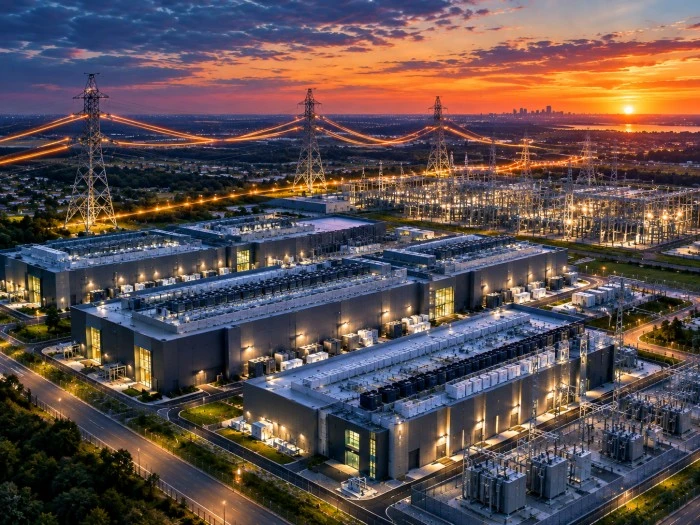
The economics of AI infrastructure are increasingly tied to electricity availability, grid capacity and the cost of connecting new large loads. The Senate’s September 17 roadblock over competing data-center legislation leaves a larger business question unresolved: who should finance the infrastructure required to power the next wave of AI capacity?
For CEOs, CFOs, CTOs and infrastructure investors, the issue extends beyond the fate of one bill. Cost-allocation rules can influence site selection, project underwriting, deployment schedules and the capital required to bring AI capacity online.
Boardroom Briefing
- Data Centers: Global data-center electricity demand grew 17% in 2025, while electricity consumption from AI-focused data centers grew 50%, according to the International Energy Agency.
- Demand: The IEA projects global data-center electricity consumption to nearly double from 485 TWh in 2025 to 950 TWh in 2030.
- Legislation: The House passed the Ratepayer Protection Act 417–3, but a Senate effort to advance the measure by unanimous consent was blocked on September 17.
- Cost Allocation: The Ratepayer Protection Act and GRID Savings Act represent different approaches to assigning data-center-related grid infrastructure costs.
- Electricity Prices: MIT CEEPR research found that data-center entry between 2010 and 2024 was associated with a 2.7% increase in average retail electricity prices, with the effects varying substantially by utility structure.
- Capital: The IEA says data-center investments have grown too large to be funded from company balance sheets alone, increasing the importance of capital-market financing and expected project returns.
The AI Infrastructure Bottleneck Is Moving From Chips to Power
Power availability is becoming a strategic input into AI infrastructure because data-center expansion requires reliable electricity and sufficient grid capacity. Global data-center electricity demand grew 17% in 2025, while electricity consumption from AI-focused data centers rose 50%, according to the IEA.
The scale is becoming material to corporate planning. The IEA projects data-center electricity consumption to rise from 485 TWh in 2025 to approximately 950 TWh in 2030, while electricity consumption from AI-focused data centers is expected to grow even faster.
AI is also changing the physical requirements inside the facility. The IEA reports that AI-server power density increased 11-fold between 2020 and 2025 and could increase another fourfold by 2027, placing additional pressure on power electronics, transformers and related infrastructure.
That changes the role of energy in an AI investment model. Electricity is not simply a recurring operating expense after construction; generation, transmission, interconnection, storage and reliability can determine whether a project can operate at its intended capacity.
The IEA also says bottlenecks across the data-center and energy value chain are reducing the likelihood of more aggressive near-term expansion scenarios.
For boards evaluating AI infrastructure capital spending, the practical implication is direct: power availability belongs in the investment thesis rather than in the facilities appendix.
The Senate Roadblock Turns a Political Dispute Into a Cost-of-Capital Question
The September 17 Senate roadblock leaves competing approaches to data-center grid-cost allocation unresolved. The House-passed Ratepayer Protection Act would require state utility commissions to consider standards addressing infrastructure costs associated with large data-center loads, while Sen. Martin Heinrich objected to advancing the measure by unanimous consent.
Heinrich argued that the House approach was insufficient because the standards would be voluntary. He instead sought consideration of the GRID Savings Act, which would require large-load customers such as data centers to finance facilities needed to connect them to the grid; Sen. Bernie Moreno then objected to that request.
The distinction matters to investors because different cost-allocation mechanisms can produce different project liabilities.
The House measure would require state regulators to evaluate standards for making large data centers pay for infrastructure upgrades. The GRID Savings Act takes a more direct approach by placing infrastructure costs associated with large-load connections on the customers creating that demand.
Sen. Heinrich summarized his position on September 17 by saying, “it’s not enough to just tell states to consider making data centers pay for grid upgrades.” His statement reflects his position on the legislation, rather than an independent assessment of the competing proposals.
For a data-center developer, the distinction eventually enters project underwriting. A higher infrastructure obligation can increase upfront capital requirements, while regulatory uncertainty can widen the range of possible project outcomes.
That is why enterprise capital allocation strategy needs to account for power infrastructure alongside land, servers and financing.
Who Pays for the Grid Determines Where AI Capacity Gets Built
The allocation of generation, transmission and interconnection costs can change the relative economics of competing data-center locations.
Consider two illustrative sites. Site A offers a lower electricity price but requires substantial transmission investment before a 500-MW facility can reach full capacity. Site B has a higher power price but existing transmission capacity and a shorter interconnection timeline.
A comparison based only on electricity rates favors Site A. A project-level financial model may not.
The relevant calculation should incorporate:
- generation and transmission upgrades;
- interconnection costs;
- contracted power prices;
- demand charges;
- backup generation and storage;
- permitting timelines;
- construction delays;
- regulatory exposure;
- and the financial cost of unused or delayed capacity.
MIT CEEPR provides evidence for why the allocation question matters. Its June 2026 research found that data-center entry between 2010 and 2024 was associated with a 2.7% increase in average retail electricity prices. The estimated effects were 2.1% for residential customers, 2.8% for commercial customers and 4.2% for industrial customers.
The study found substantial variation by utility ownership. Average retail-price effects reached 5.6% among investor-owned utilities, while effects were much smaller among publicly owned utilities and absent among cooperatives.
Those are historical empirical estimates, not a forecast that every new AI data center will create the same price effect. The research instead shows that regulatory structure and infrastructure cost recovery can materially influence who absorbs the financial consequences of load growth.
For infrastructure investors, that variability is itself an underwriting variable.
The New Data-Center Site-Selection Framework: Power First, Land Second
A data-center site-selection model should evaluate POWER → GRID → PRICE → PERMITTING → PERSISTENCE rather than ranking locations primarily by land cost and headline electricity rates.
Power measures whether sufficient generation exists or can be contracted for the required load.
Grid measures transmission availability, interconnection capacity, substations and the infrastructure required to deliver electricity to the facility.
Price measures the long-term cost of electricity, demand charges and contractual exposure rather than relying on a current tariff.
Permitting measures the time and regulatory uncertainty associated with construction, energy infrastructure and local approvals.
Persistence measures whether the site can maintain reliable power through periods of grid stress, demand growth and regulatory change.
The framework is increasingly relevant outside Washington. Reuters reported September 17 that Silicon Valley communities are debating proposed data-center projects over electricity, water, pollution and infrastructure impacts, while San Jose officials continue to promote data-center development and its potential economic benefits.
That creates a direct consideration for data-center M&A and infrastructure investment: technical access to land does not establish commercial readiness.
A project can have a viable parcel and a strong customer pipeline while remaining exposed to transmission constraints, permitting delays or uncertain infrastructure obligations.
The site-selection question is shifting from “Where can we build?” to “Where can we obtain reliable power at predictable total cost and within the required deployment window?”
The Contrarian Risk: Cheap Electricity Is Not the Same as Cheap AI Infrastructure
A low electricity price does not necessarily produce a low-cost data-center project because grid infrastructure, reliability and delays can outweigh the headline energy rate.
A developer can secure favorable electricity pricing while waiting years for transmission or interconnection work. During that period, financing costs continue, construction capital remains committed and planned computing capacity cannot generate its intended economic return.
The reverse can also occur. A location with a higher electricity price can offer existing grid capacity, greater regulatory predictability and faster deployment.
The correct executive metric is not simply electricity price.
It is the all-in cost of obtaining reliable power at the required scale and at the required time.
That distinction matters to enterprise technology leaders assessing third-party infrastructure risk. An AI deployment plan can be exposed not only to semiconductor supply, server availability and network capacity, but also to the infrastructure required to energize those systems.
The IEA’s financing analysis adds another constraint. Data-center investments have grown too large to rely exclusively on corporate balance sheets, making capital-market conditions and expected returns increasingly important to the pace of buildout.
A higher infrastructure bill can affect more than operating expenditure. It can change capital requirements, financing assumptions, deployment schedules and the return profile of the entire project.
What Enterprise Leaders Can Learn From the Emerging Large-Load Model
Large-load customers are becoming a distinct category in electricity planning because their demand can require significant generation, transmission and interconnection investment.
The federal debate illustrates the distinction. The Ratepayer Protection Act would have states consider standards addressing the infrastructure costs associated with large data centers, while the GRID Savings Act would require large-load customers to finance infrastructure needed to connect them.
The business issue extends well beyond the Senate. Utilities, developers and local governments must determine how much infrastructure to build, who finances it and what happens if projected data-center demand arrives later than expected or fails to materialize.
Local resistance is already part of the development equation. Reuters reported that San Jose residents and environmental groups are challenging proposed projects over electricity, water and pollution concerns, while city officials are balancing those concerns against the economic case for development.
That makes business continuity and operational resilience relevant to site selection.
A facility in a constrained grid may require additional redundancy. A project facing prolonged public review may require greater schedule reserves. A development exposed to uncertain cost recovery may require more conservative financing assumptions.
The relevant comparison for corporate planning is total operating and infrastructure cost adjusted for reliability, regulatory exposure and execution risk.
The Strategic Playbook: Stress-Test the Power Economics Before Committing Capital
Executives should evaluate major data-center investments by stress-testing power costs, infrastructure obligations, regulatory exposure and deployment delays as interconnected financial variables.
Before investment approval, leadership teams should model:
- Base-case electricity cost over the project’s economic life.
- Incremental grid-upgrade liability and the party responsible for that cost.
- Project-return sensitivity to higher infrastructure obligations.
- Interconnection timeline and the financial cost of delay.
- Regulatory-change exposure across federal, state and local jurisdictions.
- Backup generation and storage requirements under realistic reliability scenarios.
- 12-, 24- and 36-month delay scenarios for planned computing capacity.
- Alternative-site economics where higher electricity prices may be offset by faster grid access.
- Contracted versus market-exposed power and the resulting price volatility.
- Investment trigger points that would require a pause, redesign or relocation.
The framework should be incorporated into AI infrastructure financing before a site is locked in.
The financial case is becoming more consequential as the market expands. The IEA projects data-center electricity consumption to approach 950 TWh globally by 2030, while it also says capital markets will be critical to funding continued data-center expansion.
For CFOs, power strategy is increasingly connected to capital structure. A project with uncertain infrastructure costs requires an investment model that prices not only electricity but also delay, regulatory exposure and financing risk.
Executive Outlook: Power Availability Becomes a Competitive Variable
Power availability, reliability and cost allocation are becoming material competitive variables in AI infrastructure deployment.
The September 17 Senate impasse does not resolve which approach to data-center infrastructure costs will advance. It does establish that the federal debate now includes competing models for determining how large-load customers and other electricity customers bear the costs associated with new infrastructure.
The answer will vary across jurisdictions. MIT CEEPR’s research demonstrates why executives should avoid applying a single national assumption to every project: the historical effect of data-center growth on electricity prices differed significantly across utility ownership and regulatory structures.
For executives, the practical requirement is to make infrastructure assumptions explicit before capital is committed.
AI deployment plans should connect compute requirements to electricity requirements. Site-selection teams should connect electricity prices to grid and interconnection costs. CFOs should connect those infrastructure variables to project returns and financing requirements.
The next phase of AI infrastructure will depend not only on access to compute, but on the ability to power that compute reliably, economically and at the required scale.