
Virgin Atlantic’s India Expansion Is a Bigger Bet on Global Business Travel

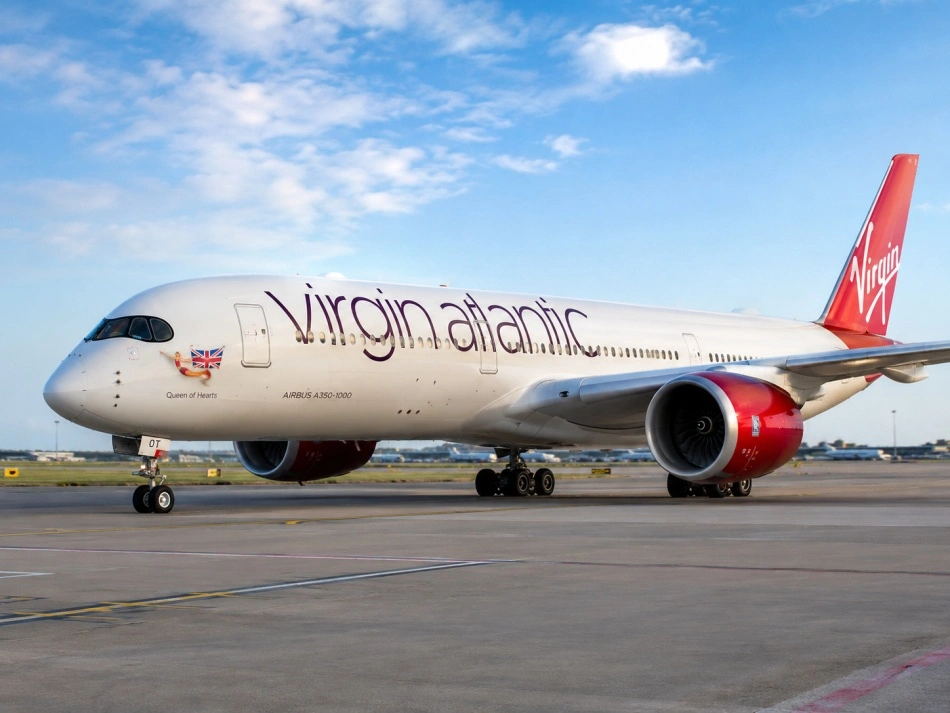
Virgin Atlantic’s decision to increase its London–Bengaluru service from 11 to 13 weekly flights is more than a route expansion. It is a bet that India’s technology centres, corporate travellers and premium long-haul demand will become increasingly important to global airline economics. (ETTravelWorld.com)
The gap is that adding seats to a fast-growing market does not automatically produce profitable growth. Yield, premium-cabin demand, cargo, connecting traffic and network resilience must rise with capacity, and Virgin Atlantic’s India strategy offers a useful case study in how airlines are attempting to make that equation work.
Boardroom Briefing
- Virgin Atlantic increased London Heathrow–Bengaluru services from 11 to 13 weekly flights from June 1, 2026, strengthening its push toward near double-daily service. (ETTravelWorld.com)
- India capacity has become one of Virgin Atlantic’s largest growth priorities outside the United States, with the airline previously saying it would offer more than 1 million seats to the country from 2025. (corporate.virginatlantic.com)
- Bengaluru matters because global technology investment and corporate mobility can generate a higher-value traffic mix than leisure growth alone.
- The IndiGo partnership allows Virgin Atlantic to extend beyond its three Indian gateways through connections across 34 cities, reducing the need to build a domestic network from scratch.
- Route economics will determine whether India expansion creates durable value, because passenger growth can be offset by fuel costs, competitive capacity and weaker yields.
- Global competition is intensifying as foreign carriers seek to capture India-linked international traffic while domestic airlines face operational and geopolitical pressures. Reuters reported that foreign carriers increased their share of India-origin international flights to 58.4% between March and May 2026. (Reuters)
Virgin Atlantic’s India Expansion Is Really a Network Strategy
Virgin Atlantic’s India expansion is a network strategy designed to connect three major Indian gateways with London Heathrow and, through partnerships, a far wider set of domestic and international markets.
The immediate news is straightforward: the airline raised its Bengaluru frequency from 11 to 13 weekly flights from June 1, 2026. The commercial significance is less obvious. (ETTravelWorld.com)
Virgin Atlantic now treats Delhi, Mumbai and Bengaluru as its Indian anchor points. Its wider India strategy combines direct long-haul flying with onward connectivity through IndiGo. Virgin Atlantic says that partnership provides connections across 34 Indian cities, allowing passengers to access markets that would be uneconomic for a UK carrier to serve directly.
That distinction matters. A direct route is not simply a line between two cities. For a network airline, the real commercial asset is the corridor around that route.
A passenger travelling from Hyderabad, Pune or Ahmedabad may begin the journey on a partner airline, connect through one of Virgin Atlantic’s Indian gateways and then continue to London or onward to North America. The airline is effectively expanding its addressable market without owning the domestic infrastructure required to serve every city itself.
Virgin Atlantic has already demonstrated how central India has become to its growth strategy. The company previously said capacity to India had increased 350% since 2019, while India had become its largest area of growth outside the United States. (corporate.virginatlantic.com)
This is why the Bengaluru increase deserves attention beyond aviation. It reflects how global companies are reorganising capacity around India’s growing economic weight and international business links.
Why Bengaluru Matters More Than a Typical New Capacity Announcement
Bengaluru matters to global business travel because it combines technology-sector concentration, corporate mobility and international connectivity in a market that is increasingly valuable to long-haul carriers.
Virgin Atlantic itself has described Bengaluru as a rapidly growing technology hub and one of India’s largest corporate markets. The route also feeds through London Heathrow into destinations including the United States. (corporate.virginatlantic.com)
The Technology and Corporate Mobility Advantage
Bengaluru generates a different traffic proposition from a leisure-heavy destination. The city supports multinational technology companies, engineering operations, startups, global capability centres and international investment activity. Those business connections create recurring travel needs across North America, Europe and Asia.
That makes corporate mobility commercially significant.
A business corridor with strong corporate demand can support more valuable traffic than a market driven only by seasonal leisure travel. Premium-cabin demand, flexible tickets and time-sensitive travel can all improve the economics of a long-haul route.
Virgin Atlantic is also expanding eastward more broadly, with five daily services across Delhi, Mumbai and Bengaluru cited as part of its wider network growth. (corporate.virginatlantic.com)
The executive question is not whether Bengaluru has enough passengers. The harder question is whether the city can generate enough high-yield traffic to justify sustained capacity growth when competing airlines pursue the same opportunity.
That distinction should guide airline boards and investors evaluating India.
The Economics Behind the India–UK Aviation Corridor
India–UK aviation economics depend on yield and network value, not simply on the number of seats an airline can fill.
Load factor is visible. Profitability is harder to see.
An aircraft can depart with a high percentage of seats occupied and still generate disappointing returns if fares are weak or premium cabins underperform. For a long-haul route, management must examine several variables together:
- Premium-cabin yield
- Economy and leisure demand
- Corporate contract revenue
- Connecting passenger volumes
- Cargo contribution
- Fuel and foreign-exchange costs
- Aircraft and crew utilisation
- Competitive capacity
Capacity Is Only Valuable When Yield Follows
Capacity expansion creates value when additional flights improve revenue quality or strengthen the broader network rather than merely increasing passenger volume.
Virgin Atlantic’s second daily Mumbai service illustrates the point. The airline explicitly positioned the expansion as a passenger and cargo opportunity, while noting that additional capacity could support sectors including fashion, pharmaceuticals and technology. (corporate.virginatlantic.com)
That is a more sophisticated route model than selling seats alone.
Cargo can help absorb the fixed costs of operating a long-haul aircraft. Connecting traffic can increase load factors. Premium passengers can improve unit revenue. Corporate accounts can provide greater demand stability.
But the downside is also clear. Reuters reported in May that high jet fuel prices had pushed major Indian carriers to reduce planned capacity, with fuel capable of accounting for up to 40% of airline operating costs in some circumstances. (Reuters)
More capacity can improve scale, but it also increases exposure to every weak point in the cost structure.
Partnerships Are Becoming a Substitute for Building Domestic Networks
Partnership-led aviation networks allow international airlines to reach secondary markets without carrying the capital burden of building their own domestic operations.
Virgin Atlantic’s IndiGo relationship is central to this strategy. The airline says customers can connect through the partnership across 34 Indian cities.
Virgin Atlantic’s IndiGo Connection Model
The model is straightforward. Virgin Atlantic concentrates its own aircraft at major international gateways. IndiGo extends the reach of those gateways through domestic connections.
For Virgin Atlantic, this produces three strategic advantages.
First, lower capital intensity. The airline does not need its own domestic Indian fleet to sell access to dozens of cities.
Second, stronger feeder traffic. Direct services to Delhi, Mumbai and Bengaluru become more valuable when they can collect passengers from markets beyond those three cities.
Third, greater corporate relevance. Multinational companies do not operate only from capital cities. A wider connection network improves the airline’s ability to serve regional offices, technology centres and industrial locations.
Virgin Atlantic previously said its IndiGo partnership had connected more than 80,000 customers and offered 36 additional destinations through its India network. (corporate.virginatlantic.com)
The broader strategic lesson extends beyond aviation: partnership strategies that reduce capital intensity can allow companies to enter large, fragmented markets without replicating infrastructure already built by a local leader.
The Contrarian Risk: More India Capacity Does Not Automatically Mean More Profitable Growth
India’s strong aviation growth does not guarantee profitable returns because airlines must compete for demand while managing fuel costs, infrastructure constraints and geopolitical disruption.
The global industry sees enormous potential. Airbus expects Indian airlines to roughly triple their fleets to about 2,250 aircraft over the next decade, while Boeing forecasts 3,290 new commercial jets for India and South Asia over the next 20 years. (Reuters)
Those projections demonstrate confidence in demand. They do not eliminate execution risk.
The immediate concern is capacity discipline. If multiple airlines expand faster than profitable demand, fares can fall even as passenger numbers rise.
Infrastructure is another pressure point. Boeing has highlighted that more than 30% of Indian traffic is concentrated in Delhi and Mumbai, increasing the importance of congestion and airport capacity in network planning. (Reuters)
Geopolitics can also change route economics quickly. Reuters reported that disruptions linked to the Iran conflict and Pakistan airspace restrictions created openings for foreign carriers while forcing Air India to reduce international operations. (Reuters)
Adding flights to a high-growth market fails when management mistakes demand growth for guaranteed profitability.
What Virgin Atlantic Can Learn From the Global Race for India’s Long-Haul Passenger
The battle for India’s long-haul passenger will increasingly be decided by network density, premium segmentation and partnership reach rather than by route announcements alone.
Foreign carriers are moving quickly.
Reuters reported that foreign airlines increased their share of India-origin international flights to 58.4% between March and May 2026 as operational disruptions weakened Air India’s international schedule. (Reuters)
That creates opportunity for Virgin Atlantic, but it also raises the competitive bar.
A strong route now needs more than an attractive departure time. Airlines must determine:
- Which Indian cities feed the route.
- Which corporate sectors generate premium demand.
- Whether passengers can connect efficiently onward.
- Whether cargo improves route economics.
- How the airline responds when airspace disruptions alter flying times and fuel consumption.
Virgin Atlantic’s advantage is its ability to combine the India–UK corridor with North American connectivity through London Heathrow. Its challenge is ensuring that this network proposition remains distinctive as competitors add capacity and Indian carriers pursue their own international ambitions.
Network relevance is becoming a strategic asset.
A Strategic Playbook for Airlines, Investors, and Corporate Travel Leaders
Leaders evaluating high-growth international corridors should measure the full commercial network around a route rather than judging expansion by passenger volume alone.
Measure the Corridor, Not Just the Route
A disciplined framework should include six questions:
- Is premium yield growing alongside total demand?
Full flights at low fares do not guarantee attractive returns. - How much connecting traffic supports the route?
Partnership reach can materially expand the commercial value of a gateway. - Which corporate sectors create recurring demand?
Technology, pharmaceuticals, financial services and global capability centres may provide different travel patterns and revenue profiles. - What role does cargo play?
A route carrying high-value commercial goods can have a stronger economic foundation. - How resilient is the route to disruption?
Airspace restrictions, fuel spikes and airport congestion must be built into planning assumptions. - Does the route strengthen the wider network?
A marginal route can still be strategically valuable if it feeds profitable onward services.
For investors, the core discipline is to separate growth in demand from growth in returns.
For corporate travel leaders, the implication is different. As India’s international connectivity expands, companies may gain more options for managing global mobility, supplier relationships and executive travel.
Executive Outlook: India’s Next Aviation Growth Battle Will Be Fought for Premium Global Connectivity
India’s next phase of aviation growth will depend increasingly on which carriers can convert economic growth into profitable premium connectivity across global business corridors.
Virgin Atlantic’s additional Bengaluru flights should be viewed through that lens.
The airline is not simply selling more seats between London and India. It is increasing exposure to a market that sits at the intersection of technology, corporate expansion, international trade and premium travel.
The strategy also carries a broader warning. Scale without yield is not strategy.
India is attracting more aircraft, more airport investment and more international competition. Reuters has reported that India plans significant aviation infrastructure spending, including a $3.06 billion regional connectivity programme and an ambition to expand the country’s airport network. (Reuters)
For airlines, the opportunity is clear. So is the management challenge.
The winners will not necessarily be the carriers adding the most flights. They will be the ones that best understand where profitable demand originates, how it connects across the network and which partnerships make growth more capital-efficient.
Virgin Atlantic’s India expansion is a test of that model. The additional Bengaluru flights are the visible part of the strategy. The real bet is on the commercial value of the corridor behind them.