
Stanley Druckenmiller’s Bond-Market Warning Has a Bigger Implication for Corporate CFOs

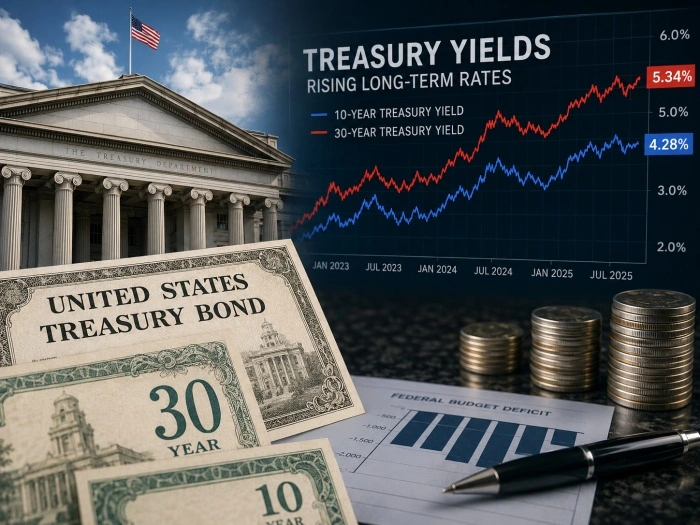
Stanley Druckenmiller’s criticism of Treasury Secretary Scott Bessent is not simply a dispute between two veteran investors. It is a warning about what happens to corporate capital allocation when long-term U.S. borrowing costs remain elevated. Treasury has doubled selected long-end bond buybacks to at least $4 billion per operation, while Druckenmiller argues that intervention cannot substitute for addressing the fiscal forces pushing yields higher.
For CFOs, the strategic question is not whether Druckenmiller’s forecast is correct. It is whether their balance sheets and investment decisions can withstand a higher-for-longer cost of capital.
Boardroom Briefing: What Executives Need to Know
- Druckenmiller argues that Treasury’s expanded long-end buybacks amount to price management rather than ordinary liquidity management and could weaken confidence in the Treasury market.
- Treasury increased selected 10- to 30-year buybacks from $2 billion to at least $4 billion per operation after the 30-year yield reached its highest level since 2007.
- Long-term yields influence corporate borrowing costs, valuation discount rates, acquisition financing and the economics of long-duration investments.
- Fiscal risk matters beyond government finance because persistent deficits and debt issuance can affect the risk-free rate used throughout corporate valuation models.
- Refinancing exposure becomes more important when companies have large debt maturities arriving during a higher-rate cycle.
- Capital-rich companies can gain strategic leverage if highly indebted competitors are forced to postpone acquisitions, reduce investment or refinance at substantially higher costs.
- CFOs should stress-test capital plans against sustained higher rates instead of assuming that a temporary intervention will restore the previous financing environment.
Druckenmiller vs. Bessent Is Really a Fight Over the Bond Market’s Signal
Stanley Druckenmiller’s central argument is that long-term Treasury yields should remain a market signal of fiscal and inflation risk rather than become a policy target. In a Wall Street Journal opinion article published August 25, Druckenmiller criticized Treasury’s decision to enlarge long-dated buybacks and argued that the intervention could damage the credibility of the Treasury market.
Why is Stanley Druckenmiller criticizing the U.S. Treasury’s bond buybacks?
Capsule Answer: Stanley Druckenmiller argues that expanded long-dated Treasury buybacks risk becoming price management rather than ordinary liquidity management. He believes suppressing yields without addressing deficits, debt and inflation risks can weaken the bond market’s role as a fiscal discipline mechanism.
Treasury announced on August 19 that buybacks in the 10-, 20- and 30-year sectors would increase to at least $4 billion per operation from a previous maximum of $2 billion. The larger operations are scheduled to begin September 9 and run through November 4.
The move followed a sharp rise in long-term yields. Reuters reported that the 30-year Treasury yield reached 5.34%, its highest level since 2007, before falling after Treasury announced the expanded buybacks.
Druckenmiller’s objection is fundamentally about the information contained in that yield. His argument is that rising long-term borrowing costs should pressure policymakers to address the fiscal deficit rather than encourage them to make the bond market’s warning less visible. Reuters reported that he called the intervention a credibility-damaging mistake.
Treasury’s stated rationale is different. The buybacks are intended to support liquidity and improve the management of outstanding debt while Treasury continues its regular auction schedule.
What did Stanley Druckenmiller say about Scott Bessent?
Capsule Answer: Druckenmiller, who previously worked with Bessent at Soros Fund Management, publicly criticized the Treasury secretary’s expanded long-term bond-buyback strategy and argued that policymakers should address the fiscal forces behind higher yields rather than manage bond prices.
The relationship makes the disagreement notable, but it should not become the article’s main story. For corporate executives, the relevant issue is whether long-term capital costs are experiencing a temporary disruption or a structural repricing.
That distinction determines how companies should approach refinancing, acquisitions, investment hurdles and liquidity.
Why the 30-Year Treasury Yield Matters to Every Corporate CFO
The long-term Treasury yield is a foundational input into corporate financing and valuation because it establishes a benchmark against which private-sector risk is priced.
Why are Treasury yields important for corporate CFOs?
Capsule Answer: Treasury yields provide a foundational reference rate for corporate borrowing and valuation. Higher long-term yields can increase refinancing costs, raise WACC, reduce the present value of future cash flows and make debt-funded acquisitions more expensive.
A company issuing 10-year debt does not simply pay the Treasury yield. It generally pays a Treasury benchmark plus a credit spread reflecting its own financial and business risk. When the benchmark rises, corporate financing can become more expensive even if the company’s credit profile has not changed.
The effect becomes particularly important when large debt maturities approach.
For illustration, a hypothetical company with $5 billion of debt that refinances at a rate 1 percentage point higher would face approximately $50 million in additional annual interest expense, before taxes, hedging effects or changes in the debt structure.
The same rate movement affects valuation. A higher discount rate reduces the present value of future cash flows, making the effect particularly significant for businesses whose expected returns arrive many years into the future.
That matters for technology infrastructure, acquisitions and other projects where today’s capital commitment depends on cash flows projected well into the future.
Executives evaluating corporate debt refinancing strategy should examine the entire financing curve rather than focus only on the Federal Reserve’s policy rate. Treasury yields, corporate spreads, maturity dates and available liquidity jointly determine the company’s effective financing risk.
For boards, the issue extends to acquisitions. A transaction that appeared accretive under one financing environment can become dilutive when debt costs rise and valuation multiples contract.
The Executive Framework: Temporary Rate Shock or Structural Repricing?
Executives should distinguish a temporary liquidity shock from a structural repricing driven by fiscal conditions, inflation expectations and the compensation investors demand for holding long-duration government debt.
The distinction matters because each scenario calls for a different corporate response.
Liquidity: Is the market malfunctioning?
Capsule Answer: A liquidity shock can create temporary distortions in bond prices and yields, while Treasury buybacks can provide additional demand for selected securities. A liquidity response does not necessarily resolve the economic forces that determine long-term yields.
A company should first ask whether market functioning itself has deteriorated. If liquidity conditions normalize, elevated yields may prove temporary.
Fundamentals: Are investors demanding a higher return?
Capsule Answer: Higher long-term yields can reflect investors demanding greater compensation for fiscal, inflation and debt-supply risks rather than simply a temporary shortage of buyers.
That distinction is central to capital planning. If yields are high because investors expect persistent fiscal pressure, a CFO should not build a five-year plan around a rapid return to lower financing costs.
Term premium: Has the required compensation for duration changed?
Capsule Answer: The term premium represents compensation investors demand for holding longer-duration bonds amid uncertainty over inflation, interest rates and future economic conditions.
A higher term premium can keep long-term yields elevated even when short-term monetary policy becomes less restrictive.
For corporate finance teams, the implication is practical: the front end of the yield curve does not fully determine the cost of long-duration capital.
Policy credibility: What signal is intervention sending?
Capsule Answer: Policy intervention can influence bond-market liquidity and prices, but investors may continue demanding higher yields if they believe fiscal and inflation risks remain unresolved.
This is the heart of Druckenmiller’s criticism. He argues that repeated intervention could draw Treasury deeper into attempts to manage market prices rather than address the forces producing those prices. Reuters reported that he warned such intervention could ultimately require larger buybacks and damage market reliability.
The executive response should not be to decide whether Druckenmiller is right. It should be to build a capital plan that remains viable if his scenario is right.
Three Capital-Allocation Decisions CFOs Should Revisit Now
Higher long-term rates should trigger a review of debt maturity, acquisition economics and long-duration investment rather than simply a revised interest-rate forecast.
Debt Maturity: Find the Refinancing Wall
Capsule Answer: Companies with concentrated debt maturities face greater earnings and liquidity risk when refinancing occurs during a high-rate period. CFOs should map maturities against multiple Treasury-yield scenarios before those refinancing windows arrive.
A company can appear conservatively financed today while carrying substantial future repricing risk.
Management should identify every major maturity and test the resulting interest expense under several rate assumptions. The exercise should also include available cash, committed credit facilities and hedging arrangements.
The key metric is not simply total debt.
It is debt that must be repriced during an adverse rate window.
M&A and Valuation: Recalculate the Price of Time
Capsule Answer: Higher discount rates can reduce the present value of a target’s future cash flows and increase the cost of acquisition financing. Buyers should test valuation, financing cost and projected growth independently rather than relying on a single base case.
That makes how interest rates affect M&A valuations a board-level question.
A CFO should test at least three variables:
- acquisition multiple;
- financing cost;
- projected cash-flow growth.
If a transaction only works when all three assumptions remain favorable, the buyer has limited protection against a higher-rate environment.
Higher rates can also change competitive dynamics. Companies with strong balance sheets may have more capacity to acquire assets when leveraged competitors are forced to conserve cash.
Growth Investment: Treat Duration as a Risk Factor
Capsule Answer: Long-duration investments become more sensitive to higher discount rates because a larger share of their expected returns arrives years after the initial capital commitment.
AI infrastructure provides a concrete example. Companies funding data centers, computing capacity and power infrastructure face large upfront expenditures whose economic returns depend on long-term utilization, pricing and financing assumptions.
AP has reported that borrowing associated with AI data-center investment is part of the broader debate surrounding the U.S. bond market and elevated long-term rates.
A project can remain strategically attractive while requiring a different hurdle rate.
That makes AI infrastructure capital spending inseparable from the company’s cost of capital. Boards should evaluate not only whether an AI investment creates strategic value, but whether that value remains compelling when the financing environment changes.
The Contrarian Case: Lower Treasury Yields Are Not Automatically Good News
Lower Treasury yields are not necessarily evidence of healthier markets if they result from intervention without an improvement in the fiscal or inflation fundamentals behind investor demand.
The distinction is important for corporate directors.
Lower yields can improve borrowing economics, support valuations and make capital projects easier to finance. But the reason yields declined matters as much as the decline itself.
If yields fall because inflation expectations improve and fiscal risks decline, the lower rate may reflect a healthier economic environment.
If yields fall because official purchases temporarily increase demand, the improvement may prove less durable.
The Council on Foreign Relations has examined the limits of efforts to contain long-term government yields when underlying fiscal and economic pressures remain unresolved.
Druckenmiller’s thesis goes further. He argues that policymakers risk focusing on the price of government debt instead of the fiscal conditions generating that price. Reuters reported that he called for addressing the primary deficit rather than relying on buybacks to reduce long-term yields.
For CFOs, the practical lesson is simple:
Never build a five-year capital plan around a lower interest rate without understanding why the rate is lower.
What the Bond Market Is Already Telling Corporate America
The initial market response indicates that Treasury’s buyback announcement did not permanently remove investor concern about elevated long-term borrowing costs.
Treasury’s August 19 announcement initially pushed the 30-year yield lower. The yield subsequently moved back up, demonstrating that the announcement alone did not settle the broader debate over long-term rates. Reuters reported the initial market reaction and subsequent reversal.
The program’s scale also matters. Treasury increased selected operations to at least $4 billion, while the broader Treasury market contains tens of trillions of dollars of outstanding debt. Reuters reported the overall Treasury market at approximately $32.2 trillion when the buyback expansion was announced.
The limited size of the operations means that a policy announcement can influence market psychology without necessarily changing the fundamental variables that determine long-term borrowing costs.
The broader debate is occurring as U.S. national debt has crossed the $40 trillion threshold. Reuters reported that milestone last week, while current financial coverage continues to focus on the fiscal burden and its implications for Treasury yields.
For companies, the relevant signal is not a single day’s yield movement. It is the persistence of the financing regime.
A CFO should monitor:
- the 10-year and 30-year Treasury curves;
- corporate credit spreads;
- inflation expectations;
- Treasury auction demand and issuance;
- the company’s refinancing calendar;
- the spread between investment returns and the updated cost of capital.
These indicators provide a stronger strategic dashboard than attempting to trade every policy announcement.
The Strategic Playbook: How Leadership Teams Should Operate in a Higher-Rate Regime
A resilient higher-rate strategy combines refinancing stress tests, updated WACC assumptions, duration discipline, debt management and liquidity preservation.
1. Stress-test refinancing
Run every material debt maturity through multiple interest-rate scenarios. Include a case in which long-term Treasury yields remain elevated for several years.
2. Recalculate WACC and hurdle rates
Update project economics when the risk-free rate changes materially. Investment committees should not continue using a discount rate inherited from a materially different financing environment.
3. Shorten long-duration assumptions
Projects dependent on cash flows many years into the future deserve explicit sensitivity analysis around terminal value, financing costs and operating assumptions.
4. Review fixed-versus-floating exposure
A higher-rate regime changes the value of certainty. Companies should reassess whether floating-rate exposure provides useful flexibility or unnecessary earnings volatility.
5. Preserve acquisition liquidity
Cash becomes strategically valuable when financing becomes expensive. Companies with strong balance sheets can gain negotiating leverage when highly indebted competitors face tighter financing constraints.
This is where executive capital allocation strategy becomes a competitive issue rather than merely a treasury function.
A board should ask management one question:
If long-term Treasury yields remain materially higher for three years, which current investment would we stop funding first?
The answer tests whether the company has genuine capital discipline or simply a favorable rate forecast.
Executive Outlook: The Question Is No Longer Whether Rates Fall
The strategic question for corporate leaders is whether the risk-free rate has entered a higher structural range that requires a different approach to capital allocation.
What should CFOs do if Treasury yields stay elevated?
Capsule Answer: CFOs should stress-test refinancing, WACC, acquisition valuations and capital expenditures under multiple higher-rate scenarios. The priority should be resilience across interest-rate regimes rather than forecasting the exact timing of rate cuts.
Stanley Druckenmiller’s warning should not be treated as proof that Treasury intervention will fail. It is better understood as a challenge to the assumption that technical intervention can permanently override fiscal, inflationary and debt-supply pressures.
Executives do not control Treasury policy, Federal Reserve decisions or global demand for U.S. government debt.
They do control maturity profiles, liquidity buffers, acquisition discipline, investment hurdles and the assumptions embedded in financial models.
The companies best positioned for the next rate regime will not necessarily be those that correctly predict the 30-year Treasury yield.
They will be those whose balance sheets, investment decisions and strategic plans remain viable when the forecast is wrong.
Why does Druckenmiller say the bond market is important for fiscal discipline?
Capsule Answer: Druckenmiller argues that rising government borrowing costs force policymakers to confront the economic consequences of persistent deficits. If policymakers suppress that market signal without correcting the underlying fiscal imbalance, the adjustment may be delayed rather than eliminated.
For corporate boards and CFOs, that is the more durable lesson in the Druckenmiller-Bessent dispute.
What is Stanley Druckenmiller’s investment philosophy?
Capsule Answer: Druckenmiller is associated with a macro-oriented investment approach that emphasizes economic conditions, liquidity, monetary policy and major market trends. His current Treasury criticism reflects that broader focus on how fiscal and monetary conditions influence asset prices.
The important takeaway for executives is not to copy an investor’s portfolio.
It is to recognize the distinction between forecasting markets and building businesses that can withstand markets being wrong.