
Eurostar’s 30-Year Monopoly Is Breaking. The Real Battle Is for Europe’s Rail Infrastructure

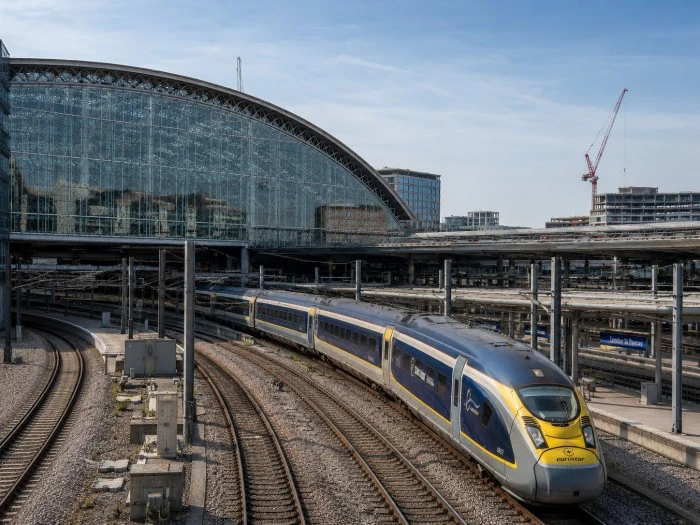
Eurostar’s three-decade position as the sole passenger operator through the Channel Tunnel is entering a new competitive era. On August 13, 2026, the Office of Rail and Road pre-approved a framework agreement allowing Virgin Trains to operate up to 20 daily return services between London and Paris, Brussels or Amsterdam from October 2030, although tunnel, European network and safety approvals remain outstanding.
The deeper threat is not another train company. It is the erosion of the infrastructure, capacity and regulatory barriers that protected Eurostar for decades. This analysis examines whether Eurostar’s capital investment, network expansion and operating scale can create a durable moat once credible challengers gain access to the same market.
Boardroom Briefing
- Virgin Trains has secured a major regulatory milestone allowing up to 20 daily return services between London and Paris, Brussels or Amsterdam from October 2030, subject to further approvals.
- Infrastructure access remains the critical barrier because challengers need rolling stock, depot capacity, Channel Tunnel access, HS1 access, European network permissions and safety approvals before launching services.
- Eurostar is investing £1.7 billion (€2 billion) in up to 50 Celestia double-decker trains, with around 20% more capacity and planned London–Frankfurt and London–Geneva services.
- Trenitalia France is targeting a London–Paris service from 2029 and has ordered 19 high-speed trains, adding an established European rail group to the competitive field.
- Gemini Trains is pursuing London–Cologne services from as early as 2030, alongside proposed Paris, Brussels, Frankfurt and Düsseldorf services, with Stratford International positioned as a potential London hub.
- Eurostar’s financial base is substantial: the company reported 20 million passengers, €2.0 billion of revenue and €337 million of EBITDA for 2025.
- Competition will not automatically produce dramatically cheaper fares because scarce infrastructure and high rolling-stock, maintenance and regulatory costs can constrain the number of operators capable of reaching profitable scale.
The Monopoly Is Ending, but the Market Is Not Yet Open
Eurostar’s monopoly is being challenged through regulated infrastructure access, but practical market entry still depends on rolling stock, tunnel access, European networks and safety approvals.
Eurostar has operated international passenger services through the Channel Tunnel since 1994, giving it more than three decades of operating experience before direct competition emerged. The structural advantage was never simply the Eurostar name; it was the accumulated ability to operate trains across a highly specialized international rail system.
Virgin crossed an important threshold in August 2026. The ORR pre-approved a framework track-access agreement allowing up to 20 daily return services between London and Paris, Brussels or Amsterdam from October 1, 2030 through December 31, 2040.
Virgin’s HS1 approval does not by itself authorize full cross-Channel operations. The company still needs rolling stock, access to other rail networks and safety approvals from UK and European authorities, while Channel Tunnel access also remains necessary.
The distinction is strategically important for any regulated, capital-intensive business. Permission to compete and the ability to compete are different assets. A market can be legally open while remaining operationally difficult to enter.
That is the first reason the Eurostar story is more complicated than a simple monopoly-ending narrative.
The Real Moat Is Infrastructure, Not the Eurostar Brand
The strongest barrier to cross-Channel competition is coordinated access to scarce physical and regulatory infrastructure, not customer loyalty alone.
Virgin’s progress illustrates the point. In October 2025, the ORR approved Virgin’s access to Temple Mills International depot, a facility critical to its proposed international operation. The regulator’s decision followed an assessment that the access was essential to Virgin’s plans.
The competitive stack includes rolling stock, depot access, HS1 paths, St Pancras capacity, Channel Tunnel access, European track access and safety certification. Each dependency can limit how quickly an entrant moves from a commercial plan to a functioning service.
The infrastructure question is especially important because international rail cannot scale simply by adding marketing spend. An operator needs trains that meet the relevant technical requirements, maintenance facilities, timetable paths and permission to operate across multiple networks.
Eurostar already possesses those capabilities.
The company reported 20 million passengers, €2.0 billion in revenue and €337 million in EBITDA for 2025. Those figures give the incumbent a substantial operating base from which to defend its network while challengers absorb the cost of entry.
Market access can be more defensible than customer loyalty when infrastructure is scarce.
Eurostar’s £1.7 Billion Counterattack: Scale Before Price
Eurostar’s primary defensive move is to increase capacity and network breadth before competitors can establish comparable scale economics.
Eurostar is investing £1.7 billion (€2 billion) in up to 50 new Celestia trains. The company says the double-decker fleet will provide around 20% more capacity, with the first services expected from 2031.
The investment is not simply a fleet replacement exercise. It is a response to a market in which capacity, frequency and destination coverage will become competitive weapons.
Eurostar has said the new trains will support direct London–Frankfurt and London–Geneva services. The company is also targeting 30 million annual passengers, meaning the fleet expansion is designed to support growth as well as defend existing routes.
More capacity can improve the economics of an incumbent. Higher passenger volumes can spread fixed operating costs across more seats, giving Eurostar greater flexibility if competitors introduce aggressive fares.
New destinations provide another defense. A challenger entering London–Paris attacks an established revenue pool. Eurostar can use its fleet expansion to pursue additional international demand while defending its core network.
The capital question is harder.
A £1.7 billion (€2 billion) investment creates value only if additional capacity generates sufficient utilization, yield and network returns. If competitive pressure reduces yields faster than new routes create demand, part of the investment becomes defensive capital rather than growth capital.
Virgin, Trenitalia and Gemini Are Testing Different Entry Strategies
The emerging challengers are pursuing different market-entry models, ranging from Virgin’s scale strategy to Trenitalia’s established European operating base and Gemini’s startup approach.
Virgin’s Scale-and-Brand Strategy
Virgin is combining a proposed high-frequency service with an established consumer brand and substantial planned infrastructure investment.
Virgin’s approved framework allows up to 20 daily return services across Paris, Brussels and Amsterdam. The company has also secured access to Temple Mills and has said its international project involves approximately £700 million of investment and around 400 jobs.
That proposed frequency is strategically important. Virgin is not positioning itself as a marginal operator with occasional services; it is seeking the scale required to become a credible alternative on Eurostar’s core international corridors.
The brand provides another potential advantage. Virgin enters with existing consumer recognition, but that recognition must translate into reliable international service, convenient schedules and repeat passenger demand.
The commercial test will be whether Virgin can turn its brand into high utilization and sustainable passenger yields.
Trenitalia’s Capital-Heavy European Network Strategy
Trenitalia represents an established European rail group using rolling-stock investment and existing high-speed expertise to enter the Channel Tunnel market.
Trenitalia France is targeting London–Paris services from 2029, while its parent group has ordered 19 high-speed trains for the broader expansion. The House of Commons Library identifies Trenitalia France among the operators seeking to challenge Eurostar on the route.
The strategic difference is important.
Trenitalia does not need to establish high-speed rail expertise from scratch. Its wider operating base gives it experience with high-speed rolling stock, European rail operations and international passenger services.
That creates a different capital equation from a startup.
The competitive question is whether Trenitalia can convert existing European rail capabilities into a sufficiently efficient Channel Tunnel operation.
Gemini’s Disruptor Model
Gemini is pursuing a differentiated entry strategy built around new routes, an alternative London hub and dynamic pricing.
Gemini has announced plans for London–Cologne services as early as 2030, with a journey time of about four hours according to the company. It has also proposed services to Paris, Brussels, Frankfurt and Düsseldorf.
The company has positioned Stratford International as part of its proposed London operation. Industry reporting has also described plans involving Stratford International and Ebbsfleet.
Gemini’s approach avoids making London–Paris the only competitive battleground.
A startup can also design its operating model without inheriting all of an incumbent’s assumptions. Dynamic pricing, alternative station access and underserved destinations can become strategic differentiators if the company can secure the infrastructure required to execute them.
That remains the central constraint.
Gemini may have a differentiated proposition, but it still needs the trains, maintenance arrangements, network access and regulatory approvals required by any cross-Channel operator.
The Contrarian Case: More Competitors Will Not Automatically Mean Lower Fares
Ending Eurostar’s monopoly can increase customer choice without turning international rail into a low-cost market.
International high-speed rail has a high fixed-cost structure. Operators must finance rolling stock, maintenance, energy, infrastructure access, station operations and regulatory compliance while coordinating services across multiple national rail systems.
Virgin’s regulatory position illustrates the issue. HS1 access is a major milestone, but the company still needs rolling stock, continental network access and safety approvals before its international operation can begin.
Competition can still put pressure on fares. The more important question is whether enough infrastructure capacity exists for multiple operators to achieve efficient utilization.
The assumption that ending a monopoly automatically produces a low-price market ignores the physical constraints of international rail.
A more plausible competitive structure is an oligopoly with differentiated products: Eurostar through network breadth and frequency, Virgin through brand and service proposition, Trenitalia through European rail scale, and Gemini through route design and pricing.
That structure can improve consumer choice without eliminating the cost base that supports cross-Channel rail.
For investors, the distinction matters. A market can become more competitive while remaining capital intensive.
What Eurostar’s Fight Reveals About Defensible Competitive Moats
A durable moat in infrastructure-intensive markets comes from several reinforcing advantages rather than one protected asset.
| Moat | Eurostar’s Position | Competitive Threat |
|---|---|---|
| Brand | Strong | Virgin has substantial consumer recognition |
| Infrastructure | Strong but contested | Access is increasingly being opened |
| Capital | Very strong | Virgin and Trenitalia have significant backing |
| Network | Strongest current advantage | New entrants can target underserved routes |
| Regulatory experience | Deep | Liberalization reduces exclusivity |
| Customer experience | Established | Challengers can compete through service design |
Eurostar does not lose every advantage when competition arrives. The change is that multiple advantages become contestable at the same time.
Infrastructure access is opening. Competitors can raise capital. Rolling-stock supply is available to credible operators. Alternative routes are being proposed.
Eurostar therefore needs to convert its accumulated experience into measurable economic advantages.
That means lower unit costs, high fleet utilization, strong frequency, reliable operations, wider network coverage and customer retention.
A moat should be judged by how much economic advantage survives after competitors receive comparable market access.
That is the broader executive lesson. Protected market share is not the same as durable competitive advantage.
The Strategic Playbook for Incumbents Entering Newly Competitive Markets
Leaders facing market liberalization should measure moat durability through infrastructure control, capital efficiency, customer retention and operating resilience—not market share alone.
- Identify infrastructure dependencies. Map every physical asset, regulatory approval and third-party agreement a credible competitor needs.
- Quantify competitor entry economics. Estimate the capital, time and operating complexity required for a rival to reach commercial scale.
- Invest before capacity becomes constrained. Secure rolling stock, facilities, technology and distribution capacity before competitors compete for the same resources.
- Defend customer experience without relying on legacy brand power. Lower switching barriers make reputation less defensible when alternatives become credible.
- Expand adjacent markets before competitors define them. New routes can create incremental demand instead of forcing every competitive battle into the existing core.
- Build regulatory resilience. Infrastructure allocation decisions can materially alter competitive economics, making regulatory preparedness part of strategy rather than compliance alone.
- Measure moat durability, not only market share. Track unit costs, utilization, frequency, yield, customer retention, infrastructure access and competitor capital deployment.
The final metric should be future competitive capacity.
A company can retain market share while its moat deteriorates. An entrant that has not yet taken meaningful customers may still have secured the trains, facilities and infrastructure required to become a serious competitor.
Boards should ask not only who is winning today, but which competitor is accumulating the assets needed to win tomorrow.
Europe’s High-Speed Rail Market Is Moving From Monopoly Economics to Network Economics
Europe’s high-speed rail market is moving toward a network model in which operators compete on capacity, connectivity, frequency and route breadth rather than exclusive access to passengers.
Eurostar’s 2025 performance shows why the market may expand rather than simply redistribute existing passengers. The company carried 20 million passengers during the year, while reporting €2.0 billion in revenue and €337 million in EBITDA.
Eurostar has also reported strong growth on several international corridors, reinforcing its view that international rail has room to expand even before new operators launch at scale.
That creates a different strategic possibility.
Virgin, Trenitalia and Gemini may not simply divide Eurostar’s existing customers. New destinations, additional frequencies and different price points could increase the number of passengers choosing international rail.
Competition can expand the addressable market when additional capacity creates services that did not previously exist.
Eurostar has responded by targeting 30 million annual passengers and investing in new trains capable of supporting Frankfurt and Geneva services.
But the infrastructure question remains.
Eurostar has appealed the ORR’s decision concerning Virgin’s HS1 access agreement, arguing that the capacity-allocation process was unfair. The ORR says it has received the appeal and is considering it. Those are competing positions and should not be treated as an established finding.
The dispute reveals where the competitive battle is moving.
Eurostar is no longer defending only a brand; it is competing over access to the physical capacity required to grow its network.
For executives outside rail, the lesson is broader. When regulators open a protected market, the first advantage to disappear may not be customer loyalty. It may be exclusive access to the infrastructure that made the business difficult to replicate.
Eurostar’s next decade will test whether network scale, operating experience, capital investment and infrastructure knowledge can remain valuable after monopoly protection fades.
The likely winner will not necessarily be the operator offering the lowest fare.
It will be the operator that extracts the greatest economic value from scarce trains, track paths, station capacity and passenger relationships.