
Hospitality Technology & the Future of Travel

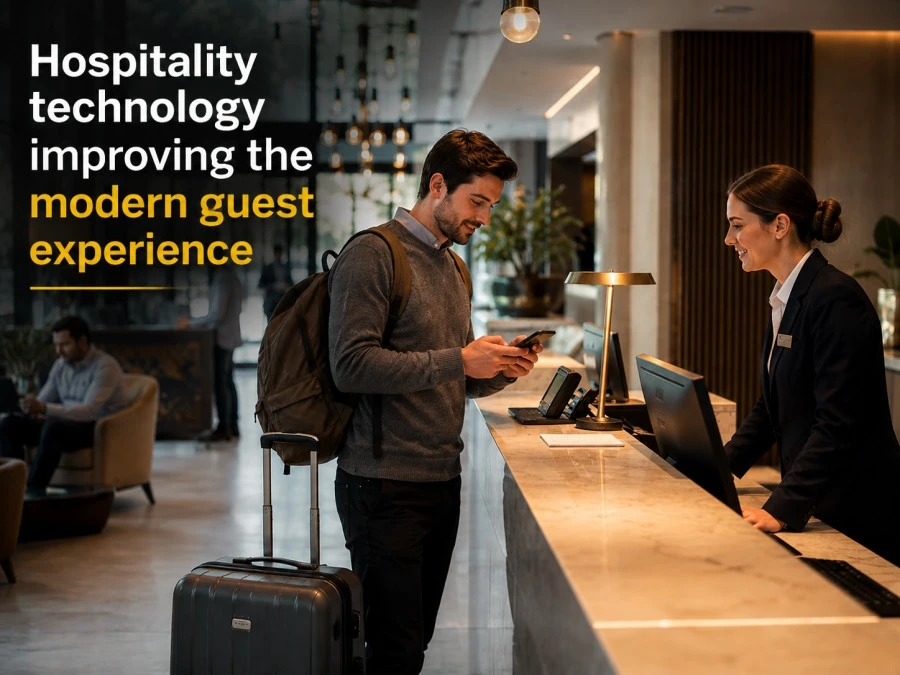
The hospitality industry is entering a new phase as technology changes how hotels, travelers, and businesses interact. From digital check-in and mobile room access to artificial intelligence and personalized services, hospitality technology is becoming an important part of the modern travel experience.
Travelers today expect more than a comfortable room. They want convenient booking, quick communication, personalized recommendations, flexible services, and a smooth experience from arrival to departure. This shift is pushing hotels and tourism businesses to rethink how they use technology while maintaining the personal service that has always defined hospitality.
For hotel operators, the challenge is finding the right balance. Technology can make operations faster and more efficient, but hospitality remains a people-focused business. The most successful companies are using technology to support employees and improve the guest experience, rather than allowing digital tools to replace human interaction completely.
How Technology Is Changing the Hospitality Industry
Technology is now influencing almost every stage of the travel journey. Travelers can search for hotels, compare prices, make reservations, check in, request services, and leave reviews using digital platforms.
For hotels, these technologies provide new ways to understand customer preferences and manage operations.
Some of the most important developments include:
- Mobile booking and hotel applications
- Digital and contactless check-in
- Smart room technology
- Artificial intelligence
- Automated customer service
- Digital payment systems
- Cloud-based hotel management
- Data analytics
- Personalized travel recommendations
These technologies are helping hotels reduce administrative work while giving guests greater control over their stay.
The shift is particularly important as competition increases across the global hospitality market. Hotels are no longer competing only on room quality and location. They are competing on convenience, personalization, service, and the overall customer journey.
Guest Experience Has Become a Competitive Advantage
The modern guest experience begins long before a traveler arrives at a hotel.
It starts with the booking process, continues through communication and check-in, and extends to the services guests receive during their stay. Even the post-stay experience, including feedback and loyalty programs, can influence whether a traveler returns.
Technology can improve each stage.
A traveler might receive a personalized booking recommendation based on previous preferences, complete check-in through a mobile application, use a smartphone as a room key, and communicate with hotel staff through digital messaging.
However, convenience is only one part of the experience.
Guests still value human interaction when they need assistance, recommendations, or solutions to unexpected problems. This means hotels need to use technology carefully, ensuring that digital services make the experience easier without making it feel impersonal.
Hotels that understand this balance can create stronger relationships with customers and differentiate themselves in an increasingly competitive market.
Digital Check-In Is Reshaping Hotel Arrivals
One of the most visible examples of hospitality technology is the growth of digital check-in.
Traditional hotel check-in can involve waiting at a reception desk, completing paperwork, and collecting a physical key. Digital systems can simplify parts of this process by allowing guests to provide information before arrival and, where available, access their rooms through mobile devices or other digital credentials.
This can reduce waiting times and allow hotel employees to focus on guests who need personal assistance.
For frequent travelers, these small improvements can make a significant difference. A faster arrival process can reduce friction after a long journey and create a more positive first impression.
At the same time, hotels need to ensure that digital check-in remains accessible to guests who prefer traditional service or may not be comfortable using mobile technology.
Smart Hotels Are Becoming More Connected
The concept of the smart hotel is also gaining attention as connected technology becomes more widely available.
Smart rooms can use connected devices to control lighting, temperature, entertainment, and other services. Some properties are also exploring sensors and automated systems to improve energy efficiency and monitor room conditions.
For guests, connected rooms can provide greater convenience and personalization. For hotel operators, they can provide information that helps improve maintenance and resource management.
For example, connected systems may help identify unusual energy consumption or equipment problems before they become major issues.
This demonstrates an important shift in the hospitality sector: technology is being used not only to improve the guest experience but also to make hotel operations more efficient.
Travel Technology Is Changing Tourism
The impact of technology extends beyond individual hotels. Travel technology is transforming the wider tourism industry, from transportation and booking platforms to digital travel guides and personalized experiences.
Travelers increasingly use smartphones throughout their journeys. They can access maps, translation tools, digital tickets, restaurant recommendations, travel information, and hotel services from a single device.
For tourism businesses, this creates opportunities to engage travelers at multiple points throughout their journey.
Hotels, airlines, travel agencies, attractions, and local businesses can use digital platforms to provide more relevant information and create smoother travel experiences.
As technology continues to evolve, the travel industry is moving toward a more connected model where different parts of the customer journey work together rather than operating independently.
AI and Automation Are Transforming Hotels
Artificial intelligence is becoming an increasingly important part of hospitality technology. Hotels are using AI and automation to improve customer service, manage operations, and understand guest preferences.
AI-powered systems can assist with tasks such as answering common questions, managing reservations, recommending services, and analyzing customer feedback. This allows hotel employees to spend more time handling complex requests and providing personal service.
Automation is also being used behind the scenes. Hotels can automate inventory management, housekeeping schedules, maintenance alerts, and certain administrative processes.
The goal is not simply to reduce the amount of human work. When implemented effectively, automation can remove repetitive tasks and allow employees to concentrate on the areas where human interaction creates the greatest value.
Personalization Is Becoming Central to Guest Experience
Modern travelers increasingly expect services that match their individual preferences. This is making personalization an important part of the guest experience.
Hotels can use customer information, booking history, loyalty activity, and stated preferences to provide more relevant services. For example, a returning guest may receive personalized room preferences, relevant recommendations, or targeted offers based on previous interactions.
However, personalization needs to be handled responsibly. Travelers want convenience, but they also expect their personal information to be protected.
Hotels therefore need clear data policies, secure technology, and transparent communication about how customer information is collected and used.
When handled correctly, personalization can strengthen customer relationships and encourage repeat bookings.
Hotel Innovation Is Improving Operations
Hotel innovation is not limited to guest-facing technology. Some of the most important developments are taking place behind the scenes.
Modern hotel management systems can connect reservations, housekeeping, payments, inventory, customer information, and reporting through centralized platforms.
This can give managers a clearer view of hotel performance and help teams coordinate daily operations.
For example, real-time information can help housekeeping teams prioritize rooms based on check-in schedules. Maintenance teams can receive alerts about equipment issues, while managers can monitor occupancy and operational performance.
These improvements can help hotels operate more efficiently while maintaining service standards.
Technology Can Improve Sustainability
Sustainability is becoming increasingly important across the hospitality industry, and technology can play a role in helping hotels reduce resource consumption.
Smart energy systems can monitor electricity usage and automatically adjust lighting or temperature based on occupancy. Water-monitoring systems can help identify unusual consumption or potential leaks.
Hotels can also use digital systems to reduce paper-based processes, optimize supply management, and improve waste monitoring.
These changes can benefit both the environment and hotel operations. Lower resource consumption can reduce costs while supporting broader sustainability goals.
For hotel leaders, technology therefore represents an opportunity to combine operational efficiency with responsible business practices.
The Human Side of Digital Hospitality
Despite rapid technological development, hospitality remains fundamentally about people.
A traveler may appreciate mobile check-in, smart rooms, and automated services, but technology cannot completely replace empathy, judgment, and personal attention.
This is particularly important when something goes wrong. A delayed flight, booking problem, special request, or unexpected issue may require a human employee who can understand the situation and provide an appropriate solution.
The strongest hospitality businesses are therefore likely to be those that combine technology with human service.
Technology should handle repetitive and predictable tasks, while employees focus on relationships, problem-solving, and experiences that require a human touch.
Challenges of Adopting Hospitality Technology
Technology offers significant opportunities, but implementation also creates challenges for hotels.
Investment Costs
New systems, connected devices, software platforms, and cybersecurity infrastructure require investment. Smaller hotels may find it difficult to adopt every new technology at once.
Employee Training
Employees need proper training to use new systems effectively. Poor implementation can create frustration rather than improving productivity.
Data Security
Hotels manage sensitive customer information, including personal details and payment information. Protecting this data is essential for maintaining customer trust.
Technology Integration
Different hotel systems need to work together. Poor integration can create duplicate work, inaccurate information, and operational problems.
Maintaining Personal Service
Hotels must ensure that technology does not make the experience unnecessarily impersonal. Digital convenience should complement hospitality rather than replace it.
These challenges mean that successful digital transformation requires careful planning rather than simply purchasing the latest technology.
The Competitive Advantage of Digital Hospitality
As tourism continues to become more digitally connected, hotels that provide convenient and personalized experiences can gain an important competitive advantage.
Technology can help businesses understand customers, improve operations, respond faster, and create more consistent service.
But the winners will not necessarily be the hotels with the most technology. They will be the ones that use technology strategically to solve genuine customer problems.
The future of hospitality will therefore depend on combining innovation with service, efficiency with personalization, and digital convenience with authentic human experiences.
The Future of Hospitality Technology
The future of hospitality technology will be shaped by a combination of artificial intelligence, automation, connected devices, and changing traveler expectations. Hotels and tourism businesses are moving toward more personalized, efficient, and digitally connected experiences.
However, the next stage of innovation will not be about replacing traditional hospitality. Instead, technology will increasingly work alongside employees to make their jobs easier and give guests greater convenience.
AI may help hotels understand demand, personalize offers, improve revenue management, and respond to routine customer requests. Connected systems can help monitor buildings and equipment, while automation can streamline repetitive operational tasks.
The result could be a hospitality industry that is more responsive while still maintaining the personal interaction travelers value.
Travel Technology Will Become More Integrated
The travel journey is becoming increasingly digital. Travelers already use technology to search for destinations, compare hotels, book accommodation, navigate unfamiliar locations, and communicate with service providers.
The next opportunity is connecting these individual experiences.
Instead of travelers using separate systems for flights, accommodation, transportation, activities, and payments, the industry is moving toward more integrated digital journeys.
For hotels, this could create opportunities to become more involved in the complete travel experience rather than focusing only on accommodation.
A hotel could potentially use digital platforms to help guests discover local experiences, arrange transportation, manage reservations, and receive personalized recommendations.
This broader approach could strengthen the relationship between hotels and travelers while creating additional opportunities for tourism businesses.
The Importance of Human-Centered Hospitality
Technology may change how hotels operate, but hospitality will continue to depend on human connection.
Travelers often remember how they were treated as much as the physical quality of a property. A friendly welcome, thoughtful recommendation, or quick response to a problem can have a lasting impact.
This means hotel leaders need to think carefully about where technology adds value and where human interaction matters most.
The ideal model is not a completely automated hotel. It is a human-centered digital hotel where technology removes unnecessary friction while employees remain available to provide genuine service.
This balance could become one of the most important competitive advantages in the future hospitality market.
Key Trends to Watch
Several developments are likely to influence the hospitality industry in the coming years:
- Greater use of artificial intelligence
- Personalized hotel services
- Smart rooms and connected devices
- Contactless and mobile-based services
- Automated hotel operations
- Digital travel platforms
- Data-driven decision-making
- Technology-enabled sustainability
- More integrated travel experiences
- Continued focus on customer experience
Hotels that understand these developments early can make more informed technology investments and prepare their teams for changing customer expectations.
Key Takeaways
The transformation of hospitality, hotels, and tourism is no longer simply a technology story. It is a customer experience story.
The most important lessons are:
- Hospitality technology can improve both guest services and hotel operations.
- AI and automation can reduce repetitive work and support employees.
- Personalization can create more relevant guest experiences.
- Travel technology is connecting different parts of the travel journey.
- Smart hotel systems can improve efficiency and resource management.
- Technology adoption requires investment, training, cybersecurity, and careful planning.
- Human interaction remains essential to successful hospitality.
- The strongest hotel innovation will combine digital convenience with genuine service.
Conclusion
The future of Hospitality Technology & Travel will be defined by how effectively businesses combine technology with the human side of hospitality.
Artificial intelligence, automation, smart rooms, connected systems, and digital travel platforms are creating new opportunities for hotels and tourism businesses. These technologies can improve efficiency, personalize services, and make travel more convenient.
But technology alone cannot create memorable experiences.
The hospitality companies that succeed will be those that understand what travelers actually value and use technology to deliver it more effectively. They will automate repetitive processes while empowering employees to focus on personal service, problem-solving, and meaningful guest relationships.
For hotel executives and tourism leaders, the priority should therefore be strategic innovation rather than technology for its own sake. The future belongs to businesses that can make travel simpler, more personalized, and more human.
As the industry continues to evolve, hospitality technology, guest experience, travel technology, and hotel innovation will remain closely connected. Together, they will shape a more intelligent, efficient, and customer-focused future for global travel.