
Electric Vehicles: Driving the Future of Mobility

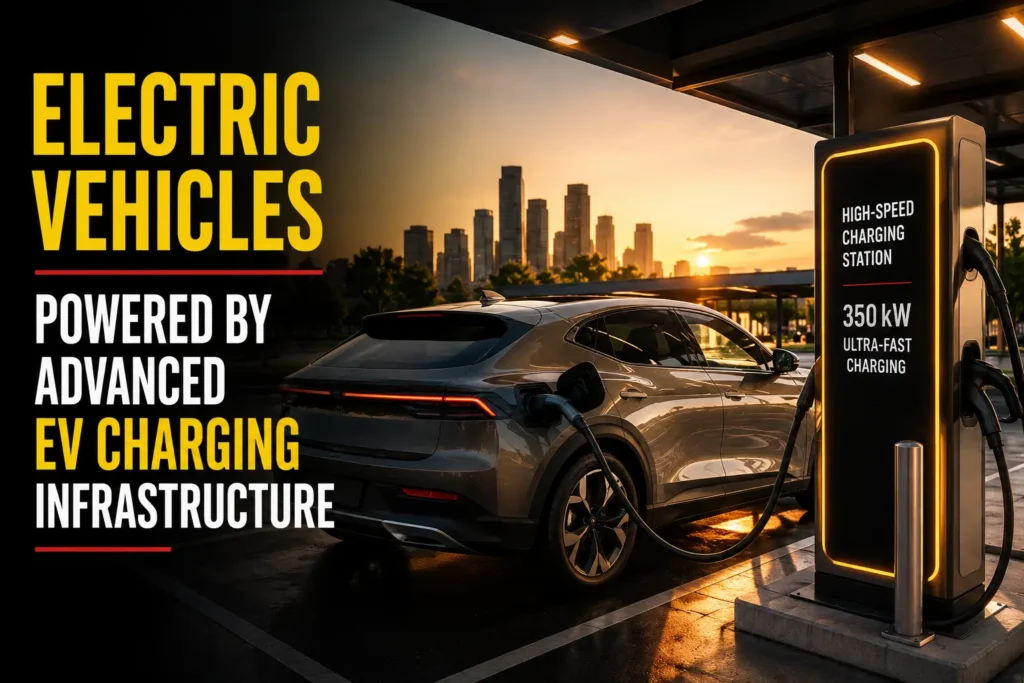
Electric Vehicles are reshaping the global transportation industry and redefining how people, businesses, and governments approach mobility. Once viewed as a niche alternative to conventional automobiles, electric vehicles have become a strategic priority for automakers, technology companies, policymakers, and investors seeking cleaner, smarter, and more sustainable transportation solutions.
The rapid advancement of battery technology, charging infrastructure, connected vehicle systems, and artificial intelligence has accelerated the global shift toward electric mobility. Consumers are increasingly considering electric cars not only for environmental reasons but also for lower operating costs, improved performance, and continuous technological innovation.
For business leaders, the rise of Electric Vehicles extends beyond the automotive sector. It is transforming manufacturing, energy, infrastructure, software development, supply chains, and urban planning, making it one of the most significant industrial transitions of the decade.
Why Electric Vehicles Matter Today
Transportation remains one of the world’s largest contributors to greenhouse gas emissions, making sustainable mobility a major global priority.
Governments, manufacturers, and private investors are accelerating investments in Electric Vehicles to reduce emissions, improve energy efficiency, and strengthen long-term energy security.
Modern EV ecosystems support:
- Sustainable transportation
- Lower operating costs
- Reduced fuel dependence
- Connected vehicle technologies
- Smart mobility solutions
- Clean energy integration
- Advanced battery systems
- Digital driving experiences
As environmental regulations become stricter and consumer expectations evolve, Electric Vehicles are becoming central to the future of transportation.
The Evolution of the EV Industry
The EV industry has evolved rapidly over the past decade.
Early electric vehicles primarily focused on environmental benefits, but today’s models compete directly with traditional vehicles in performance, range, safety, and technology.
Several factors are driving this transformation:
Battery Innovation
Advancements in lithium-ion batteries have improved vehicle range, charging speed, durability, and overall efficiency.
Digital Technology
Modern EVs integrate software, artificial intelligence, cloud connectivity, and over-the-air updates, creating smarter driving experiences.
Government Support
Many countries continue introducing incentives, emissions standards, and infrastructure investments to encourage electric mobility adoption.
Consumer Demand
Growing awareness of sustainability, lower maintenance costs, and improved driving performance continues to increase global demand for electric vehicles.
Together, these trends are strengthening the long-term outlook for the EV market.
EV Technology Is Redefining Modern Transportation
Technology lies at the center of today’s Electric Vehicles.
Modern EV platforms combine multiple innovations, including:
- Advanced battery management systems
- Artificial intelligence
- Connected vehicle software
- Autonomous driving technologies
- Regenerative braking
- Smart energy management
- Vehicle-to-cloud connectivity
- Digital driver assistance
Unlike traditional automobiles, many electric vehicles continue improving after purchase through software updates, adding new features and optimizing performance over time.
This software-first approach is transforming vehicles into intelligent mobility platforms rather than simply transportation products.
The Growth of EV Charging Infrastructure
One of the most important developments supporting Electric Vehicles is the expansion of charging infrastructure.
Reliable charging networks are becoming essential for large-scale EV adoption.
Current investments focus on:
- Fast-charging stations
- Ultra-fast highway charging
- Home charging solutions
- Workplace charging
- Smart charging management
- Renewable-powered charging stations
- Grid-integrated charging systems
As charging infrastructure continues expanding, range anxiety is gradually decreasing, making electric mobility more practical for consumers and commercial fleets alike.
Why Business Leaders Should Care
The transition toward Electric Vehicles represents more than a transportation trend—it is reshaping multiple industries simultaneously.
Automotive manufacturers, battery producers, software companies, utilities, logistics providers, infrastructure developers, and renewable energy businesses are all becoming part of the expanding EV ecosystem.
For executives, Electric Vehicles represent opportunities to innovate, diversify, improve sustainability, and compete in a rapidly evolving mobility landscape.
Organizations that prepare early for this transition will be better positioned to capitalize on the next generation of transportation and energy technologies.
Market Analysis: Why Electric Vehicles Are Transforming the Global Economy
The rapid rise of Electric Vehicles is reshaping far more than the automotive industry. It is influencing manufacturing, energy, mining, logistics, software development, financial services, and public infrastructure. As governments and businesses pursue lower-carbon economies, electric mobility has become one of the world’s fastest-growing industrial opportunities.
Several long-term factors continue driving the expansion of the EV market:
- Strong government support for clean transportation.
- Continuous improvements in battery technology.
- Expansion of public and private EV charging infrastructure.
- Increasing consumer demand for sustainable mobility.
- Corporate commitments to reduce carbon emissions.
- Rapid advances in digital vehicle technologies.
Unlike previous automotive transitions, today’s EV revolution is closely connected with artificial intelligence, cloud computing, renewable energy, and smart-city development.
For investors and business leaders, Electric Vehicles represent one of the most significant structural growth opportunities of the next decade.
Battery Innovation Is Powering the EV Industry
Battery technology remains the foundation of modern Electric Vehicles.
Manufacturers continue investing heavily in research to improve battery performance, charging speed, driving range, safety, and affordability.
Current innovation focuses on:
- Higher energy-density batteries.
- Faster charging capabilities.
- Longer battery lifespan.
- Improved thermal management.
- Battery recycling technologies.
- Sustainable raw material sourcing.
- Next-generation solid-state batteries.
As battery technology continues advancing, production costs are expected to decline while vehicle performance improves, making electric cars increasingly competitive across multiple market segments.
Battery innovation is also creating new opportunities for energy storage, renewable power integration, and smart electricity grids beyond the automotive sector.
EV Charging Is Becoming Critical Infrastructure
The success of Electric Vehicles depends heavily on reliable and accessible charging infrastructure.
Governments, utility providers, and private companies are investing billions in expanding EV charging networks to support growing adoption.
Modern charging ecosystems include:
- Home charging stations.
- Public charging networks.
- Ultra-fast highway chargers.
- Workplace charging facilities.
- Fleet charging infrastructure.
- Smart charging software.
- Renewable-powered charging stations.
Smart charging technologies are also helping balance electricity demand by allowing vehicles to charge during periods of lower grid usage, improving energy efficiency while reducing infrastructure pressure.
As charging networks become more widespread, electric mobility becomes increasingly practical for both individual drivers and commercial transportation.
Technology Is Creating Smarter Electric Vehicles
Today’s Electric Vehicles function as intelligent digital platforms rather than traditional automobiles.
Artificial intelligence, cloud connectivity, sensors, and advanced software enable continuous performance improvements through over-the-air updates.
Modern EV technology includes:
- AI-powered driver assistance.
- Predictive maintenance.
- Connected navigation systems.
- Real-time battery optimization.
- Remote diagnostics.
- Vehicle-to-cloud communication.
- Digital safety systems.
These capabilities improve customer experience while allowing manufacturers to introduce new software features throughout a vehicle’s lifespan.
The combination of automotive engineering and software development is creating an entirely new competitive landscape within the EV industry.
Leadership Lessons from the Electric Vehicle Revolution
The growth of Electric Vehicles provides valuable strategic insights for business leaders.
1. Innovation Drives Industry Transformation
Companies that continuously invest in research and development are better positioned to lead emerging markets.
2. Sustainability Creates Competitive Value
Environmental responsibility is increasingly influencing purchasing decisions, investor confidence, and long-term corporate reputation.
3. Ecosystems Matter More Than Individual Products
The success of electric mobility depends on collaboration between automakers, battery manufacturers, charging providers, software developers, energy companies, and governments.
4. Digital Transformation Is Reshaping Transportation
Software, artificial intelligence, and connected technologies are becoming as important as mechanical engineering in defining vehicle performance and customer satisfaction.
These leadership lessons demonstrate why Electric Vehicles are driving one of the largest industrial transformations of the twenty-first century.
Why Executives Should Prepare for the Future of Mobility
The future of transportation extends beyond replacing gasoline engines with electric motors.
Business leaders should prepare for broader mobility trends including:
- Autonomous transportation.
- Connected vehicle ecosystems.
- Shared mobility platforms.
- Renewable energy integration.
- Smart-city infrastructure.
- AI-driven transportation management.
- Digital mobility services.
Organizations that recognize these long-term trends can identify new opportunities for innovation, strategic partnerships, and sustainable business growth.
For executives, Electric Vehicles represent more than an automotive trend—they are becoming a catalyst for digital transformation, clean energy adoption, and the future of global mobility.
Challenges Facing the Electric Vehicle Industry
Despite the remarkable momentum behind Electric Vehicles, several challenges continue to influence the pace of global adoption. While technology and infrastructure have improved significantly, governments, manufacturers, and businesses must address key barriers before electric mobility becomes the dominant form of transportation.
One of the biggest challenges is charging infrastructure. Although public charging networks continue expanding, many regions still lack sufficient fast-charging stations to support growing EV ownership. Rural areas and developing markets, in particular, require greater investment to improve accessibility.
Battery production presents another challenge. Manufacturing lithium-ion batteries requires critical minerals such as lithium, nickel, cobalt, and graphite. Securing sustainable supply chains while reducing environmental impact has become a strategic priority for the EV industry.
Vehicle affordability also remains an important consideration. Although battery costs continue declining, the upfront purchase price of many Electric Vehicles remains higher than comparable internal combustion engine vehicles. Continued innovation and economies of scale are expected to improve affordability over time.
Grid capacity is another emerging issue. As EV adoption increases, electricity providers must modernize power infrastructure to support greater demand while integrating renewable energy sources efficiently.
Finally, battery recycling and end-of-life management will become increasingly important as millions of electric vehicles reach later stages of their lifecycle. Developing circular economy solutions for battery reuse and recycling will be essential for long-term sustainability.
Addressing these challenges will play a major role in determining how quickly Electric Vehicles continue expanding across global markets.
Future Outlook for Electric Vehicles
The future of Electric Vehicles remains exceptionally promising.
Rapid innovation across battery technology, artificial intelligence, renewable energy, and connected mobility is creating an entirely new transportation ecosystem. As governments strengthen climate commitments and businesses accelerate sustainability strategies, electric mobility is expected to become a central pillar of future transportation systems.
Several trends are expected to shape the next decade:
- Continued expansion of the global EV market.
- Breakthroughs in solid-state battery technology.
- Faster and more accessible EV charging networks.
- Greater adoption of autonomous driving systems.
- Increased integration with renewable energy.
- Expansion of vehicle-to-grid (V2G) technologies.
- AI-powered mobility platforms.
- Growth of electric commercial fleets and public transportation.
Advances in software-defined vehicles will also allow manufacturers to continuously improve vehicle capabilities through remote updates, creating more personalized and efficient driving experiences.
For businesses, the transition toward Electric Vehicles represents not only an environmental opportunity but also a powerful engine for innovation and long-term economic growth.
Executive Takeaways
The rapid evolution of Electric Vehicles offers several strategic lessons for business leaders.
1. Electric Mobility Is a Long-Term Growth Market
The global transition toward cleaner transportation continues creating opportunities across automotive manufacturing, energy, software, infrastructure, logistics, and financial services.
2. Innovation Creates Sustainable Competitive Advantage
Organizations investing in battery technology, AI, connected vehicles, and charging infrastructure are positioning themselves for future market leadership.
3. Collaboration Strengthens the EV Ecosystem
The success of Electric Vehicles depends on partnerships between governments, automakers, utilities, technology companies, battery manufacturers, and infrastructure providers.
4. Sustainability Drives Business Value
Environmental responsibility increasingly influences customer preferences, investor confidence, regulatory compliance, and corporate strategy.
5. Digital Technology Will Define Future Mobility
Software, artificial intelligence, cloud connectivity, and intelligent transportation systems are becoming essential components of modern vehicle platforms.
These insights demonstrate why Electric Vehicles are reshaping not only transportation but also the broader global economy.
Conclusion: Electric Vehicles Are Defining the Future of Transportation
The rise of Electric Vehicles marks one of the most significant industrial transformations of the modern era. What began as an alternative transportation technology has evolved into a strategic driver of innovation, sustainability, and economic development.
Across industries, businesses are investing in Electric Vehicles to reduce emissions, improve operational efficiency, strengthen energy security, and deliver smarter mobility solutions. Advances in EV technology, battery innovation, charging infrastructure, and connected software are making electric mobility increasingly practical for consumers, businesses, and governments alike.
Although challenges related to charging infrastructure, battery supply chains, affordability, and power grids remain, continuous technological progress is steadily overcoming these barriers. At the same time, collaboration between automakers, energy providers, policymakers, and technology companies is accelerating the transition toward cleaner transportation.
For executives, investors, and entrepreneurs, the message is clear: Electric Vehicles are no longer an emerging trend—they are becoming the foundation of the future mobility ecosystem.
Organizations that embrace electric mobility today will be better positioned to lead tomorrow’s transportation revolution, unlock new business opportunities, and contribute to a more sustainable global economy.