
Renewable Energy: How the Global Energy Transition Is Reshaping Business

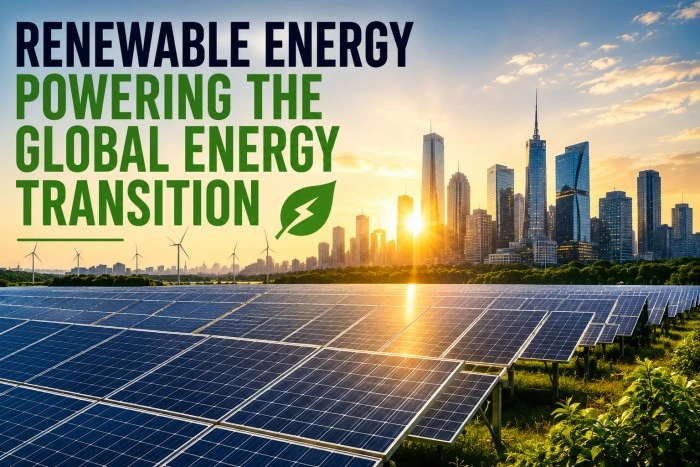
Renewable Energy has evolved from an environmental initiative into one of the world’s most significant economic and strategic growth opportunities. Governments, corporations, investors, and technology companies are accelerating investments in cleaner energy systems as they respond to rising electricity demand, climate commitments, and long-term energy security concerns.
The global energy transition is transforming how electricity is generated, distributed, and consumed. Solar farms, wind parks, battery storage, smart grids, hydrogen projects, and advanced clean technologies are becoming central to national infrastructure plans. At the same time, businesses are integrating sustainable energy solutions to reduce operating costs, improve resilience, and meet increasingly ambitious environmental goals.
For executives and investors, Renewable Energy is no longer simply a sustainability conversation—it is a strategic business priority influencing capital allocation, innovation, and competitive advantage across industries.
Why Renewable Energy Matters More Than Ever
The importance of Renewable Energy extends far beyond reducing greenhouse gas emissions.
Global electricity demand continues to increase as economies digitize, artificial intelligence expands data-center capacity, electric vehicles become more common, and manufacturing grows in emerging markets. Meeting this demand using traditional fossil fuels alone presents both environmental and economic challenges.
Renewable technologies offer an alternative that supports long-term energy security while reducing dependence on volatile fuel markets.
Today, businesses are investing in:
- Solar energy projects
- Wind energy installations
- Battery energy storage
- Smart electricity grids
- Renewable power purchase agreements
- Energy efficiency technologies
These investments help organizations improve operational resilience while strengthening environmental, social, and governance (ESG) performance.
Understanding Renewable Energy Sources
A successful energy transition depends on combining multiple renewable energy sources, each offering unique strengths.
Solar Energy
Solar energy has become one of the fastest-growing sources of electricity worldwide. Falling equipment costs, higher panel efficiency, and supportive government policies continue to accelerate adoption across residential, commercial, and utility-scale markets.
Wind Energy
Wind energy remains a cornerstone of renewable electricity generation. Both onshore and offshore wind projects are expanding rapidly, particularly in Europe, North America, and parts of Asia.
Geothermal Energy
Although smaller in scale, geothermal energy provides highly reliable baseload electricity by utilizing heat stored beneath the Earth’s surface. Countries with suitable geological conditions continue expanding geothermal capacity.
Hydropower
Hydropower remains one of the largest contributors to renewable electricity generation globally. Existing infrastructure continues providing dependable low-carbon energy while new projects increasingly emphasize environmental sustainability.
Renewable Technology Innovation
Advances in battery storage, grid management software, artificial intelligence, and digital monitoring systems are making renewable energy systems more efficient and reliable than ever before.
The Business Case for Renewable Energy
The economics of Renewable Energy have changed dramatically over the past decade.
Previously viewed as expensive alternatives, many renewable technologies now compete directly with—or outperform—traditional energy sources in terms of long-term operating costs.
Businesses increasingly adopt renewable energy because it can:
- Lower long-term electricity expenses.
- Reduce exposure to fuel-price volatility.
- Support sustainability commitments.
- Strengthen investor confidence.
- Improve operational resilience.
- Enhance corporate reputation.
Major global companies including Microsoft, Google, Amazon, Apple, and IKEA continue investing heavily in renewable electricity to power operations and achieve ambitious climate targets.
Their strategies demonstrate that clean energy has become a competitive business advantage rather than simply a corporate responsibility initiative.
Investment Is Accelerating the Energy Transition
Investment has become one of the strongest drivers behind Renewable Energy growth.
Institutional investors, infrastructure funds, venture capital firms, and sovereign wealth funds are directing billions of dollars toward renewable power generation, battery technology, hydrogen projects, and clean infrastructure.
Governments are also supporting investment through tax incentives, infrastructure programs, and long-term climate strategies designed to encourage private-sector participation.
This influx of capital is accelerating innovation while creating opportunities for equipment manufacturers, software developers, engineering firms, utilities, and technology companies.
As investment continues expanding, the renewable energy sector is becoming one of the world’s largest sources of infrastructure development and economic growth.
Why Business Leaders Should Pay Attention
The rise of Renewable Energy represents far more than an environmental trend—it signals a structural transformation of the global economy.
Organizations that successfully integrate clean energy strategies into their long-term planning are likely to benefit from improved cost efficiency, stronger investor confidence, greater operational resilience, and enhanced brand reputation.
For CEOs, founders, investors, and policymakers, understanding Renewable Energy is becoming essential to navigating an increasingly competitive and sustainability-focused business landscape.Market Analysis: Why Renewable Energy Is Becoming a Global Economic Driver
The expansion of Renewable Energy is no longer driven solely by environmental concerns. Today, economic competitiveness, technological innovation, and national energy security are equally important factors accelerating the global energy transition.
Countries are investing heavily in modernizing their power infrastructure to support growing electricity demand from electric vehicles, artificial intelligence, advanced manufacturing, and digital economies. As electricity consumption rises, governments and businesses are recognizing that a diversified energy mix built around renewable resources can improve long-term resilience while reducing dependence on imported fossil fuels.
At the same time, declining costs for renewable technologies have significantly improved their commercial viability. Solar panels, wind turbines, battery storage systems, and smart-grid technologies have become more efficient and affordable, making large-scale renewable projects increasingly attractive to both public and private investors.
For business leaders, Renewable Energy represents one of the strongest long-term investment themes of the decade, creating opportunities across infrastructure, manufacturing, finance, technology, and industrial development.
How Clean Technology Is Accelerating the Energy Transition
The success of the global energy transition depends not only on renewable power generation but also on continuous advances in clean technology.
Modern renewable systems are becoming smarter, more connected, and increasingly efficient through digital innovation.
Key technologies transforming the industry include:
- Artificial intelligence for energy forecasting.
- Smart grids that balance electricity demand in real time.
- Battery energy storage systems.
- Digital monitoring and predictive maintenance.
- Advanced power management software.
- Hydrogen production technologies.
- Carbon capture and energy optimization solutions.
Artificial intelligence, in particular, is helping utilities improve forecasting accuracy for solar and wind generation while reducing operational costs.
Battery storage is another critical development. As renewable electricity production increases, energy storage allows excess power generated during sunny or windy periods to be used when demand rises, improving grid stability and reliability.
Together, these innovations are making Renewable Energy more dependable and commercially scalable than ever before.
Renewable Energy Investment Is Reshaping Global Markets
Investment continues to be one of the strongest growth drivers behind Renewable Energy.
Governments worldwide are introducing incentive programs, tax credits, infrastructure funding, and supportive regulations designed to accelerate renewable deployment.
Private investment is also expanding rapidly.
Institutional investors, pension funds, venture capital firms, and infrastructure specialists increasingly view renewable projects as attractive long-term assets capable of generating stable returns.
Investment opportunities now extend across multiple sectors:
- Solar and wind infrastructure.
- Battery manufacturing.
- Electric grid modernization.
- Renewable technology startups.
- Green hydrogen production.
- Sustainable construction.
- Electric mobility ecosystems.
For financial markets, Renewable Energy has evolved into a major infrastructure investment theme with global significance.
Companies that develop innovative technologies, improve operational efficiency, or strengthen energy resilience are attracting increasing attention from investors seeking long-term growth opportunities.
Leadership Lessons from the Renewable Energy Revolution
The transformation of the energy sector offers valuable strategic lessons for organizations across every industry.
1. Innovation Creates Competitive Advantage
Businesses investing in new technologies often gain stronger market positions before industries fully mature.
2. Long-Term Planning Delivers Sustainable Growth
Energy infrastructure requires decades of planning and investment. Organizations that adopt long-term strategies are generally better positioned to benefit from structural market shifts.
3. Sustainability Supports Business Performance
Environmental responsibility is increasingly influencing investment decisions, customer preferences, and corporate reputation.
4. Collaboration Accelerates Innovation
Governments, private companies, technology providers, research institutions, and financial organizations all play important roles in expanding renewable energy adoption.
These leadership principles demonstrate that Renewable Energy is as much about strategic management as it is about technological progress.
Renewable Energy Jobs and Economic Growth
One of the most significant outcomes of the global energy transition is the creation of new employment opportunities.
As renewable projects expand, demand continues growing for professionals in engineering, construction, software development, manufacturing, project management, environmental consulting, and energy finance.
The renewable sector is creating opportunities in areas such as:
- Solar panel manufacturing.
- Wind turbine engineering.
- Battery technology.
- Smart-grid management.
- Renewable project development.
- Clean technology research.
- Sustainability consulting.
- Energy data analytics.
Universities and technical institutions are also adapting their programs to prepare graduates for careers in clean energy and emerging technologies.
For governments, the growth of Renewable Energy represents not only environmental progress but also an opportunity to strengthen domestic industries, improve workforce skills, and stimulate regional economic development.
Why CEOs Should Prepare for the Renewable Energy Economy
The transition toward Renewable Energy is influencing nearly every major industry.
Manufacturers are reducing emissions through clean electricity. Technology companies are investing in renewable-powered data centers. Retailers are strengthening ESG commitments, while logistics businesses are exploring electrification and sustainable transportation solutions.
Executives who view renewable energy solely as a compliance requirement risk overlooking broader business opportunities.
Instead, forward-looking organizations are integrating renewable strategies into:
- Corporate sustainability plans.
- Capital investment decisions.
- Supply-chain resilience.
- Digital transformation initiatives.
- Risk management frameworks.
- Long-term business strategy.
The companies that successfully combine technological innovation with sustainable energy adoption are likely to be better positioned for future growth in an increasingly low-carbon global economy.
Challenges Slowing the Renewable Energy Transition
Despite the remarkable progress of Renewable Energy, significant challenges remain before the world can achieve a fully sustainable energy system. Expanding clean power generation requires more than installing solar panels and wind turbines—it demands large-scale investment in infrastructure, technology, policy, and workforce development.
One of the biggest challenges is electricity grid modernization. Many national power grids were designed decades ago for centralized fossil-fuel generation and now require extensive upgrades to efficiently integrate renewable electricity from multiple distributed sources.
Energy storage also remains a critical issue. While battery technology continues to improve, storing renewable electricity at utility scale remains expensive in many regions. Reliable storage solutions are essential to ensure stable electricity supplies during periods of low wind or limited sunlight.
Supply chain resilience presents another concern. Growing demand for solar panels, batteries, rare earth minerals, and advanced semiconductor components has increased pressure on global manufacturing and logistics networks. Diversifying supply chains will be important to maintaining long-term industry growth.
Policy uncertainty can also slow investment. Renewable infrastructure projects often require long planning cycles, making investors dependent on stable regulations, consistent incentives, and predictable energy policies.
Addressing these challenges will determine how quickly Renewable Energy can continue expanding over the coming decade.
Future Outlook for Renewable Energy
The long-term outlook for Renewable Energy remains exceptionally strong.
Global electricity demand is expected to continue increasing as economies become more digital, transportation becomes increasingly electrified, and industries adopt cleaner production methods. Meeting this demand sustainably will require continued investment across the renewable energy ecosystem.
Several trends are expected to define the next phase of growth:
- Larger utility-scale solar and wind projects.
- Expansion of offshore wind infrastructure.
- Greater deployment of battery storage systems.
- Increased investment in green hydrogen.
- AI-powered energy management platforms.
- Smarter electricity grids and digital utilities.
- Continued growth in renewable energy investment.
- Stronger collaboration between governments and private industry.
Innovation will continue reducing costs while improving efficiency, making renewable technologies increasingly accessible across developed and emerging economies.
The next decade is likely to see renewable power become an even larger contributor to global electricity generation, supported by advances in digital technologies, automation, and intelligent energy management systems.
Executive Takeaways
The rapid expansion of Renewable Energy offers valuable strategic lessons for executives, entrepreneurs, and policymakers.
1. Renewable Energy Is Now a Business Strategy
Clean energy has moved beyond environmental responsibility. It has become a core driver of operational resilience, cost optimization, and long-term competitiveness.
2. Innovation Will Shape Future Market Leaders
Organizations investing in renewable technology, digital infrastructure, and sustainable innovation are likely to gain competitive advantages as markets continue evolving.
3. Energy Security Matters More Than Ever
Diversified renewable energy systems can strengthen national resilience while reducing exposure to fuel-price volatility and geopolitical uncertainty.
4. Sustainability Creates Investor Confidence
Environmental performance increasingly influences capital allocation, customer trust, and corporate reputation. Businesses demonstrating measurable sustainability progress are better positioned to attract long-term investment.
5. Collaboration Will Accelerate the Energy Transition
Governments, utilities, technology companies, financial institutions, manufacturers, and research organizations must continue working together to scale renewable infrastructure and accelerate innovation.
These insights demonstrate why Renewable Energy has become one of the defining business and economic opportunities of the decade.
Conclusion: Renewable Energy Is Defining the Future of Global Business
The rise of Renewable Energy represents one of the most significant transformations in the modern global economy. What began as an environmental initiative has evolved into a powerful engine of innovation, investment, and industrial growth.
Across industries, businesses are adopting clean energy solutions not only to reduce emissions but also to improve operational efficiency, strengthen energy security, and enhance long-term competitiveness. Advances in solar energy, wind energy, battery storage, renewable technology, and smart-grid infrastructure are making the global energy transition increasingly achievable.
At the same time, continued investment, supportive public policy, and technological innovation will remain essential for overcoming infrastructure, storage, and supply chain challenges.
For business leaders, the message is clear: Renewable Energy is no longer a future trend—it is a present-day strategic priority. Organizations that embrace sustainable innovation today will be better prepared to compete in tomorrow’s low-carbon economy.
As the global energy transition accelerates, Renewable Energy will continue reshaping industries, creating new investment opportunities, generating high-value jobs, and defining the next era of sustainable economic development.