
Why Premium Gin Is Winning in 2026

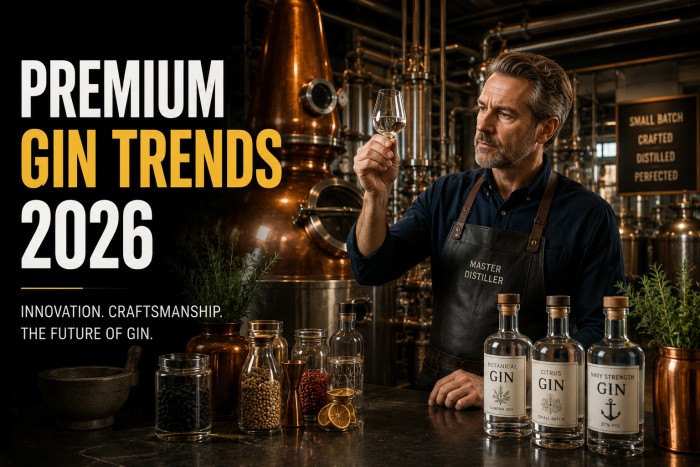
The conversation around Premium Gin Trends 2026 is no longer just about new flavors or attractive packaging. It reflects a broader transformation within the global spirits industry, where consumers are placing greater value on craftsmanship, authenticity, and premium experiences.
Although the alcoholic beverage sector continues to face changing consumer habits and economic pressures, gin has demonstrated remarkable resilience. Premium and craft expressions continue to attract consumers looking for quality over quantity, encouraging distillers to innovate with botanicals, production techniques, and sustainable practices.
Recent international blind-tasting competitions and industry reports have reinforced this momentum, highlighting the growing diversity and quality of premium gins entering the global market. Rather than competing solely on price, producers are increasingly differentiating themselves through originality, regional ingredients, and exceptional distillation standards.
For business leaders, beverage companies, investors, and hospitality professionals, Premium Gin Trends 2026 provide valuable insight into how premiumization is reshaping one of the world’s most established spirits categories.
Why Premium Gin Trends 2026 Matter
Consumer preferences are changing rapidly across the food and beverage industry.
Rather than purchasing larger quantities of alcoholic beverages, many consumers are choosing fewer but higher-quality products. This “drink better, not more” mindset has become one of the defining characteristics of today’s premium spirits market.
The shift has created new opportunities for distilleries willing to invest in quality ingredients, distinctive branding, and authentic storytelling.
Premium Gin Trends 2026 illustrate how innovation can help mature product categories remain competitive. Gin producers are expanding beyond traditional recipes by incorporating regional botanicals, experimenting with aging techniques, and creating expressions that appeal to both cocktail enthusiasts and consumers seeking premium sipping experiences.
This evolution demonstrates that premiumization is no longer a niche strategy—it has become a key driver of growth across the global beverage industry.
The Current State of the Global Gin Market
The global gin market has matured significantly over the past decade.
Following a period of rapid expansion driven by craft distilleries and premium product launches, the industry has entered a phase where sustainable growth depends increasingly on product quality and consumer loyalty.
While growth rates have moderated in some regions, consumer demand for premium spirits remains strong. Industry research indicates that gin consumption continues to outperform pre-pandemic levels, supported by strong interest in premium cocktails, home mixology, and unique botanical flavors.
Instead of competing through aggressive pricing, many distillers are focusing on:
- Premium product positioning.
- Small-batch production.
- Local and sustainable ingredients.
- Distinctive botanical profiles.
- Premium hospitality partnerships.
- International brand expansion.
These strategies are helping producers strengthen brand value while responding to increasingly sophisticated consumer expectations.
For investors, the category demonstrates how established beverage sectors can continue evolving through innovation rather than relying solely on volume growth.
Premiumization Is Driving Industry Growth
One of the most significant themes within Premium Gin Trends 2026 is the continued rise of premiumization.
Consumers are becoming more selective about what they drink. Rather than choosing products based only on affordability, purchasing decisions increasingly reflect quality, craftsmanship, production methods, and brand authenticity.
This trend is influencing nearly every segment of the spirits industry.
Distilleries are introducing limited editions, higher-quality botanical blends, cask-aged expressions, and regionally inspired products designed to deliver distinctive tasting experiences.
At the same time, retailers and hospitality businesses are expanding premium selections to meet evolving customer preferences.
Premiumization also benefits producers in another important way.
Higher-value products often generate stronger margins than mass-market alternatives, allowing brands to invest further in innovation, sustainability, and international expansion.
For business leaders, this demonstrates how creating additional customer value can become a more sustainable growth strategy than competing primarily on price.
Innovation Is Redefining Modern Gin
Innovation remains one of the strongest competitive advantages within the spirits industry.
Today’s premium gin producers are moving beyond traditional juniper-forward profiles by exploring new botanical combinations, advanced distillation techniques, and regional flavor identities.
Many brands now emphasize locally sourced ingredients, environmentally responsible production methods, and transparent craftsmanship as part of their brand positioning.
This creativity has contributed to increasing recognition for producers from both established and emerging gin markets.
Industry tasting competitions have also highlighted the remarkable diversity now present across the category, with traditional London Dry expressions standing alongside contemporary botanical styles, cask-aged releases, flavored gins, organic offerings, and premium limited editions.
These developments demonstrate that Premium Gin Trends 2026 are being shaped by continuous innovation rather than short-term marketing campaigns.
For consumers, greater diversity means more choice.
For producers, it creates opportunities to build stronger brands through originality, craftsmanship, and consistent product quality.
What Business Leaders Can Learn
The evolution of the gin industry offers lessons that extend well beyond beverages.
Successful premium brands consistently invest in three areas:
- Product quality.
- Brand differentiation.
- Long-term customer trust.
Rather than relying solely on promotional campaigns, many leading producers are strengthening their competitive position through craftsmanship, innovation, and authentic storytelling.
These principles apply across industries—from luxury goods and hospitality to technology and consumer products.
The continued momentum behind Premium Gin Trends 2026 illustrates that businesses capable of combining innovation with consistent quality are often better positioned to create sustainable long-term growth.
Market Analysis: Why Premium Gin Trends 2026 Continue to Gain Momentum
The momentum behind Premium Gin Trends 2026 reflects broader changes in consumer behavior rather than a temporary shift in beverage preferences. Across global markets, consumers are becoming more intentional about their purchases, placing greater importance on quality, authenticity, and memorable experiences.
Instead of competing on volume alone, many premium spirits brands are focusing on creating products that offer distinctive flavors, compelling brand stories, and superior craftsmanship. This strategy allows producers to strengthen customer loyalty while improving long-term profitability.
For the gin industry, this approach has encouraged distilleries to invest in product innovation, sustainable production, and premium positioning rather than relying solely on traditional recipes.
Another notable trend is the increasing international diversity of premium gin. While established producers continue to perform strongly, distilleries from emerging markets are earning recognition for introducing local botanicals, regional ingredients, and unique production techniques that appeal to modern consumers seeking new experiences.
The continued growth of Premium Gin Trends 2026 demonstrates that innovation and quality are becoming stronger competitive advantages than simply expanding production volumes.
Consumer Preferences Are Driving Premium Spirits
Today’s consumers are making purchasing decisions differently than they did a decade ago.
Rather than buying products based solely on price, many consumers now evaluate quality, craftsmanship, sustainability, transparency, and overall brand experience.
This change has encouraged premium gin producers to focus on several key priorities:
- Authentic botanical ingredients.
- Small-batch craftsmanship.
- Sustainable sourcing and production.
- Premium packaging and branding.
- Unique regional identities.
- Exceptional cocktail versatility.
Consumers are also showing greater interest in discovering brands with distinctive stories rather than choosing only long-established names.
As a result, smaller distilleries now have greater opportunities to compete alongside global beverage companies by emphasizing originality and product excellence.
The success of Premium Gin Trends 2026 illustrates how consumer expectations continue to reshape product development across the entire beverage industry.
Innovation Is Expanding the Definition of Gin
Innovation has become one of the strongest growth drivers within the premium spirits sector.
Traditional London Dry gin remains highly respected, but consumers are increasingly exploring contemporary styles featuring unusual botanicals, citrus-forward profiles, herbal complexity, floral expressions, cask-aged finishes, and organic ingredients.
Distillers are experimenting with:
- Indigenous botanicals.
- Barrel maturation techniques.
- Sustainable farming partnerships.
- Lower-impact production methods.
- Limited-edition seasonal releases.
- Premium cocktail-focused expressions.
These innovations are helping brands reach new audiences while maintaining the essential character that defines quality gin.
International tasting competitions continue to showcase how both heritage producers and emerging distilleries are successfully balancing tradition with creativity.
The evolution of Premium Gin Trends 2026 demonstrates that innovation does not require abandoning classic styles—it often involves refining them for modern consumer preferences.
Leadership Lessons from the Premium Gin Industry
The premium gin market offers valuable business lessons that extend far beyond the beverage sector.
1. Quality Builds Long-Term Brand Value
Companies that consistently invest in product excellence are more likely to earn customer loyalty than businesses competing primarily on discounts.
2. Innovation Creates Sustainable Growth
Successful organizations continually improve products and customer experiences rather than relying on past achievements.
3. Brand Storytelling Matters
Consumers increasingly connect with brands that communicate authenticity, craftsmanship, and purpose.
4. Differentiation Beats Commoditization
As competition increases, businesses that develop unique value propositions are generally better positioned to maintain pricing power and customer loyalty.
These principles explain why Premium Gin Trends 2026 continue to attract attention from investors, hospitality companies, and consumer goods executives alike.
Global Competition Is Raising Industry Standards
One of the most encouraging developments within Premium Gin Trends 2026 is the increasing diversity of producers earning recognition across international markets.
Premium-quality gin is no longer concentrated in a handful of traditional producing regions.
Today, innovative distilleries from Europe, Asia-Pacific, North America, and other emerging markets are introducing distinctive expressions inspired by local ingredients, regional culture, and modern distillation techniques.
This broader participation is strengthening competition across the category.
For consumers, increased competition means greater product choice and higher overall quality.
For producers, it encourages continuous improvement and ongoing investment in research, production, sustainability, and customer engagement.
Industry recognition through international tasting events has become an important benchmark for quality, helping brands demonstrate craftsmanship while giving consumers greater confidence in premium products.
Why Business Leaders Should Watch Premium Gin Trends 2026
The evolution of the premium gin market reflects broader shifts taking place across many consumer industries.
Companies are discovering that long-term success increasingly depends on delivering differentiated products, memorable customer experiences, and authentic brand value rather than competing exclusively on price.
Executives in luxury goods, hospitality, retail, and consumer packaged goods can draw several important lessons from Premium Gin Trends 2026:
- Premium positioning supports stronger brand equity.
- Innovation drives customer engagement.
- Sustainability influences purchasing decisions.
- Authenticity strengthens long-term loyalty.
- Product quality remains the foundation of lasting competitive advantage.
As global consumer expectations continue to evolve, the strategies shaping today’s premium gin market may offer valuable insights for organizations across a wide range of industries.
Challenges Facing Premium Gin Trends 2026
Despite the positive momentum surrounding Premium Gin Trends 2026, the industry continues to navigate a complex business environment. Slower economic growth, changing consumer spending habits, and intense competition are encouraging producers to rethink their long-term strategies.
One of the most significant challenges is premium pricing. While consumers continue to appreciate high-quality spirits, they are also becoming more selective about discretionary spending. Brands must clearly demonstrate value through craftsmanship, authenticity, and product quality rather than relying solely on premium positioning.
Competition has also intensified. Hundreds of craft distilleries and established global brands are introducing new expressions each year, making differentiation increasingly important. Innovation remains essential, but maintaining consistent quality and a distinctive brand identity is equally critical.
Another challenge is sustainability. Modern consumers expect beverage companies to reduce environmental impact through responsible sourcing, recyclable packaging, energy-efficient production, and transparent supply chains. Sustainability is no longer a marketing advantage—it is becoming a business expectation.
In addition, evolving regulations, international trade dynamics, and shifting distribution channels continue to influence growth opportunities across the global spirits market.
The future of Premium Gin Trends 2026 will depend on how effectively producers balance innovation, operational efficiency, and long-term brand trust.
Future Outlook for Premium Gin Trends 2026
The outlook for Premium Gin Trends 2026 remains encouraging, even as the spirits industry becomes more competitive.
Consumers are expected to continue favoring premium products that deliver quality, authenticity, and memorable experiences over high-volume consumption. This supports the ongoing shift toward premiumization across the beverage sector.
Several trends are likely to shape the next phase of industry growth:
- Continued expansion of premium and craft gin portfolios.
- Greater use of locally sourced and sustainable botanicals.
- Increased investment in environmentally responsible production.
- Growth of experiential hospitality and premium cocktail culture.
- Wider adoption of digital marketing and direct-to-consumer engagement.
- Greater international recognition for emerging craft distilleries.
Innovation will remain central to success, but the strongest brands will combine creativity with consistency, quality control, and customer trust.
As consumers become more knowledgeable about premium spirits, they are likely to reward brands that demonstrate genuine craftsmanship rather than short-term marketing trends.
Executive Takeaways from Premium Gin Trends 2026
The evolution of Premium Gin Trends 2026 provides valuable insights for business leaders across industries.
1. Premium Quality Creates Long-Term Value
Organizations that prioritize product excellence often build stronger customer loyalty and sustainable brand equity.
2. Innovation Must Support Brand Identity
Introducing new ideas is important, but innovation should strengthen—not dilute—a company’s core values and customer expectations.
3. Consumer Experience Drives Competitive Advantage
Modern consumers increasingly value authenticity, storytelling, and memorable experiences alongside product performance.
4. Sustainability Has Become a Strategic Priority
Responsible sourcing, environmental stewardship, and transparent business practices are becoming essential components of long-term growth.
5. Global Competition Encourages Continuous Improvement
As more brands enter premium markets, companies must continually invest in product development, operational excellence, and customer relationships to remain competitive.
These lessons extend beyond the spirits industry and apply equally to luxury goods, hospitality, retail, technology, and consumer products.
Conclusion: What Premium Gin Trends 2026 Mean for the Future of the Spirits Industry
The rise of Premium Gin Trends 2026 demonstrates that the global gin industry continues to evolve through innovation, craftsmanship, and changing consumer expectations.
Rather than competing solely on price or production volume, many producers are differentiating themselves through premium quality, distinctive botanical profiles, sustainable practices, and authentic brand experiences. This shift reflects a broader transformation across the consumer goods sector, where value is increasingly defined by quality and trust.
International industry competitions and market developments also highlight how both established distilleries and emerging producers are raising standards across the category. As premium expressions continue to gain recognition, consumers benefit from greater diversity, higher quality, and more innovative products.
For business leaders, the success of Premium Gin Trends 2026 reinforces an important strategic principle: sustainable growth is built through continuous innovation, operational excellence, and a deep understanding of evolving customer preferences.
Looking ahead, the gin category appears well positioned to remain one of the most dynamic segments of the global spirits industry. Brands that successfully combine tradition with innovation, sustainability with craftsmanship, and premium quality with authentic storytelling will likely shape the next chapter of growth in the years ahead.