
Gen Z AI Entrepreneurship: How Young Founders Are Building Modern Businesses

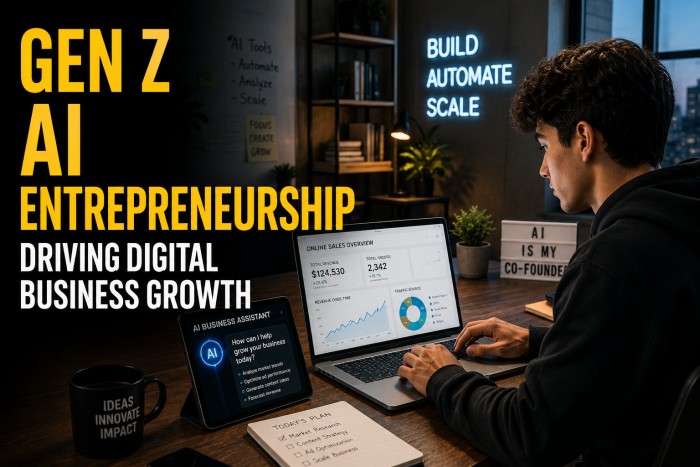
Gen Z AI Entrepreneurship is reshaping the way businesses are launched and scaled. Unlike previous generations that often required significant capital, industry experience, or large professional networks, today’s young entrepreneurs have access to artificial intelligence, e-commerce platforms, and digital tools that dramatically lower the barriers to starting a business.
Across the world, students and first-time founders are using platforms like Amazon, online marketplaces, and AI-powered assistants to identify opportunities, analyze markets, streamline operations, and reach customers faster than ever before.
One recent example involves a teenage entrepreneur who successfully built an online reselling business by combining product research, disciplined execution, and AI-assisted workflows. While every entrepreneurial journey is unique, stories like these illustrate a broader trend: technology is changing not only how businesses operate but also who can become an entrepreneur.
For business leaders, investors, and educators, Gen Z AI Entrepreneurship is no longer a niche movement—it represents the next generation of digital business innovation.
Why Gen Z AI Entrepreneurship Is Accelerating
Entrepreneurship has always required creativity, persistence, and calculated risk-taking. What has changed is the availability of technology.
Artificial intelligence, cloud-based software, digital payment systems, and global e-commerce platforms have made it possible for individuals to launch businesses with relatively modest financial resources.
The rise of Gen Z AI Entrepreneurship reflects this shift. Rather than waiting for traditional career opportunities, many young people are exploring online business models that allow them to learn practical skills while generating income.
Several factors are contributing to this trend:
- Easy access to AI-powered productivity tools.
- Growth of global online marketplaces.
- Increased availability of digital education and business communities.
- Lower startup costs compared with traditional businesses.
- Greater acceptance of entrepreneurship as a career path.
These developments have created an environment where young founders can experiment, adapt, and scale much faster than previous generations.
How Artificial Intelligence Is Transforming Small Business
Artificial intelligence has become one of the most powerful resources available to entrepreneurs.
Tasks that previously required professional expertise—such as market research, product descriptions, customer communication, data analysis, and content creation—can now be completed more efficiently with AI-assisted tools.
Within Gen Z AI Entrepreneurship, artificial intelligence is increasingly being used to:
- Research market demand.
- Compare product pricing.
- Improve operational efficiency.
- Create marketing content.
- Analyze customer trends.
- Automate repetitive business tasks.
Importantly, AI does not replace entrepreneurial thinking.
Successful founders still need to identify opportunities, understand customer needs, manage finances, and make strategic decisions. AI simply enables them to work more efficiently and focus on higher-value activities.
For business leaders, this signals a broader transformation in how small businesses compete. Access to advanced technology is becoming a competitive advantage regardless of company size.
Gen Z AI Entrepreneurship and the Rise of E-Commerce
E-commerce has become one of the strongest drivers of entrepreneurial growth.
Digital marketplaces allow entrepreneurs to reach customers across regions without investing in physical retail locations. Combined with AI-powered analytics, these platforms enable sellers to identify market trends, evaluate demand, and make data-informed decisions.
The growth of Gen Z AI Entrepreneurship demonstrates how younger founders are embracing this model.
Instead of building traditional storefronts, many entrepreneurs begin by identifying consumer demand, sourcing products responsibly, optimizing listings, and improving customer experience through digital tools.
This approach encourages continuous learning.
Young founders quickly develop skills in pricing, inventory management, logistics, customer service, marketing, and financial planning—capabilities that remain valuable regardless of future career paths.
The result is a generation of entrepreneurs gaining real-world business experience while operating in an increasingly digital economy.
A New Generation of Entrepreneurial Thinking
One reason Gen Z AI Entrepreneurship is attracting attention is the mindset behind it.
Many young entrepreneurs are less focused on waiting for the “perfect” business idea and more interested in testing opportunities, learning from results, and improving over time.
This experimental approach reflects principles commonly used by successful startups:
- Start with available resources.
- Validate demand quickly.
- Learn through execution.
- Improve continuously.
- Scale proven systems.
Rather than viewing failure as a setback, many digital entrepreneurs see it as part of the learning process.
Business educators often describe this as an entrepreneurial mindset—one that values adaptability, curiosity, resilience, and continuous improvement.
These qualities are becoming increasingly important as industries continue to evolve through technological innovation.
A Real-World Example of Learning Through Action
Recent stories of young online entrepreneurs highlight an important lesson: successful businesses rarely begin with perfect conditions.
Instead, many founders start small, invest in learning, and gradually build experience through practical execution.
One example involves a teenager who entered the online reselling market by studying product demand, learning marketplace operations, and using AI tools to improve efficiency. Rather than relying on a single product or short-term trend, the business grew by refining processes, identifying repeatable opportunities, and consistently adapting to market demand.
While individual outcomes will always vary, this example reflects a larger shift taking place across digital commerce.
The growth of Gen Z AI Entrepreneurship is being driven not by shortcuts, but by the combination of technology, education, disciplined execution, and a willingness to learn continuously.
For executives and investors, these emerging entrepreneurs represent more than individual success stories—they offer a glimpse into how the next generation is redefining innovation, leadership, and business creation in the AI era.
Market Analysis: Why Gen Z AI Entrepreneurship Is Reshaping Business
The rise of Gen Z AI Entrepreneurship reflects a broader transformation in the global business landscape. Digital technologies have lowered the barriers to entry, enabling young entrepreneurs to launch ventures with fewer resources than ever before. What once required substantial capital, extensive business networks, or years of industry experience can now begin with a laptop, internet access, and a willingness to learn.
Artificial intelligence has accelerated this shift. Entrepreneurs can analyze market trends, improve productivity, automate routine tasks, and make faster business decisions using tools that were once available only to large enterprises.
At the same time, global e-commerce platforms have expanded access to millions of customers. Small businesses are no longer limited by geography, allowing young founders to compete in markets that were previously inaccessible.
For investors and business leaders, Gen Z AI Entrepreneurship signals a long-term change in how businesses will be created, managed, and scaled. The next generation of founders is growing up with AI as a standard business tool rather than a future technology.
Business Strategy Behind Successful AI-Powered Side Hustles
Many people assume successful online businesses are built around viral products or overnight success. In reality, sustainable digital businesses are usually created through disciplined execution and continuous improvement.
The strongest examples of Gen Z AI Entrepreneurship follow several consistent business principles.
Start Small and Learn Quickly
Successful founders rarely begin with complex business models. Instead, they validate demand, understand customer behavior, and improve their operations before expanding.
Use Data Instead of Assumptions
Digital marketplaces provide valuable insights into pricing, demand, competition, and customer preferences. Entrepreneurs who base decisions on data are often better positioned to reduce risk and identify growth opportunities.
Build Repeatable Systems
Rather than depending on a single successful product, experienced entrepreneurs create repeatable processes for sourcing products, managing inventory, serving customers, and evaluating performance.
Adapt to Market Changes
Consumer preferences change rapidly in digital commerce. Businesses that monitor trends and respond quickly are more likely to maintain long-term growth.
These strategies demonstrate that sustainable entrepreneurship depends less on finding a perfect opportunity and more on building systems that support consistent improvement.
How Artificial Intelligence Is Changing Entrepreneurial Leadership
The influence of AI extends far beyond automation.
Within Gen Z AI Entrepreneurship, artificial intelligence is becoming a strategic partner that supports decision-making across multiple areas of business.
Entrepreneurs are increasingly using AI to:
- Generate product ideas.
- Draft marketing content.
- Analyze customer reviews.
- Improve search visibility.
- Organize business workflows.
- Support customer communication.
- Research emerging market trends.
However, AI cannot replace entrepreneurial judgment.
Business success still depends on leadership qualities such as critical thinking, financial discipline, customer understanding, and ethical decision-making.
The most successful entrepreneurs use AI to strengthen these capabilities rather than substitute them.
This distinction is important for organizations adopting AI across industries. Technology enhances productivity, but leadership remains responsible for strategy, accountability, and long-term vision.
Leadership Lessons from Gen Z AI Entrepreneurship
The growth of Gen Z AI Entrepreneurship offers valuable lessons for entrepreneurs of every generation.
1. Learning Is a Competitive Advantage
Many successful young founders invest time in developing practical business skills before pursuing rapid expansion. Continuous learning often creates stronger long-term results than chasing short-term opportunities.
2. Execution Matters More Than Ideas
Business ideas have limited value without consistent execution. Entrepreneurs who test, measure, and improve their operations generally outperform those waiting for ideal conditions.
3. Technology Should Support Strategy
Artificial intelligence can improve productivity, but successful businesses are still built on customer value, operational excellence, and thoughtful leadership.
4. Resilience Drives Growth
Digital businesses evolve rapidly. Entrepreneurs who adapt to changing customer needs, market conditions, and competitive pressures are more likely to build sustainable companies.
These principles demonstrate that entrepreneurial success is increasingly defined by adaptability rather than age or experience.
Challenges Facing Gen Z AI Entrepreneurship
Although digital entrepreneurship offers exciting opportunities, it also presents meaningful challenges.
Competition on major e-commerce platforms continues to increase as more sellers enter the market. Product trends change quickly, making continuous market research essential.
Other challenges include:
- Increasing competition from established brands.
- Marketplace policy changes.
- Inventory management.
- Cash flow planning.
- Customer acquisition costs.
- Maintaining profitability while scaling.
Artificial intelligence also introduces new considerations.
As AI-generated content becomes more common, businesses must ensure accuracy, originality, and authenticity. Entrepreneurs who rely solely on automation without adding unique value may struggle to build lasting customer trust.
The future of Gen Z AI Entrepreneurship will therefore depend not only on adopting AI but also on combining technology with creativity, ethics, and strategic thinking.
Why Business Leaders Should Pay Attention
The rise of Gen Z AI Entrepreneurship is not simply a youth trend—it represents the future of business innovation.
Today’s young entrepreneurs are learning digital marketing, financial management, operations, customer experience, and AI adoption at an earlier stage than many previous generations.
For established companies, this creates important opportunities.
Organizations can attract emerging talent by encouraging innovation, investing in digital skills, and creating environments where technology supports entrepreneurial thinking.
The companies that successfully integrate AI while empowering creative problem-solving will likely be better positioned to compete in an increasingly digital economy.
Ultimately, Gen Z AI Entrepreneurship is demonstrating that business success is becoming less dependent on traditional barriers and more dependent on knowledge, adaptability, and continuous innovation.
Challenges and Risks in Gen Z AI Entrepreneurship
While Gen Z AI Entrepreneurship is creating exciting opportunities, it also comes with challenges that every aspiring entrepreneur should understand. Artificial intelligence can accelerate business processes, but it cannot eliminate the realities of running a successful company.
One of the biggest risks is market competition. E-commerce platforms have become increasingly crowded, making it more difficult for new sellers to differentiate themselves. Products that perform well today may become saturated within weeks as competitors quickly identify and replicate successful ideas.
Another challenge is platform dependency. Many online businesses rely heavily on marketplaces such as Amazon, Walmart Marketplace, or Shopify ecosystems. Changes to platform policies, search algorithms, fees, or seller requirements can directly affect business performance.
Cash flow management is another common obstacle. Scaling an e-commerce business often requires reinvesting profits into inventory, marketing, software, and logistics. Entrepreneurs who grow too quickly without careful financial planning may struggle to maintain healthy operations.
Artificial intelligence also raises ethical and operational considerations. While AI tools can improve efficiency, overreliance on automation may reduce originality, weaken customer relationships, or create inaccurate content if outputs are not reviewed carefully.
The future of Gen Z AI Entrepreneurship will depend on founders using AI as a decision-support tool rather than a replacement for critical thinking, creativity, and responsible leadership.
Future Outlook for Gen Z AI Entrepreneurship
The long-term outlook for Gen Z AI Entrepreneurship is highly promising.
Artificial intelligence is becoming more accessible, cloud technologies continue to reduce startup costs, and digital marketplaces provide entrepreneurs with global reach from the very beginning of their business journey.
Several trends are expected to shape the next generation of entrepreneurship:
- Greater adoption of AI-powered business operations.
- Expansion of cross-border e-commerce.
- Increased use of predictive analytics for product research.
- Growth in personalized customer experiences.
- More automation across marketing, inventory, and customer service.
- Rising demand for digital entrepreneurship education.
At the same time, consumers are placing greater value on authenticity, transparency, and trust. Businesses that combine technological efficiency with strong customer relationships are likely to achieve more sustainable growth than those relying solely on automation.
For young founders, this means future success will come from balancing innovation with ethical leadership and long-term strategic planning.
Executive Takeaways from Gen Z AI Entrepreneurship
The rise of Gen Z AI Entrepreneurship provides valuable insights for entrepreneurs, business leaders, educators, and investors.
1. AI Is a Business Enabler, Not a Business Model
Artificial intelligence improves productivity and decision-making, but sustainable businesses are still built on solving genuine customer problems.
2. Continuous Learning Creates Competitive Advantage
Successful entrepreneurs consistently invest in developing new skills, understanding markets, and adapting to technological change.
3. Data Should Guide Business Decisions
Modern entrepreneurs have access to unprecedented amounts of information. Companies that analyze customer behavior, pricing trends, and operational performance are better equipped to make informed decisions.
4. Systems Drive Sustainable Growth
Long-term business success depends on creating repeatable processes rather than relying on one successful product or short-term trend.
5. Leadership Remains the Ultimate Differentiator
Technology continues to evolve rapidly, but qualities such as integrity, resilience, adaptability, and strategic thinking remain the foundation of successful entrepreneurship.
These lessons extend beyond young founders. Organizations of every size can apply them to strengthen innovation, improve operational efficiency, and prepare for the future of digital business.
Conclusion: What Gen Z AI Entrepreneurship Means for the Future of Business
The rise of Gen Z AI Entrepreneurship demonstrates that the next generation of founders is approaching business differently. Instead of waiting for ideal conditions, many young entrepreneurs are using artificial intelligence, digital marketplaces, and continuous learning to identify opportunities and build businesses with relatively limited resources.
Stories of young entrepreneurs leveraging AI and e-commerce illustrate an important shift in the entrepreneurial landscape. Success is increasingly determined by adaptability, disciplined execution, and the ability to combine technology with sound business strategy rather than by age, background, or access to large amounts of capital.
For business leaders, the emergence of Gen Z AI Entrepreneurship also signals how the future workforce will think about innovation. AI is no longer viewed simply as a productivity tool—it is becoming an essential part of business planning, market analysis, and operational decision-making.
However, technology alone is not enough. Sustainable companies are built through customer trust, financial discipline, ethical leadership, and a commitment to continuous improvement.
As artificial intelligence continues to reshape industries, Gen Z AI Entrepreneurship will likely become an increasingly influential force in global business. Organizations that embrace innovation while maintaining strong leadership principles will be best positioned to thrive in the digital economy.