
Decentralized Finance (DeFi): How Finance Is Being Rebuilt in 2026

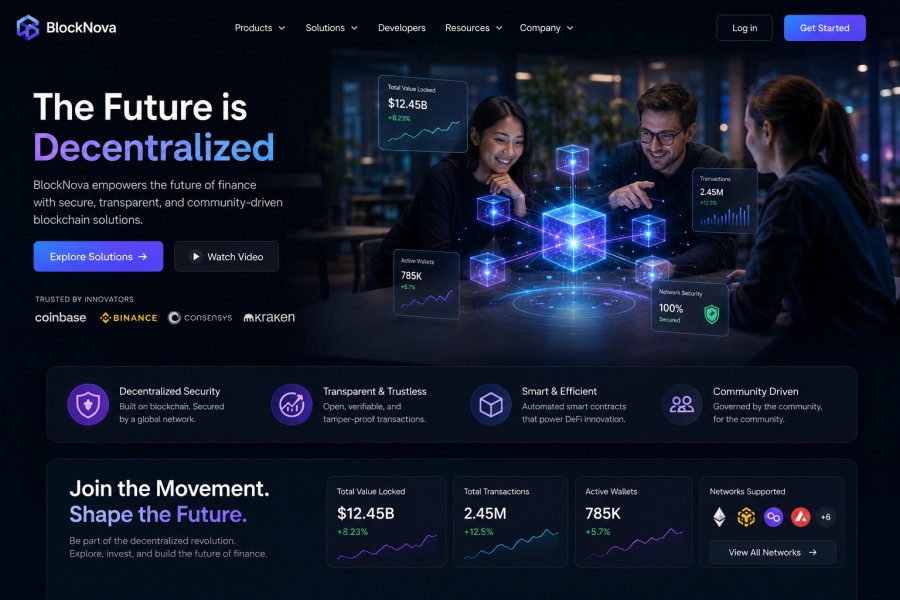
For decades, the global financial system has relied on banks, payment processors, brokers, and other intermediaries to facilitate transactions and manage financial services.
While this model has enabled economic growth, it has also created challenges related to accessibility, efficiency, transparency, and cost.
Today, a new financial movement is emerging.
Decentralized Finance, commonly known as DeFi, is redefining how individuals and businesses access financial services by leveraging blockchain technology and smart contracts instead of traditional intermediaries.
In 2026, decentralized finance is no longer viewed as a niche innovation. It is becoming one of the most significant developments in the future of finance, attracting entrepreneurs, investors, financial institutions, and technology leaders worldwide.
What Is Decentralized Finance?
Decentralized Finance refers to a financial ecosystem built on blockchain networks that allows users to access financial services without relying on traditional centralized institutions.
Instead of banks controlling transactions and services, DeFi platforms use smart contracts—self-executing software programs that automatically enforce agreements and process transactions.
Common DeFi services include:
- Digital payments
- Lending and borrowing
- Asset trading
- Yield generation
- Financial management tools
- Cross-border transactions
The primary goal of decentralized finance is to create a more open, transparent, and accessible financial system.
Why Decentralized Finance Matters
Traditional financial systems often involve multiple intermediaries, complex processes, and geographic limitations.
Decentralized finance seeks to address these challenges by enabling direct peer-to-peer financial interactions.
Benefits include:
- Greater accessibility
- Faster transactions
- Increased transparency
- Lower operating costs
- Enhanced financial inclusion
- Reduced reliance on intermediaries
As digital economies continue to expand, these advantages are attracting increasing attention from businesses and consumers alike.
How Blockchain Powers Decentralized Finance
Blockchain technology serves as the foundation of the DeFi ecosystem.
A blockchain functions as a distributed digital ledger that records transactions securely across a network of computers.
This structure provides several advantages:
Transparency
Transactions can be verified and audited through publicly accessible records.
Security
Advanced cryptographic protections help safeguard digital assets and transaction data.
Immutability
Recorded transactions cannot easily be altered or manipulated.
Efficiency
Automated smart contracts reduce the need for manual processing and administrative overhead.
These capabilities make blockchain an ideal infrastructure for decentralized financial services.
Smart Contracts Are Transforming Financial Services
One of the most important innovations within decentralized finance is the smart contract.
Smart contracts automatically execute predefined actions when specific conditions are met.
For example:
- Loan agreements can process automatically.
- Payments can be released instantly.
- Financial transactions can occur without manual intervention.
By automating financial operations, smart contracts improve efficiency while reducing operational costs and delays.
Businesses exploring digital transformation increasingly view smart contracts as a valuable tool for streamlining processes.
Financial Inclusion Through Decentralized Finance
Millions of people worldwide still have limited access to traditional banking services.
Decentralized finance has the potential to expand financial access by providing digital financial services through internet-connected platforms.
Benefits include:
- Access to financial tools without physical bank branches
- Lower barriers to participation
- Reduced transaction costs
- Greater economic opportunities
For emerging markets, decentralized finance could play a significant role in promoting financial inclusion and economic development.
How Businesses Are Exploring DeFi Opportunities
Forward-thinking organizations are evaluating how decentralized finance can support innovation and operational efficiency.
Potential business applications include:
Cross-Border Payments
Traditional international transactions can be slow and expensive.
DeFi solutions may help streamline global payments and improve transaction efficiency.
Digital Asset Management
Organizations are exploring new methods for managing digital assets and financial records.
Automated Financial Processes
Smart contracts can reduce administrative workloads and improve operational accuracy.
New Revenue Models
Emerging decentralized platforms are creating opportunities for innovative business services and products.
As adoption increases, more organizations are expected to explore practical use cases for decentralized finance.
Challenges Facing Decentralized Finance
Despite its rapid growth, decentralized finance still faces several challenges.
Regulatory Uncertainty
Governments worldwide continue to develop frameworks for blockchain and decentralized financial activities.
Security Risks
While blockchain technology is secure, vulnerabilities can exist in software applications and smart contracts.
User Education
Many individuals and businesses still lack a clear understanding of decentralized finance and its potential applications.
Scalability
Some blockchain networks continue to face limitations related to transaction speed and processing capacity.
Addressing these challenges will be critical for long-term adoption and mainstream growth.
Decentralized Finance and the Future of Banking
Many experts believe decentralized finance will not completely replace traditional financial institutions.
Instead, a hybrid financial ecosystem may emerge.
Banks and financial institutions are increasingly exploring blockchain technology, digital assets, and decentralized infrastructure.
Future financial systems may combine:
- Traditional banking services
- Blockchain technology
- Automated financial processes
- Digital identity solutions
- Decentralized financial platforms
This convergence could create more efficient and customer-focused financial experiences.
What Business Leaders Should Know About DeFi
Executives and entrepreneurs do not need to become blockchain experts.
However, understanding decentralized finance is becoming increasingly important as digital financial innovation accelerates.
Business leaders should:
Monitor Industry Developments
DeFi continues to evolve rapidly, creating new opportunities and challenges.
Focus on Practical Applications
Organizations should evaluate how decentralized technologies can improve operations and customer experiences.
Strengthen Digital Literacy
Understanding blockchain and digital finance concepts will become increasingly valuable.
Prepare for Financial Innovation
Businesses that remain informed and adaptable will be better positioned for future opportunities.
The Future of Decentralized Finance
The next decade could significantly reshape how financial services are delivered.
Several trends are expected to influence the future of decentralized finance:
- Greater institutional adoption
- Improved regulatory frameworks
- Enhanced blockchain scalability
- Expansion of digital financial services
- Increased integration with traditional finance
As technology matures, decentralized finance may become a fundamental component of the global financial ecosystem.
Conclusion
Decentralized finance is transforming the way people and organizations think about financial services.
By leveraging blockchain technology, smart contracts, and decentralized networks, DeFi is creating opportunities for greater transparency, efficiency, and accessibility.
While challenges remain, the potential impact of decentralized finance is undeniable.
For entrepreneurs, investors, and business leaders, understanding this rapidly evolving sector is essential for navigating the future of finance.
The organizations that embrace financial innovation today may be the ones leading tomorrow’s digital economy.