
Financial Technology Trends Every Business Leader Should Watch in 2026

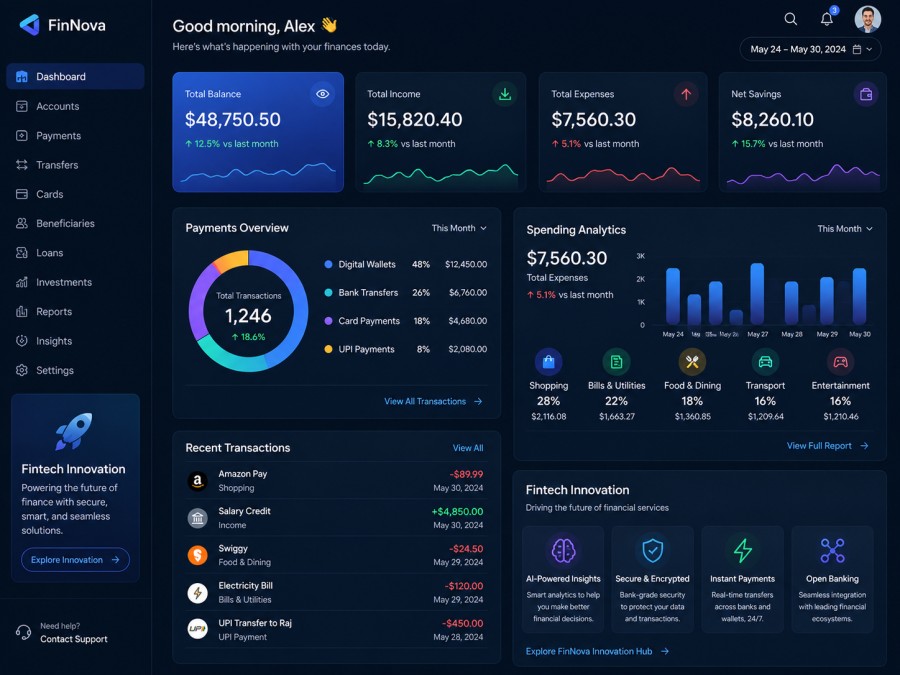
Financial technology is no longer a niche sector.
Over the past decade, fintech has transformed how businesses manage payments, access capital, analyze financial data, and interact with customers. What began as a disruption to traditional banking has evolved into a powerful force shaping the global economy.
In 2026, financial technology trends are influencing nearly every industry. From artificial intelligence and digital payments to embedded finance and automated financial services, businesses are leveraging technology to improve efficiency, reduce costs, and enhance customer experiences.
For executives, entrepreneurs, and investors, understanding these trends is essential for staying competitive in an increasingly digital economy.
Why Financial Technology Trends Matter
Financial technology is changing the way organizations operate.
Modern businesses expect financial systems to be:
- Faster
- More secure
- More accessible
- Highly automated
- Data-driven
Companies that adopt innovative financial technologies can streamline operations, improve decision-making, and create new growth opportunities.
As digital transformation accelerates, fintech is becoming a strategic business advantage rather than simply a support function.
Artificial Intelligence Is Revolutionizing Financial Services
Artificial intelligence has become one of the most important financial technology trends of the decade.
Financial institutions and businesses are using AI to:
- Detect fraud
- Assess risk
- Automate customer support
- Improve financial forecasting
- Analyze market trends
- Personalize financial services
AI enables organizations to process vast amounts of data quickly while improving accuracy and efficiency.
As machine learning capabilities continue to advance, AI-driven financial services are expected to become even more sophisticated.
Digital Payments Continue to Expand
Consumers increasingly expect fast, seamless, and secure payment experiences.
As a result, digital payments remain one of the fastest-growing areas of financial technology.
Businesses are investing in:
- Mobile payments
- Contactless transactions
- Digital wallets
- Real-time payment systems
- Cross-border payment solutions
The shift toward cashless transactions is creating opportunities for companies to improve customer convenience and operational efficiency.
Organizations that modernize payment systems can often gain a competitive advantage.
Embedded Finance Is Reshaping Business Models
Embedded finance is becoming one of the most disruptive trends in the fintech industry.
This model allows businesses to integrate financial services directly into their products and platforms.
Examples include:
- Buy Now, Pay Later services
- Integrated business lending
- Digital insurance offerings
- In-app payment solutions
Rather than directing customers to separate financial institutions, companies can provide financial services within their own ecosystems.
This improves customer experiences while creating new revenue opportunities.
Data Analytics Is Improving Financial Decision-Making
Financial decisions are increasingly driven by data.
Organizations are using advanced analytics to gain deeper insights into:
- Customer behavior
- Revenue performance
- Spending patterns
- Market trends
- Investment opportunities
Data-driven financial strategies help businesses identify risks, optimize operations, and improve long-term planning.
Companies that leverage analytics effectively often make faster and more informed decisions.
Cybersecurity Remains a Top Fintech Priority
As digital financial systems expand, cybersecurity risks continue to increase.
Financial organizations are prime targets for cybercriminals due to the sensitive nature of financial data.
To strengthen security, businesses are investing in:
- Multi-factor authentication
- Biometric verification
- Advanced encryption
- Fraud detection systems
- Zero-trust security frameworks
Protecting customer information is critical for maintaining trust and regulatory compliance.
Automation Is Transforming Financial Operations
Automation is helping organizations reduce costs and improve efficiency.
Many routine financial tasks can now be automated, including:
- Invoice processing
- Expense management
- Financial reporting
- Compliance monitoring
- Risk assessments
By reducing manual work, businesses can allocate resources toward strategic initiatives and growth opportunities.
Automation also improves accuracy and reduces operational errors.
Fintech Innovation Is Driving Financial Inclusion
Technology is making financial services more accessible than ever before.
Digital platforms allow individuals and businesses to access financial products regardless of geographic location.
Financial inclusion initiatives are expanding access to:
- Banking services
- Credit solutions
- Investment platforms
- Digital payment systems
This trend is creating new opportunities in both developed and emerging markets.
What Business Leaders Should Do Next
Business leaders should approach fintech as a strategic priority.
To remain competitive, organizations should:
Monitor Emerging Financial Technologies
Understanding new innovations helps businesses identify opportunities early.
Invest in Digital Infrastructure
Modern technology platforms provide the foundation for long-term growth.
Strengthen Cybersecurity Capabilities
Financial security must remain a top organizational priority.
Build Data-Driven Financial Strategies
Organizations that leverage analytics effectively often outperform competitors.
Encourage Innovation
Creating a culture of experimentation helps businesses adapt to changing market conditions.
The Future of Financial Technology
The future of finance will be increasingly digital, intelligent, and interconnected.
Several trends are expected to continue shaping the industry:
- Artificial intelligence
- Embedded finance
- Digital payments
- Financial automation
- Advanced cybersecurity
- Data-driven financial services
Businesses that embrace these innovations will be better positioned to compete and grow in the years ahead.
Conclusion
Financial technology trends are transforming how businesses manage money, serve customers, and drive growth.
From AI-powered analytics and digital payments to embedded finance and cybersecurity innovation, fintech is creating opportunities across industries.
For business leaders, staying informed about financial technology trends is no longer optional. It is essential for maintaining competitiveness and preparing for the future.
Organizations that invest in innovation today will be better equipped to navigate tomorrow’s financial landscape.