
Jeff Bezos Wants “Zero” for Half of America—Here’s What That Could Change for Workers, Businesses and the Economy

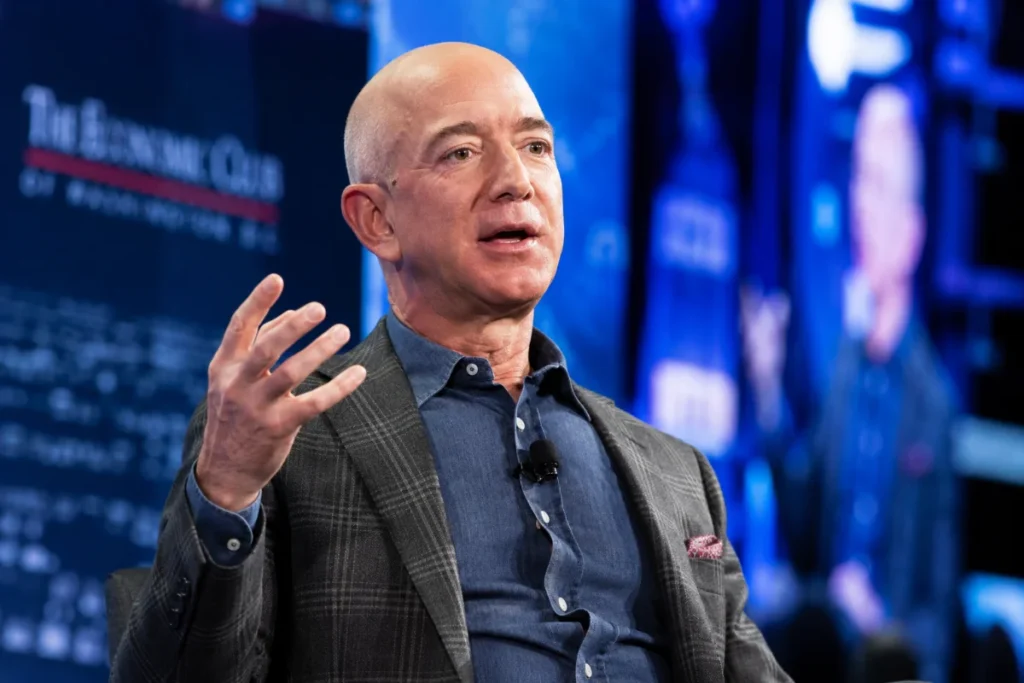
Jeff Bezos’s proposal to eliminate federal income tax for the bottom 50% of U.S. earners is less interesting as a political sound bite than as a question about consumer demand, labor economics and corporate planning.
The gap between the headline and the economics is significant. Many lower-income households already have little or no effective federal income-tax liability, so the potential increase in disposable income could be considerably smaller than “half of America pays zero” implies. The analysis below separates the tax mechanics from the business consequences leaders should actually watch.
Boardroom Briefing: What Executives Need to Know
- Bezos’s proposal targets federal individual income tax, not the entire U.S. tax burden. Social Security, Medicare and state or local taxes would not automatically disappear.
- The bottom 50% of taxpayers accounted for 12.3% of adjusted gross income but paid 3.3% of federal individual income taxes in 2023, according to IRS data analyzed by the Tax Foundation.
- Household cash flow is the central corporate variable because any additional disposable income could influence consumer spending, debt repayment or savings.
- The fiscal effect cannot be evaluated from the 3% figure alone because federal income tax is one component of total federal revenue. The individual income tax accounts for roughly half of federal tax collections.
- Labor economics could move in either direction: additional after-tax income may reduce financial pressure, while stronger household finances could also raise workers’ expectations around wages and benefits.
- Corporate forecasts should not treat Bezos’s proposal as an enacted policy. It remains an advocacy position, and its actual economic effect would depend on legislative design and how any lost revenue were addressed.
Bezos’s “Zero” Tax Proposal Is Really a Workforce-Economics Question
Jeff Bezos’s proposal is to eliminate federal individual income-tax liability for the bottom half of U.S. earners, not to eliminate every tax paid by those households. Bezos made the argument during a CNBC interview, using a hypothetical Queens nurse earning $75,000 as his central example and saying the bottom half currently pays only 3% of federal income taxes.
The underlying data gives his argument a factual foundation. Tax Foundation analysis of 2023 IRS data shows that taxpayers in the bottom 50%—those with adjusted gross income below about $53,801—earned 12.3% of total adjusted gross income and paid 3.3% of federal individual income taxes. Their average federal income-tax rate was 3.7%, compared with 26.3% for the top 1%.
Independent tax-policy analysis complicates Bezos’s argument. Natasha Sarin, professor of law at Yale Law School and president of the Budget Lab at Yale, told CNN that the math behind Bezos’s presentation was flawed in important ways, underscoring the need to examine the underlying tax data rather than the headline 3% figure alone.
For executives, that distinction matters because the share of federal income taxes paid by a group does not directly measure how much disposable income would be created by eliminating its remaining liability.
The business interpretation requires a sharper distinction. A tax share is not the same thing as a household’s total tax burden. Bezos’s 3% figure refers to federal individual income tax, while workers can also face payroll taxes and state and local taxes.
That distinction matters for corporate strategy. A company evaluating the potential demand effect cannot simply assume that removing federal income tax would return an additional $12,000 to every worker earning $75,000. The actual incremental benefit depends on the worker’s filing status, deductions, credits and existing federal liability.
The $75,000 Nurse Example Exposes the Policy’s Central Tension
The Queens nurse example illustrates why federal income tax and total taxation must be analyzed separately. Bezos said a nurse earning $75,000 should not be sending more than $1,000 a month to Washington, but the figure he cited encompasses the broader tax burden rather than establishing that the worker’s federal income-tax liability alone equals that amount.
Tax Foundation data shows why the distinction matters. The average taxpayer in the bottom half paid $913.41 in federal individual income taxes in 2023, while the group’s average income-tax rate was 3.73%. The same group had an income split point of $53,801, meaning the bottom half is a broad population with very different household circumstances.
Income Tax Is Not the Same as the Total Tax Burden
Federal income tax is only one part of the taxes paid by U.S. workers, so a zero-income-tax proposal would not create a zero-tax household. Payroll taxes for Social Security and Medicare would remain under current law, as would applicable state and local taxes.
There is another complication. Tax Foundation notes that taxpayers earning less than $25,000 typically owe no federal income tax, while refundable credits can produce additional payments through the tax system.
That means the policy’s marginal effect is concentrated among households that currently have a meaningful federal income-tax liability. For executives, this is the first analytical checkpoint: measure incremental cash retained, not the number of people covered by the headline.
Companies with large frontline workforces should apply the same discipline. A retailer, hospital system or logistics company should model the policy against actual employee income distributions rather than assuming every worker below the median would receive the same financial benefit.
Where the Economic Multiplier Could—and Could Not—Appear
The economic effect of tax relief would depend primarily on what affected households do with the additional disposable income. Additional cash could support consumption, debt repayment or savings, and each behavior produces a different effect on corporate revenues and the broader economy.
The potential consumption channel is straightforward. Households with limited liquidity tend to have fewer financial buffers, so additional after-tax income can have a faster effect on spending than an equivalent amount received by a high-income household. But the proposal’s actual stimulus would depend on the amount of tax liability eliminated.
LeaderSpheres Finance coverage
Consumer Demand
Consumer demand would be the fastest channel through which tax relief could reach companies. A worker who retains an additional $100 a month might spend it on groceries, rent-related expenses, transportation, healthcare or discretionary purchases rather than increasing long-term investments.
For consumer-facing companies, that distinction matters more than the political debate. Retailers and service businesses should watch spending among lower- and middle-income households rather than assuming a uniform national consumption response.
The counterpoint is equally important. If a household uses additional cash to reduce credit-card balances or build emergency savings, the immediate revenue effect for businesses could be smaller.
Entrepreneurship
Bezos argues that reducing financial pressure could make entrepreneurship more accessible, but that proposition should be treated as a hypothesis rather than an established outcome. His broader argument is that lower financial pressure could leave people with more resources for rent, groceries and other expenses, potentially giving them greater capacity to take entrepreneurial risks.
For startup investors, the interesting question is not whether a tax cut creates entrepreneurs automatically. It is whether lower personal financial risk changes the threshold at which skilled workers leave employment to launch companies.
That effect would probably be uneven. A software engineer with savings and marketable skills faces a different entrepreneurial constraint from a worker whose additional income is immediately absorbed by housing, childcare or debt.
Workforce Economics
Tax relief can change employee economics without changing the employer’s wage bill. An employee who takes home more money because of lower taxes has greater disposable income, but the employer has not necessarily increased compensation.
That distinction could influence wage negotiations. Workers who feel financially stronger may become less willing to accept stagnant wages, while employers could face stronger competition for labor if household financial security makes job switching easier.
The result is a policy paradox for employers: tax relief could improve employee financial resilience while simultaneously increasing expectations for compensation.
The Fiscal Trade-Off Executives Cannot Ignore
Eliminating federal income-tax liability for a large group of taxpayers would create a fiscal trade-off that must be evaluated separately from the household benefit. The individual income tax is the largest federal revenue source, accounting for approximately half of federal tax collections, according to the Tax Foundation.
The 3.3% share paid by the bottom 50% is meaningful but needs context. Tax Foundation’s 2023 data shows that the group paid about $69.9 billion in federal individual income taxes, against approximately $2.14 trillion in total individual income-tax collections.
That is why Bezos’s statement that the government could “find” the 3% should not be treated as a complete fiscal analysis. The policy question is what replaces the revenue if the exemption becomes permanent.
Possible responses include:
- Spending reductions, which could affect public programs and government procurement.
- Higher taxes elsewhere, potentially shifting the burden toward higher earners, businesses or other forms of income.
- Additional borrowing, which could affect federal interest costs and fiscal risk.
- A redesigned tax structure, potentially combining lower income taxes with changes elsewhere in the tax code.
For investors, the financing mechanism could matter more than the tax cut itself.
The Contrarian Case: Zero Federal Income Tax May Not Mean a Major Corporate Demand Shock
The headline economic effect could be smaller than expected because many lower-income households already have minimal or zero effective federal income-tax liability. Tax Foundation reports that taxpayers earning below $25,000 typically owe no federal income tax, while refundable credits can further reduce effective liabilities.
This is the central disconnect between the political headline and the corporate forecast.
If a household already owes little federal income tax, moving its statutory liability to zero creates only a small incremental cash-flow effect. A household that owes $2,000, by contrast, has a much larger potential change in disposable income.
The same distinction applies at scale. The bottom 50% is not an economically uniform population. In 2023, that group included taxpayers below roughly $53,801 of adjusted gross income, with an average income-tax payment of $913.
Executives should not confuse population coverage with economic magnitude.
Stock Market Trends Every Business Leader Should Watch in 2026
That is also why the strongest corporate response is scenario analysis rather than political positioning.
What the Proposal Could Mean for Companies With Large Frontline Workforces
Companies with large concentrations of lower- and middle-income workers could experience the policy through both consumer demand and employee behavior. Retail, logistics, healthcare, hospitality and manufacturing companies would have particularly strong reasons to monitor the proposal if it gains legislative momentum.
The first variable is employee cash flow. A worker with lower federal income-tax liability may have greater capacity to manage unexpected expenses, reduce debt or increase consumption.
The second variable is compensation pressure. Tax relief does not substitute for wages, and employees may still evaluate jobs according to total compensation, schedule flexibility, healthcare benefits and career progression.
The third variable is geographic exposure. A national employer cannot assume that tax relief will have identical effects across states because state income-tax rules and living costs vary.
For a CFO, the appropriate exercise would be a sensitivity model:
- Map the employee population by income band.
- Estimate current federal income-tax liability.
- Model incremental take-home pay under multiple policy designs.
- Estimate potential effects on turnover and wage expectations.
- Overlay consumer-demand exposure by geography and customer segment.
That produces a business model rather than a political opinion.
How Companies Are Rethinking Employee Compensation
The Executive Playbook: Five Indicators to Watch
Executives should monitor five economic indicators before changing forecasts, compensation plans or investment assumptions.
1. Lower-income consumer spending.
Watch transaction volumes, retail sales and discretionary spending among households most likely to receive meaningful tax relief. The critical measure is the change in spending, not simply the number of taxpayers covered.
2. Effective federal income-tax rates.
Track how much federal income-tax liability affected households actually carry. The policy’s economic impact will depend on the incremental liability removed.
3. Labor participation and job switching.
Watch whether stronger household finances change labor-force participation, voluntary turnover or willingness to move between employers.
4. Wage growth and compensation budgets.
Monitor whether improved household finances strengthen employee bargaining power. A tax benefit can coexist with higher wage expectations.
5. Federal borrowing and replacement revenue.
Watch how policymakers propose financing the change. The same household tax cut could have very different corporate consequences depending on whether it is funded by spending reductions, other taxes or additional borrowing.
For investors, these indicators also provide a better signal than the Bezos headline itself.
The Economic Signals Investors Should Watch in 2026
Bezos’s Tax Proposal Is a Signal, Not Yet a Business Forecast
Jeff Bezos’s zero-federal-income-tax proposal is a policy signal, not an enacted tax plan or a basis for changing corporate forecasts today. Bezos has said the bottom 50% should pay zero and has discussed advocating the idea with political leaders, but the proposal would require legislative action before companies could incorporate it into operating assumptions.
The underlying data is less dramatic than the headline but more useful for executives. In 2023, the bottom half of taxpayers earned 12.3% of adjusted gross income and paid 3.3% of federal individual income taxes; the top 1% earned 20.6% of AGI and paid 38.4% of federal individual income taxes.
The strategic question is not whether Bezos is right about what the tax system should look like. It is whether a change in after-tax household income would materially alter the behavior of customers, employees, entrepreneurs and investors.
That is the scenario executives should prepare for.
A CEO should ask what happens to demand.
A CFO should model the fiscal and consumer effects.
A CHRO should examine compensation and retention.
A founder should consider whether personal financial risk changes entrepreneurial formation.
An investor should watch whether policy changes alter consumption, labor supply or government borrowing.
Bezos has supplied the provocation. The business community’s job is to quantify the consequences.