
Buc-ee’s Expansion Plans: Inside America’s Fastest-Growing Travel Center Strategy

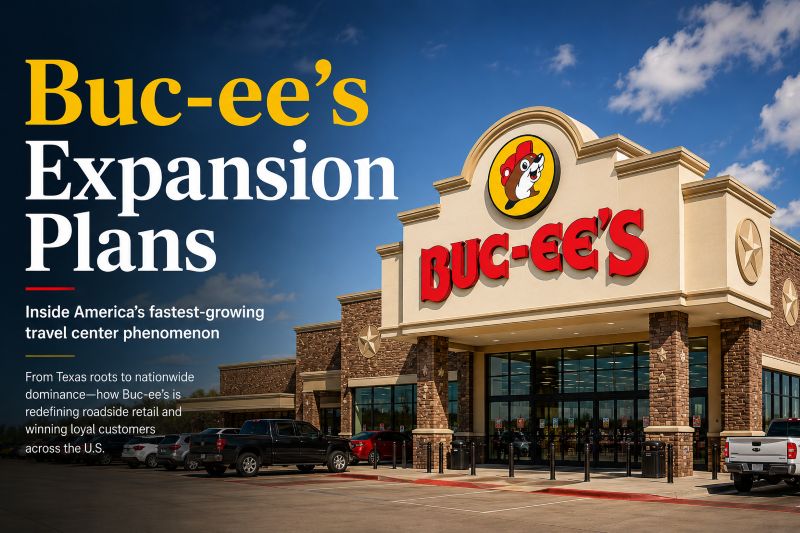
While many American retailers continue to close stores and reduce their physical footprint, one company is moving in the opposite direction. Buc-ee’s, the Texas-born travel center chain famous for its massive stores, spotless restrooms and loyal customer following, is accelerating one of the most ambitious retail expansion plans in the country.
The company recently confirmed a multi-year expansion that includes at least 16 new locations across the United States through 2029. New travel centers are scheduled for states including Texas, Arkansas, Tennessee, Louisiana, Kansas, Florida, Wisconsin, North Carolina, Kentucky and South Carolina, reflecting Buc-ee’s confidence in long-term consumer demand.
At first glance, Buc-ee’s may appear to be another gas station chain. In reality, it represents something much larger. The company has transformed the traditional roadside stop into a destination where travelers spend time, buy branded merchandise, enjoy freshly prepared food and often leave with far more than a tank of fuel.
Its continued expansion raises an important business question: What is Buc-ee’s doing differently while many retailers struggle to grow?
More Than a Convenience Store
Founded in Texas in 1982, Buc-ee’s spent decades building a strong regional presence before beginning its national expansion in 2018. Today, it operates more than 50 locations across multiple states and continues to enter new markets with some of the largest travel centers in the United States.
Each location is designed to be far more than a fuel stop. Most stores cover between 50,000 and 74,000 square feet, feature dozens of fueling stations, extensive food counters, branded merchandise, clean restrooms and large parking areas. Instead of encouraging customers to make quick purchases, Buc-ee’s creates an experience that keeps visitors inside the store longer.
That strategy has helped the company build a customer base that treats many of its locations as tourist attractions rather than ordinary convenience stores.
The Expansion Strategy Behind Buc-ee’s Growth
Unlike many retail chains that rapidly open hundreds of stores before slowing down, Buc-ee’s follows a carefully planned expansion strategy.
The company focuses on high-traffic interstate corridors, rapidly growing metropolitan areas and destinations popular with road travelers. Each new location is selected based on long-term traffic patterns, regional population growth and tourism potential rather than simply filling geographic gaps.
Its newest Arizona location illustrates this approach. The 74,000-square-foot travel center serves as Buc-ee’s first location in the Southwest, strategically positioned to attract travelers moving between Phoenix, California and other western destinations. Reports suggest the city expected tens of thousands of vehicles during the opening period alone.
This deliberate site selection reduces risk while strengthening the brand’s presence in markets with strong long-term growth prospects.
Why Buc-ee’s Continues to Expand While Others Close Stores
The wider retail industry presents an interesting contrast.
Many traditional retailers continue to announce store closures as they adapt to changing consumer habits and online shopping. At the same time, several value-focused and experience-driven businesses are investing heavily in physical locations. Industry reports show that more than 1,000 new retail stores are expected to open across the United States in 2026, led by companies that believe physical retail still plays an important role when combined with a compelling customer experience.
Buc-ee’s fits squarely into that trend.
Instead of competing primarily on fuel prices, the company competes on convenience, cleanliness, product variety and customer experience. That differentiation allows it to attract travelers even when competing gas stations are located nearby.
The result is a business model that generates revenue from multiple sources, including food, beverages, gifts, apparel, snacks and branded merchandise, reducing dependence on fuel sales alone.
The Business Model Competitors Find Difficult to Copy
Buc-ee’s success is not built on fuel sales alone. The company has created a business model that encourages customers to spend more time—and more money—inside its stores.
Unlike a traditional convenience store, Buc-ee’s offers freshly prepared barbecue, sandwiches, bakery items, snacks, premium coffee, home décor, clothing, outdoor gear and its popular branded merchandise. Many travelers leave with shopping bags instead of just a fuel receipt.
This approach increases the average customer transaction and reduces the company’s dependence on fluctuating fuel margins. It also helps Buc-ee’s build a loyal customer base that actively seeks out its locations during road trips.
The company has effectively transformed a routine highway stop into a destination experience.
Customer Experience Is the Company’s Biggest Competitive Advantage
Retail experts often talk about customer experience, but Buc-ee’s has turned the concept into a measurable business advantage.
Visitors frequently mention three things:
- Exceptionally clean restrooms
- Wide variety of fresh food
- Friendly customer service
These may seem like simple details, but together they create a memorable experience that encourages repeat visits and positive word-of-mouth marketing.
In today’s competitive retail market, customer loyalty is becoming more valuable than aggressive discounting. Buc-ee’s has shown that investing in service quality can be just as important as investing in new products.
How Buc-ee’s Compares with Wawa, Sheetz and Love’s
Buc-ee’s is entering markets where established brands such as Wawa, Sheetz, Love’s Travel Stops, Pilot Flying J and Casey’s General Stores already have loyal customers.
However, its strategy differs from most competitors.
While many convenience chains focus on speed and accessibility, Buc-ee’s focuses on creating an experience worth planning a stop for. Its stores are significantly larger, offer a broader product range and encourage customers to browse rather than simply refuel.
This positioning allows Buc-ee’s to attract not only truck drivers and commuters but also families, tourists and long-distance travelers looking for a break during their journey.
Rather than competing solely on price, the company competes on value, convenience and experience.
The Economic Impact of Every New Store
Each Buc-ee’s location represents a significant investment in the local economy.
Large travel centers typically create hundreds of jobs during construction and continue supporting permanent positions once operations begin. Local businesses, suppliers and tourism-related industries can also benefit from increased visitor traffic.
Communities often see higher sales tax revenues as travelers spend money not only at Buc-ee’s but also at nearby hotels, restaurants and attractions.
This broader economic contribution is one reason many cities actively compete to attract new Buc-ee’s developments.
What Business Leaders Can Learn from Buc-ee’s Expansion
Buc-ee’s growth offers several lessons that extend far beyond the convenience store industry.
Differentiate your business. Competing only on price rarely creates lasting success. Buc-ee’s built its reputation through quality, cleanliness and customer experience.
Think long term. The company’s measured expansion strategy demonstrates the value of sustainable growth over rapid expansion.
Create a destination, not just a product. Customers increasingly seek memorable experiences. Businesses that provide them often build stronger brand loyalty.
Diversify revenue streams. By generating income from food, retail merchandise and branded products, Buc-ee’s has reduced its reliance on fuel sales.
These principles can apply to retailers, hospitality businesses, restaurants and service companies alike.
What Buc-ee’s Expansion Means for the Future of American Retail
The continued expansion of Buc-ee’s sends an important message about the future of physical retail.
Consumers have not abandoned brick-and-mortar stores. Instead, they have become more selective about where they choose to spend their time and money.
Businesses that deliver convenience alone face increasing competition from e-commerce. Companies that combine convenience with exceptional customer experiences continue to attract visitors despite broader industry challenges.
Buc-ee’s expansion demonstrates that physical retail is far from obsolete. When businesses create a compelling reason for customers to visit, invest in operational excellence and maintain a consistent brand experience, they can continue growing even in a rapidly changing retail landscape.
As the company opens new locations across the United States over the coming years, its strategy will be closely watched not only by competitors but also by business leaders looking for practical lessons in growth, branding and customer loyalty. While many retailers are adapting to changing consumer habits, Buc-ee’s is proving that the right business model can still turn a roadside stop into one of America’s strongest retail success stories.