Beata Golec: Where Music, Education and Community Meet

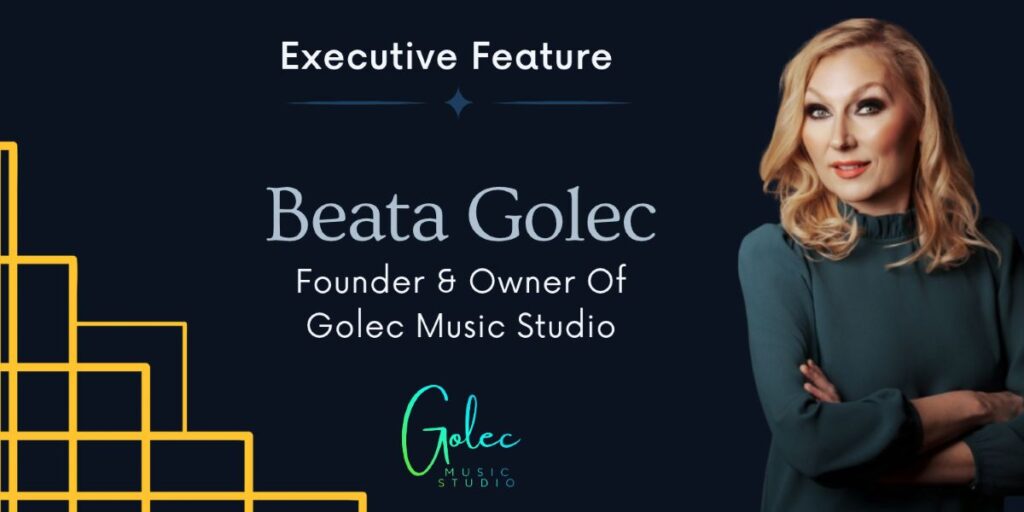
From rigorous musical training in Poland to a multifaceted career in Rochester, Dr. Beata Golec has built her work around music, teaching and the relationships that make both meaningful.
A Foundation Built in Poland
Long before Dr. Beata Golec established her own studio in Rochester, her musical education had already taught her to think beyond a single instrument.
She began studying at the Mieczyslaw Karlowicz School of Music in Katowice, Poland, at the age of seven. By high school, her schedule extended well beyond piano lessons. She studied accompanying, cello, orchestra, form analysis, music history, aural skills, part writing, counterpoint, conducting and orchestration while also attending a regular high school. Her weekdays could involve roughly twelve hours of classes, lessons and practice.
That demanding environment became an important part of her formation as a musician. Rather than treating performance as an isolated skill, her education exposed her to the many disciplines that sit behind it.
She continued her studies at the Frederic Chopin University of Music in Warsaw, focusing on piano performance and literature, while studying composition and music theory at the Karol Szymanowski University of Music in Katowice. The universities were about 200 miles apart, so she traveled between Katowice and Warsaw several times a week while maintaining full-time studies at both.
The effort brought opportunities as well. Golec received government scholarships during her university years and, during her freshman year in Warsaw, attended the Chautauqua Institution Summer Music School on a full scholarship. She describes that experience as a turning point that strengthened her interest in the Eastman School of Music.
At Eastman, she earned a Master of Music and Doctor of Musical Arts in Piano Performance and Literature. She also spent a year pursuing doctoral studies in composition at the University of Buffalo while working and serving as a teaching assistant at Eastman.
It was an ambitious path, and eventually the demands of studying at two doctoral programs at the same time became unsustainable. Golec chose to end her studies at Buffalo and continued building her career through teaching, assessment and music leadership.
Her mother, Alicja Golec, had been an important influence from the beginning. Also a music educator, she recognized her daughter’s musical ability early. Golec later discovered that she had perfect pitch, which proved useful in aural skills and transcription.
Interestingly, Golec recalls that her enthusiasm did not arrive immediately. At seven, she did not particularly enjoy practicing. By ten, however, her perspective had changed, and she had already decided that she wanted to pursue advanced musical study.
Becoming a Complete Musician
Golec’s career has never fit neatly into one professional title.
She has worked as a pianist, composer, educator and mentor, while also contributing to music assessment and community initiatives. She sees those roles as connected rather than competing for her attention.
“I believe in being a complete musician,” she says.
For Golec, that means having the ability to move between disciplines and adapt to the needs of the people she teaches. A teacher needs practical command of the instrument. A composer needs an analytical understanding of music. A mentor needs experience that goes beyond theory.
Her professional experience reflects that belief. While studying at Eastman, she became an examiner for Advanced Placement Music Theory, accepted a teaching position at SUNY Geneseo and became Director of Music Programs for the Diocese of Rochester. She later became involved with International Baccalaureate music assessment as well.
That combination of performance, theory and education has also shaped the way she approaches students. Rather than teaching from one fixed model, she draws on different parts of her experience depending on what a learner needs.
It is an approach that becomes particularly important at Golec Music Studio.
Building a Studio Around Real Lives
Golec established her studio because she wanted to share music in a setting she could shape herself.
Music, she explains, has been her lifelong passion. Teaching it, analyzing it, performing it and sharing it are all part of the same relationship. Owning a business allowed her to turn that philosophy into an organization while giving her the autonomy to decide how the studio would serve its clients.
The reality of entrepreneurship, however, extends well beyond the music itself.
Golec has learned to handle the responsibilities of a CEO, finance manager, marketer, scheduler and customer-support representative. She describes business ownership as rewarding precisely because it combines independence with responsibility.
Her preference for small local businesses also influences the way she operates. She values direct communication, responsiveness and long-term relationships, and she has carried those expectations into her own client relationships.
That philosophy is reflected in the breadth of Golec Music Studio.
The studio offers piano, voice, theory, analysis and composition lessons, as well as masterclasses and practical training for new music educators. Students can prepare for Advanced Placement and International Baccalaureate examinations, graduate-school auditions, competitions, productions and job interviews. The studio also provides music services for weddings, religious celebrations, corporate events, fundraising concerts and private gatherings.
Its student base is equally varied.
Golec accepts students from the age of three and works with neurodiverse children, adults, retirees and professionals whose schedules make conventional weekly appointments difficult. Some students are returning to music after decades away. Others are preparing for a specific academic or professional milestone.
That range requires flexibility. It also gives Golec an opportunity to teach across musical styles, from classical and sacred repertoire to jazz, popular, experimental and musical-theater selections.
Teaching Begins With Listening
The studio’s broad reach makes one element of Golec’s teaching philosophy particularly important: she listens before deciding how to teach.
She describes her approach as empathetic teaching, built around two-way conversation, emotional support and active listening. In her experience, simply lecturing students does not encourage the kind of creative exchange that meaningful learning requires.
At the studio, Golec sees herself as a guide rather than an intimidating authority figure.
That distinction changes the dynamic of a lesson. Students are encouraged to ask questions, discuss ideas and participate in shaping their own learning. A student preparing for an audition may need something very different from an adult returning to the piano after several decades, even if both arrive for the same type of lesson.
Golec’s role is to recognize that difference.
She also keeps the studio open throughout the year, including school breaks. She sees the winter and summer periods as useful opportunities for students to maintain their abilities, work on specific skills and prepare for the next academic stage. The studio is also an approved vendor for the New York State Department of Education and Heritage Christian Services to provide lessons to students with learning disabilities.
For Golec, individualized education does not mean lowering expectations. It means finding the appropriate way to help each person reach them.
Where Technology Helps—and Where It Stops
Digital resources have created new possibilities for music education, and Golec recognizes their value.
Online platforms can assist with ear training and basic analysis. They can also give students additional resources between lessons.
But she does not see them as complete substitutes for an educator.
Teaching involves adjusting the pace of a lesson, explaining a concept in several ways, demonstrating an idea without preparation and responding to the learner in front of you. It also involves communication outside the classroom, progress monitoring and advocacy.
There is a human dimension to the work as well. Golec points to the role educators can play in noticing changes in students’ emotional and behavioral patterns and creating environments where learners feel safe and engaged.
Technology can extend what happens in a lesson. It cannot fully reproduce the relationship that makes the lesson personal.
Giving Young Musicians Room to Find Their Voice
Golec’s belief in creating supportive environments extends beyond individual instruction.
In 2016, she founded Young Musicians’ Concerts, a twice-yearly charity concert series supporting food pantries at Holy Cross and Our Mother of Sorrows Churches in Rochester.
The format is deliberately different from a traditional formal recital.
Students do not have to memorize their selections, and the performance order is not predetermined. Golec usually opens with one of her own compositions before inviting students to perform. Each musician introduces themselves and announces the piece they are about to play or sing.
The result is a stage with less pressure attached to it.
Students of different ages and experience levels participate, and families sometimes perform together. Parents performing alongside their children creates a different kind of example: the adults are not simply watching from the audience; they are taking part.
For Golec, the confidence that develops through those experiences matters as much as the performance itself.
The concerts also carry a second purpose. Families bring non-perishable food items for donation, giving parents an opportunity to explain to their children what it means to provide a meal for another family. The musical event therefore becomes a practical lesson in generosity and community responsibility.
The Measure of Success Is Personal
When asked which achievement or professional milestone has meant the most to her, Golec does not choose one.
She thinks about her students.
A meaningful achievement might be learning to read music or hold a pencil. For another student, it might be memorizing a piece, performing in public, earning admission to the Eastman School of Music, receiving a full scholarship or securing a desired job.
The difference between those accomplishments is obvious. Their importance is not.
Golec describes each student’s development as an individual learning path, with its own milestones, surprises and achievements. Her commitment is to assist students regardless of their circumstances, and she sees that dedication as central to the purpose of her work.
That outlook also explains the studio’s objectives. Golec Music Studio aims to tailor education to individual needs, encourage creativity, provide performance opportunities, promote collaboration and give students the skills to remain engaged with music throughout their lives.
Recognition Reflects a Broader Body of Work
Golec’s professional recognition has grown alongside the studio and her educational work.
She received the SUNY Chancellor’s Award for Excellence in Teaching in 2020. In 2024, she received the Victor Business Award and was named an honoree of the Ontario County ATHENA Leadership Awards. Her more recent recognition includes the 2026 Better Business Bureau Torch Award for Ethics, along with the Trusted Business Award, International Association for Business Excellence Award and Global Recognition Award identified in her profile.
The recognition spans teaching, business and community-oriented work, but Golec’s own definition of a meaningful career remains closely tied to the people she teaches.
For her, an award may acknowledge the work. A student’s progress gives that work its meaning.
A Lasting Impact in Rochester
Golec’s plans for the coming years center on growing Golec Music Studio without losing the principles that shaped it.
She wants to continue nurturing musical talent, responding to individual student needs and creating a supportive environment. At the same time, she hopes to develop a wider network of community collaborators and continue using music as a way to contribute beyond the classroom.
Her upcoming commitments reflect that direction. Young Musicians’ Concerts are scheduled for November 8 at Our Mother of Sorrows Church in Rochester, while Golec Music Studio is set to sponsor the 41st Ontario County ATHENA Leadership Awards Gala at Finger Lakes Community College in Canandaigua on November 5.
The two initiatives occupy different spaces, but both reflect the same instinct that has shaped Golec’s work: create opportunities for people to participate, develop and contribute.
Her performance background continues to inform the way she teaches, while her experience as a composer and theorist gives her a deeper perspective on how music can be understood and communicated. Running her own studio has added another layer, requiring her to think about service, relationships and the practical realities of sustaining an organization.
That combination has become the defining characteristic of her career.
Golec has built a professional life in which music is not confined to the stage or classroom. It becomes a way to teach, connect, create opportunities and strengthen the community around it.
About Dr. Beata Golec
Dr. Beata Golec is a pianist, composer, music theorist, educator and supporter of local community initiatives. She owns Golec Music Studio and teaches at the State University of New York and Rochester Institute of Technology.
She holds master’s and doctoral degrees from the Eastman School of Music and has worked across performance, composition, education, music assessment, entrepreneurship and community initiatives.
About Golec Music Studio
Golec Music Studio provides music education and related services for students and clients with a wide range of ages, abilities and goals.
Its offerings include piano, voice, music theory, analysis and composition, along with masterclasses and preparation for Advanced Placement and International Baccalaureate examinations, auditions, competitions and professional opportunities. The studio also provides music services for weddings, religious celebrations, corporate events, fundraising concerts and private gatherings.
The studio operates year-round and offers flexible scheduling for students and professionals whose commitments make traditional weekly lesson schedules difficult.