
Aman Pal Singh on Transforming Insurance Through InsurTech, Embedded Innovation, and Digital Infrastructure

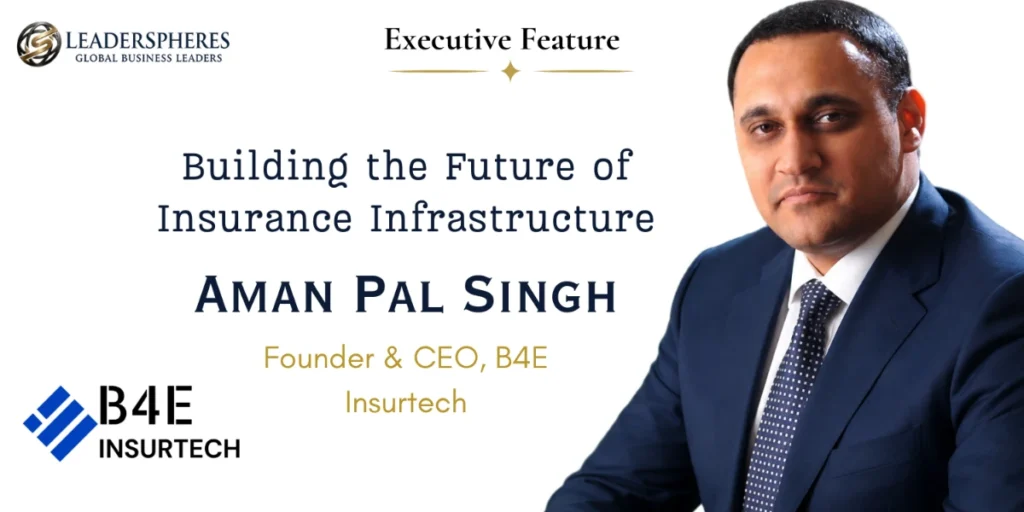
Insurance has long been built on a simple promise: providing financial protection when uncertainty strikes. Yet behind that promise lies a different reality.Many insurers still rely on legacy systems, fragmented regulations, and lengthy product development cycles. Those constraints make it difficult to keep pace with a rapidly evolving digital economy. While consumers have grown accustomed to instant banking, online investing, and seamless digital services, insurance innovation has frequently been slowed by complex operational processes and decades-old technology.
That gap has created consequences beyond operational efficiency. For expatriates navigating unfamiliar healthcare systems, businesses managing globally distributed workforces, gig economy professionals seeking flexible protection, and organizations looking to launch tailored insurance products, traditional models often prove too rigid to meet modern needs. The challenge is no longer simply creating new insurance products—it’s building the infrastructure that allows those products to reach people quickly, compliantly, and at scale.
After nearly three decades in senior leadership roles with global insurance organizations including MetLife, Zurich, RSA, Tata AIG, and HDFC Standard Life, Aman Pal Singh witnessed these limitations from the inside. Working across North America, the Middle East, and Asia-Pacific exposed Aman to diverse insurance markets.
It also revealed something more important.
Working across North America, the Middle East, and Asia-Pacific exposed Aman to diverse insurance markets. It also revealed something more significant: despite operating in different regions, insurers were wrestling with remarkably similar structural challenges.
That perspective ultimately led to the creation of Benefits for Expats Inc., a company focused on addressing the complex insurance and regulatory needs of globally mobile individuals and organizations, and later B4E Insurtech Inc., a cloud-native technology platform designed to simplify how insurance products are configured, launched, and managed. Together, the two organizations reflect a broader philosophy: technology should not add complexity to insurance—it should remove it.
During this conversation with LeaderSpheres, Aman Pal Singh discusses why legacy insurance models are reaching their limits, how embedded insurance and no-code platforms are reshaping the industry’s future, and why trust, regulatory discipline, and thoughtful innovation remain essential as artificial intelligence begins to transform financial services. His insights offer more than a founder’s perspective; they provide a broader view of how one of the world’s oldest industries is adapting to a new era of digital infrastructure.
From Global Insurance Leadership to Entrepreneurial Innovation
For nearly three decades, Aman Pal Singh built his career within some of the world’s most established insurance organizations, including MetLife, Zurich, RSA, Tata AIG, and HDFC Standard Life. Working across North America, the Middle East, and the Asia-Pacific region exposed him to diverse markets, regulatory environments, and customer expectations. More importantly, it offered an inside view of how one of the world’s most essential industries operates behind the scenes.
Those years provided far more than executive experience. They revealed a recurring pattern that transcended geography and organizational scale. While insurers continued to develop new products and expand into new markets, the underlying systems responsible for designing, launching, and managing those products often struggled to evolve at the same pace.
For Aman, the challenge was never a lack of expertise or ambition within the industry. It was the weight of legacy infrastructure. Traditional development cycles could stretch for months, regulatory requirements varied across jurisdictions, and introducing new insurance solutions frequently depended on lengthy systems projects that slowed innovation before it ever reached customers.
Rather than accepting those constraints as the cost of doing business, he began questioning whether the industry’s operating model itself needed to change. If digital banking, e-commerce, and cloud computing had fundamentally transformed customer expectations in other sectors, why should insurance remain dependent on processes designed for a different era?
That question became the turning point in his professional journey.
Looking back, the move feels less like a rejection of the insurance industry and more like a natural progression. Years spent inside global insurers had convinced Aman that meaningful change wouldn’t come from criticizing the system—it would come from rebuilding parts of it.
Bridging Market Need with Next-Gen InsurTech
Leaving a senior corporate leadership role to build a company from the ground up meant stepping away from established resources, predictable career progression, and organizational certainty. It also meant accepting the realities that accompany entrepreneurship: capital constraints, operational uncertainty, and the responsibility of transforming an idea into a viable business.
Looking back, Aman describes that decision less as a career change and more as a shift in perspective. Corporate leadership had shown him how the insurance ecosystem functioned. Entrepreneurship gave him the opportunity to redesign parts of it.
That vision first took shape through Benefits for Expats Inc., addressing the often-overlooked challenges faced by expatriates and globally mobile professionals navigating complex insurance and regulatory environments. As those challenges revealed broader structural issues across the industry, the vision expanded further with the launch of B4E Insurtech Inc., a technology platform designed to help insurers and digital businesses create, configure, and deploy insurance products with greater speed and flexibility.
This journey stems from something bigger than just launching another InsurTech firm. It grew out of a drive to strip away the technical and operational roadblocks that slow the whole industry down. For the duration of his career, Aman has viewed technology not as the destination, but as an enabler—one that should simplify complexity, expand access, and allow businesses to focus on delivering meaningful protection rather than navigating outdated systems. That philosophy continues to shape both his leadership and the evolution of the companies he leads.
One thing becomes apparent throughout the conversation. Aman rarely describes success in terms of market share or product launches. Instead, he measures progress by how effectively technology removes friction for insurers and customers alike.

Why Legacy Insurance Systems Need Reinvention
Insurance has always been an industry built on trust. Yet in today’s digital economy, trust alone is no longer enough. Customers expect the same speed, personalization, and convenience from insurance that they experience when booking travel, managing investments, or making online purchases. Many insurers struggle to keep up, hindered by operational tech that founders in a fast-moving market.
According to Aman Pal Singh, this disconnect is one of the defining challenges facing the industry today. While digital transformation has accelerated across financial services, many insurance organizations continue to rely on complex legacy systems that slow product development, increase operational costs, and make it difficult to respond to rapidly changing customer needs.
The Cost of Protracted Development Cycles
Traditional insurance products often require months—sometimes longer—to move from concept to market. Every new product can involve extensive coordination between business teams, actuaries, compliance specialists, and systems departments before it ever reaches customers. In an increasingly competitive environment, those timelines limit an organization’s ability to respond quickly to emerging risks, changing workforce models, or new market opportunities.
For consumers, the consequences are even more significant.Around the world, millions of expatriates, freelancers, digital nomads, gig workers, and small businesses struggle to find insurance solutions that reflect how they actually live and work. Most existing products cater to traditional jobs and domestic markets, which leaves growing segments of the global workforce underserved. As economies become more mobile and interconnected, those protection gaps continue to widen.
Simplifying Product Deployment with No-Code
Rather than viewing these gaps simply as market opportunities, Aman sees them as evidence that the industry’s operating model must evolve. In his view, innovation should not begin with creating another insurance policy. It should begin by rethinking the infrastructure that enables those policies to be designed, distributed, and managed.
That philosophy became the foundation for B4E Insurtech.
Instead of requiring lengthy software development projects every time an insurer wants to introduce a new offering, the company’s cloud-native, no-code platform is designed to dramatically simplify product configuration and deployment. By embedding regulatory logic directly into the platform, organizations can reduce implementation complexity while maintaining the compliance standards that remain essential within financial services.
Balancing Speed, Compliance, and Seamless Integration
One of the platform’s most notable capabilities is its ability to help organizations configure and launch regulated insurance products in under 30 minutes—a process that traditionally could take months. While the platform itself is significant, Aman believes the greater achievement lies in changing how insurers think about innovation. Speed alone has little value if it comes at the expense of governance, customer trust, or regulatory integrity. Sustainable transformation requires balancing agility with accountability.
That balance is becoming increasingly important as insurance expands beyond its traditional boundaries.
By embedding protection directly into everyday digital experiences—like travel bookings, banking, or online shopping—insurers are fundamentally changing how consumers interact with their products.Rather than purchasing coverage through separate channels, customers increasingly expect protection to appear naturally within the services they already use. This shift places even greater importance on flexible digital infrastructure capable of supporting multiple partners, markets, and regulatory environments.
For Aman, the future of insurance is not defined by more products. It is defined by better infrastructure.
When software architecture removes operational friction, insurers gain the freedom to focus on solving real customer problems instead of managing outdated processes. That, he believes, is where the industry’s next chapter truly begins.
Technology should never be deployed just for the sake of automation or complexity; its primary objective must be lowering barriers and solving a real human problem.
Building the Digital Infrastructure Behind Modern Insurance
Ask most people where insurance innovation begins, and they’ll point to artificial intelligence.
Aman Pal Singh points somewhere else with new products, improved customer experiences, or advances in artificial intelligence. Aman Pal Singh, however, believes the industry’s most pressing opportunity lies much deeper. Before insurers can fully embrace the future, they must first modernize the infrastructure that supports it.
That belief became the driving force behind B4E Insurtech Inc., a technology company established to simplify one of the insurance sector’s most persistent challenges: turning new ideas into market-ready products without lengthy platform projects or operational bottlenecks.
Integrating Compliance and Rapid Deployment
Rather than positioning itself as another software provider, B4E Insurtech has focused on building a cloud-native, no-code Insurance Infrastructure-as-a-Service (IaaS) platform. Its purpose is straightforward yet ambitious—to help insurers, managing general agents (MGAs), reinsurers, affinity groups, and even non-insurance businesses configure, price, and deploy regulated insurance products with significantly greater speed and flexibility than traditional development models have typically allowed.
The platform reflects a broader shift taking place across financial services. Businesses increasingly expect technology that allows them to adapt quickly without rebuilding entire systems every time customer needs evolve. By separating product innovation from conventional software development cycles, organizations gain the ability to respond to emerging market opportunities while maintaining the governance and regulatory standards essential to insurance.
Integrating Compliance and Rapid Deployment
For Aman, the objective has never been to accelerate tech for its own sake. Speed matters only when it enables better outcomes for customers and business partners. That philosophy explains why regulatory logic and compliance have been built directly into the platform’s architecture rather than treated as separate processes. In a highly regulated industry, innovation and compliance must move together—not compete with one another.
One example of this thinking is the platform’s ability to help organizations configure and launch regulated insurance products in less than 30 minutes. While that achievement highlights technical capability, its broader significance lies in what it enables. Faster deployment means insurers can introduce more specialized products, respond to changing market demands, and explore entirely new distribution models without becoming constrained by prolonged implementation cycles.
The platform’s reach also extends beyond traditional insurance companies. As embedded insurance continues to gain momentum, banks, telecommunications providers, digital platforms, travel companies, and e-commerce businesses are increasingly exploring ways to integrate protection directly into their customer experiences. Aman notes that a growing share of B4E Insurtech’s deployments now support organizations outside the conventional insurance sector—a reflection of how protection is gradually becoming part of broader digital ecosystems rather than a standalone purchase.
Running alongside B4E Insurtech is Benefits for Expats Inc., which addresses another critical challenge within the global insurance landscape. As workforces become increasingly international, expatriates, digital nomads, overseas retirees, and multinational employers often face fragmented regulatory requirements and inconsistent access to insurance solutions. Benefits for Expats focuses on helping insurers and partners navigate those complexities while designing cross-border protection programs tailored to globally mobile communities.
Viewed together, the two organizations represent complementary parts of the same vision. Benefits for Expats identifies real-world protection challenges experienced by internationally mobile populations, while B4E Insurtech provides the technology infrastructure capable of delivering modern insurance solutions at scale. One is grounded in market expertise; the other in digital execution.
That combination reflects Aman Pal Singh’s broader approach to innovation. Rather than building software architecture in search of a problem, he has focused on solving practical industry challenges first and designing technology that enables better outcomes for insurers, partners, and ultimately the people they serve.
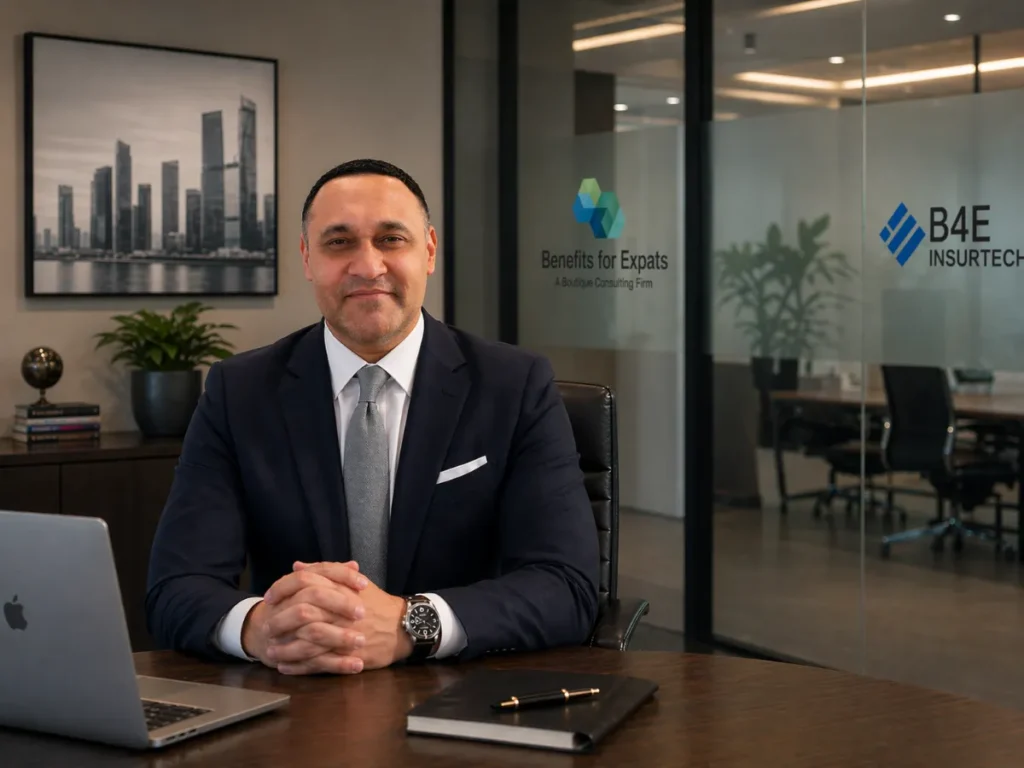
Leading with Simplicity, Compliance, and Trust
Technology companies often celebrate disruption. Aman Pal Singh speaks more often about responsibility.
It is a subtle but important distinction.
Throughout his career, he has consistently viewed systems not as an end goal, but as a means of removing unnecessary complexity. Whether working inside global insurance organizations or building his own ventures, his guiding principle has remained remarkably consistent: innovation should make systems simpler, more accessible, and ultimately more valuable for the people who depend on them.
That philosophy has shaped both his leadership style and the direction of the businesses he leads.
Simplifying Complexity and Integrating Compliance
Aman sees simplicity not as reduced sophistication, but as the result of hard work. Insurers deliver true simplicity only by resolving deep operational, technical, and regulatory challenges behind the scenes. Customers should experience seamless products because organizations have invested in making complexity invisible—not because complexity no longer exists.
This perspective also explains why regulatory compliance occupies such a central role in his thinking. In many technology discussions, compliance is often portrayed as a barrier to innovation. Aman sees it differently. Rather than treating regulations as obstacles to overcome, he believes they should become part of the design process from the very beginning.
Building compliance into platform, rather than adding it later, creates stronger foundations for growth. It allows organizations to move faster with greater confidence while strengthening relationships with regulators, business partners, and customers alike. In an industry where trust is earned over years and lost in moments, that distinction carries considerable weight.
Expanding Access and Empowering Ecosystems
His leadership philosophy extends beyond systems and governance.
From his perspective meaningful innovation should expand access rather than create exclusivity. For the duration of the interview, Aman repeatedly returns to the idea of closing protection gaps—whether for expatriates navigating unfamiliar healthcare systems, businesses operating across multiple jurisdictions, or workers whose employment models no longer fit traditional insurance frameworks. Technology, in his view, has value only when it enables more people to benefit from services that were previously difficult to access.
That mindset also influences how he approaches leadership within his own organizations.
Rather than emphasizing hierarchy, Aman describes leadership as a collaborative process built on mentoring, shared learning, and empowering partners to solve increasingly complex challenges together. As industries become more interconnected and technology evolves more rapidly, no single organization can innovate in isolation. Sustainable progress depends on building ecosystems where expertise, trust, and long-term relationships matter as much as technical capability.
The Role of Entrepreneurial Resilience
There is another quality that quietly runs through his leadership journey: resilience.
Leaving the certainty of senior corporate leadership to build new ventures required more than technical expertise. It demanded confidence in an idea before the market had fully validated it. Looking back, Aman believes that stepping beyond familiar structures taught him one of entrepreneurship’s most enduring lessons—that meaningful transformation rarely begins inside a comfort zone. Conviction, supported by disciplined execution, often becomes the defining difference between incremental improvement and genuine industry change.
Ultimately, Aman Pal Singh’s leadership philosophy is less about managing organizations and more about creating conditions where innovation can thrive responsibly. By combining technological ambition with regulatory discipline, commercial pragmatism, and a strong focus on human outcomes, he offers a model of leadership that feels particularly relevant as financial services continue their digital transformation.
How AI, Embedded Insurance, and Digital Infrastructure Are Reshaping the Future
Every industry reaches a point where incremental improvements are no longer enough. In Aman’s view the insurance sector is approaching that moment now. The next phase of innovation will not be defined by digitizing existing processes but by fundamentally rethinking how insurance is created, distributed, and experienced.
For decades, insurance has largely operated as a standalone financial product. Customers actively searched for policies, compared providers, and completed separate purchasing journeys before receiving coverage. That model, Aman believes, is gradually giving way to something far more integrated.
The Rise of Embedded Protection and Real-Time Data
Embedded insurance is changing the relationship between protection and everyday life.Rather than asking customers to seek out insurance independently, businesses are increasingly incorporating coverage directly into digital experiences. Whether someone is booking international travel, purchasing consumer electronics, using a financial platform, or accepting work through a gig economy application, insurance can become a natural extension of the transaction itself rather than an additional decision made later.
This evolution has important implications for insurers.Delivering insurance within digital ecosystems requires technology platforms capable of adapting quickly across multiple industries, partners, and regulatory environments. It also demands greater flexibility in product design, pricing, compliance, and customer experience. Legacy infrastructure, originally developed for a slower and more centralized operating model, is often ill-equipped to support these new expectations.
Equally significant is the growing role of real-time data.Traditional insurance has historically relied on historical information to assess risk and determine pricing. Emerging technologies now allow insurers to incorporate live data streams into decision-making, enabling more responsive pricing models and faster claims processing. Parametric insurance, where predefined events automatically trigger payouts, represents one example of how technology can simplify customer experiences while improving operational efficiency.
Driving Operational Scale with Agentic AI
Artificial intelligence is expected to accelerate this transformation even further. Though virtual assistants and simple automation have already boosted customer service, Aman believes Agentic AI will lead the next major shift. Rather than just assisting, these systems independently tackle complex operational tasks like underwriting, compliance, and claims processing. Rather than simply responding to customer requests, these intelligent systems will increasingly assist organizations in making faster, more informed operational decisions while reducing manual intervention.
Despite these advances, Aman remains careful not to portray technology as a replacement for sound business judgment.Innovation, in his view, succeeds only when supported by trust, governance, and responsible implementation. Artificial intelligence may streamline workflows and improve efficiency, but lasting transformation still depends on transparent decision-making, regulatory discipline, and customer confidence. In financial services, technological capability alone is never enough.
Focusing on Accessibility, Trust, and Long-Term Impact
That balanced perspective reflects a broader trend emerging across enterprise technology.Organizations are no longer pursuing digital transformation simply because new tools exist. Increasingly, they are asking whether those tools solve measurable business problems, improve customer outcomes, and create sustainable competitive advantages. Within insurance, that means designing systems capable of adapting continuously without sacrificing security, compliance, or reliability.
For Aman Pal Singh, the industry’s future is ultimately less about automation than accessibility.As insurance becomes more deeply integrated into digital ecosystems, its greatest achievement may not be the sophistication of the technology behind it but the fact that millions more people gain access to protection that previously remained difficult, expensive, or unavailable. In that sense, the future of insurance may become increasingly invisible to consumers—working quietly in the background while delivering greater confidence in everyday life.
Trust remains the primary currency of this industry; technology is simply the vehicle used to deliver it.
Looking Ahead: Building a More Accessible Future for Insurance
When Aman Pal Singh speaks about the future of insurance, he rarely focuses on technology in isolation. Instead, he returns to a broader objective—making protection more accessible, adaptable, and relevant for a world where work, mobility, and customer expectations continue to evolve.
That long-term vision extends across both organizations he leads.
Scaling Global Insurance Infrastructure
Through B4E Insurtech, the ambition is to establish cloud-native insurance infrastructure that enables insurers, financial institutions, digital platforms, and emerging businesses to launch modern protection products with greater speed and flexibility. By removing the technical barriers that have historically slowed product deployment, the platform aims to help organizations focus on what matters most: serving customers and closing global coverage gaps.
At the same time, Benefits for Expats continues to address the specific needs of globally mobile individuals and cross-border workforces. As international mobility becomes increasingly common for professionals, remote workers, and multinational teams, creating seamless, compliant insurance solutions across jurisdictions remains a vital priority.
Guided by Responsibility, Governance, and Trust
Together, these initiatives reflect a unified commitment to modernizing how insurance operates behind the scenes while keeping human outcomes at the center.
As technologies like artificial intelligence, real-time data, and embedded distribution continue to reshape financial services, Aman believes the fundamental principles of the industry will remain unchanged. Technology provides the means to innovate faster and reach broader audiences, but lasting progress will always depend on governance, transparency, and trust.
For an industry built on providing certainty in an uncertain world, the future lies not in replacing foundational values, but in giving them modern infrastructure capable of supporting a changing world.
Trust remains the primary currency of this industry; technology is simply the vehicle used to deliver it.
Final Reflection
The future of insurance will almost certainly include artificial intelligence, embedded ecosystems, real-time data, and increasingly digital customer experiences. But as Aman Pal Singh’s leadership journey suggests, lasting transformation rarely begins with technology alone.
It begins by asking a more fundamental question:
How can we make protection simpler, more inclusive, and more accessible for the people who need it most?
For leaders across insurance and financial services, answering that question will shape far more than the next generation of products. It will influence how trust is earned, how innovation is delivered, and how accessible protection becomes in an increasingly digital world.
After spending time with Aman Pal Singh’s ideas, one conclusion stands out: lasting progress won’t be measured by how quickly new technology is adopted. It will be measured by how effectively that technology removes complexity, earns trust, and expands access to meaningful protection. That may prove to be the industry’s most enduring innovation.