
Alessandra Leoni on Hospitality Leadership, Technology, and Building a People-First Future

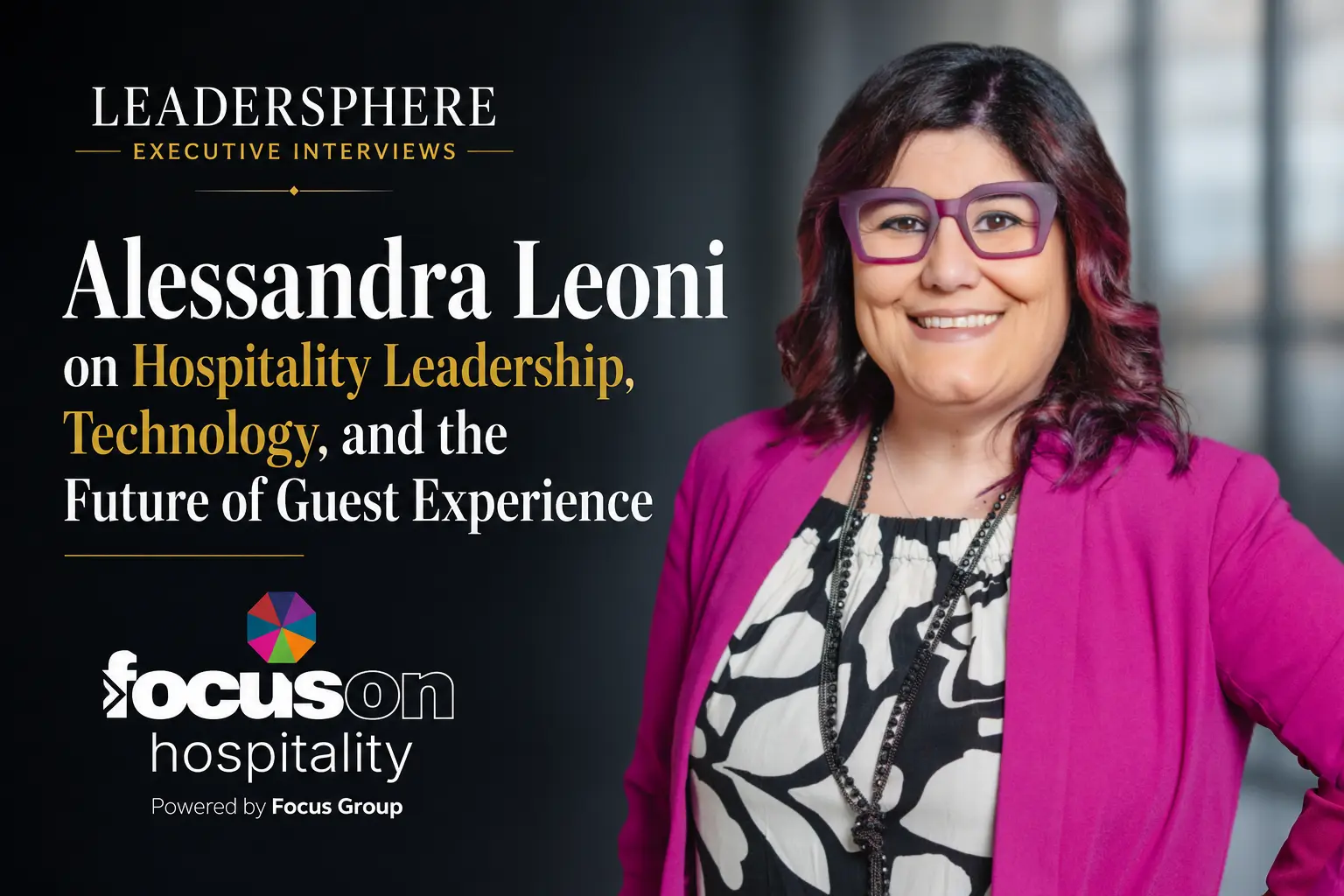
The hospitality industry has changed dramatically over the past three decades. Guest expectations have evolved, digital transformation has reshaped hotel operations, and artificial intelligence now influences almost every aspect of the guest experience. Yet despite these changes, one principle remains constant for Alessandra Leoni: great hospitality is always about people.
Today, as Head of Hospitality at Focus Group, Alessandra works closely with UK hotels. She helps them adopt technology that improves operational efficiency, commercial performance, and guest satisfaction. Her approach differs from many technology leaders because she builds it on firsthand operational experience rather than theory. She understands the pressures hotels face because she lived them throughout her career.
Over more than 30 years, Alessandra has built an impressive career across Europe and the United States. She has worked in luxury hotels and independent properties, led commercial and IT transformations, and helped organisations navigate rapid growth. Throughout every stage of that journey, she has focused on creating value for both businesses and the people they serve.
In this exclusive LeaderSphere Executive Interview, Alessandra reflects on the experiences that shaped her leadership philosophy. She explains why technology should strengthen rather than replace human connection, and shares her vision for the future of hospitality.
A Career Built from the Ground Up
Leadership often begins with experience rather than a title, and Alessandra’s journey reflects exactly that. Instead of entering the industry through management, she started in housekeeping. Those early years gave her a practical understanding of hotel operations. She also developed a lasting appreciation for every role involved in delivering an exceptional guest experience.
As her career progressed, she deliberately explored different areas of hospitality instead of remaining within a single discipline. She moved from front-of-house operations and food and beverage to revenue management, commercial leadership, digital transformation, and technology strategy. Each position added another layer to her understanding of how successful hotels operate.
Looking back, Alessandra believes that broad exposure became one of the greatest advantages of her career. Experiencing hospitality from multiple perspectives enabled her to understand how operational decisions affect commercial outcomes. She saw how technology influences service delivery and how leadership shapes the guest experience.
Today, that diverse background allows her to bridge the gap between hospitality operations and technology. Rather than viewing digital solutions purely as software, she evaluates them through the eyes of a hotelier who understands the daily realities of running a hotel.
“I don’t look at technology through the eyes of an IT provider. I look at it through the eyes of a hotelier who understands the daily realities of running a hotel.”
Turning Experience into Purpose
Every career reaches a point where experience evolves into purpose. For Alessandra, that purpose means helping hospitality businesses simplify technology. When systems are simple, teams can focus on what matters most: their people, their guests, and long-term profitability.
Working with hotels across the UK has reinforced her belief that technology should remove unnecessary complexity instead of creating it. Hotel teams already manage countless responsibilities each day, from delivering excellent guest service to maintaining operational efficiency. When systems become difficult to use or fail to communicate, they create additional pressure rather than solving problems.
This practical perspective shapes the way Alessandra approaches every conversation with hospitality businesses. Instead of promoting technology for its own sake, she encourages organisations to invest in solutions that genuinely improve day-to-day operations. The right tools support better experiences for guests and employees alike.
Her approach reflects a careful balance between innovation and practicality. Technology is important, but it should always support the people who use it rather than becoming the centre of attention.
Why Hospitality Is More Than a Profession
For many people, hospitality is simply a career. For Alessandra, it became part of her identity.
Growing up in Italy, she developed an early appreciation for the way exceptional service could transform an ordinary interaction into a memorable experience. That fascination gradually developed into a lifelong profession. The industry has continued to evolve alongside her, throwing new challenges her way at every turn.
During her career, she has witnessed some of the hospitality sector’s biggest transformations. The industry has adapted to online distribution, revenue management, digital transformation, the challenges of COVID-19, and now the rapid rise of artificial intelligence. Each development has changed the way hotels operate, but none has altered the industry’s core purpose.
Despite advances in technology, Alessandra believes hospitality remains fundamentally a people business. Guests may appreciate seamless digital experiences, but they remember how staff treated them above all else. This belief continues to influence every decision she makes. It explains why she still describes herself as a hotelier first and a technology leader second.
Leadership Begins with Authenticity
Ask Alessandra what defines effective leadership, and her answer extends well beyond business performance or financial results. She believes authenticity, curiosity, and a genuine commitment to serving others form the foundation of true leadership.
For her, authenticity means leading by example. Titles alone do not earn trust. Leaders gain credibility when they understand the challenges their teams face. Alessandra commands respect because she has experienced many of those challenges herself.
Curiosity has also played an important role throughout her career. Rather than remaining comfortable in familiar roles, Alessandra intentionally explored new disciplines. She moved between operations, commercial leadership, revenue management, and technology. Every transition required learning new skills, but it also expanded her perspective and prepared her for future opportunities.
She also believes leadership is ultimately about helping others succeed. While business growth and commercial success are important, she considers the development of future leaders to be the ultimate measure of long-term impact. This philosophy has remained consistent throughout her career and continues to guide the way she supports hospitality organisations today.
Navigating an Industry in Transformation
Few industries have experienced as much change over the past decade as hospitality. Rising operational costs, changing guest expectations, increasing cybersecurity risks, sustainability goals, and the rapid growth of artificial intelligence all reshape how hotels operate. For hospitality leaders, adapting to these changes is no longer optional—it is essential.
From Alessandra Leoni’s perspective, however, these challenges also create significant opportunities. Hotels that embrace change with a clear strategy can improve efficiency, strengthen guest relationships, and build more resilient businesses for the future.
Rather than viewing technology as another expense or operational hurdle, she believes it should become a practical tool that helps teams perform at their best. The focus should never be on adopting the latest software simply because it is available. Instead, every technology decision should support business goals while making daily operations easier for employees.
This practical mindset has become one of the defining characteristics of her work with hospitality businesses across the UK.
Technology Should Solve Problems, Not Create Them
One of the biggest issues Alessandra sees across the hospitality sector isn’t a lack of technology. In many cases, hotels already have plenty of systems in place. The real challenge is that those systems often operate independently, making everyday tasks more complicated than they need to be.
A hotel might use one platform for reservations, another for guest messaging, and a separate solution for payments. They might also use different software for customer relationship management, revenue management, or internal communications. While each tool may perform its individual function well, the lack of integration creates unnecessary complexity.
When information cannot move easily between systems, employees spend valuable time switching between applications. They waste hours manually entering data and solving problems that technology should have eliminated. Over time, those inefficiencies affect productivity, decision-making, and ultimately the guest experience.
Instead of encouraging businesses to purchase more standalone products, Alessandra advocates for a different approach. She believes hotels should focus on building connected technology ecosystems where systems communicate seamlessly. When information flows freely across departments, teams gain better visibility, decisions become more informed, and operations become significantly more efficient.
Putting People at the Centre of Digital Transformation
Despite the recent move into hospitality technology, Alessandra consistently returns to one central idea: technology should support people, not replace them.
Hotels exist to create memorable experiences, and human interaction shapes those experiences. Digital tools can simplify processes, automate repetitive tasks, and improve communication, but they cannot replace genuine hospitality.
This people-first philosophy influences every technology recommendation she makes. Rather than asking what new software can do, she encourages businesses to ask a different question: How will this help our teams serve guests more effectively?
That shift in thinking changes the role of technology entirely. Instead of becoming another system that employees must manage, it becomes a resource that removes friction. Ultimately, it gives people more time to focus on meaningful interactions.
The Growing Role of Artificial Intelligence
Artificial intelligence has become one of the defining conversations in hospitality, but Alessandra believes the industry often approaches it from the wrong perspective.
Too many discussions focus on whether AI will replace people. In reality, the real opportunity lies in enabling people to deliver better hospitality. AI and automation are not destinations in themselves—they are tools that, when implemented strategically, remove friction from operations, empower employees, and create more seamless experiences for guests.
The hospitality brands seeing the greatest commercial success are not simply investing in AI; they are building connected technology ecosystems that allow guests to move effortlessly through their journey. From personalised pre-arrival communications and digital check-in to mobile room access, intelligent guest messaging, automated service requests and frictionless check-out, technology enables guests to self-serve when they choose while giving teams more time to focus on meaningful human interactions.
For Alessandra, however, technology adoption is where many organisations fall short.
In the rush to embrace AI and automation, driven in part by the fear of missing out, businesses often underestimate what is required to make these technologies successful. AI cannot simply be purchased and switched on. Sustainable adoption requires strong governance, cybersecurity, regulatory compliance, resilient infrastructure, high-quality data and a long-term technology strategy that evolves alongside the business. Without these foundations, organisations risk creating fragmented solutions that fail to deliver meaningful commercial value.
She believes technology should never be viewed as a one-off project but as a continuous business capability. Success comes not from deploying the newest tools but from ensuring they are adopted by people, integrated across the technology ecosystem and aligned with the organisation’s commercial objectives.
At its heart, hospitality remains profoundly human.
Guests rarely remember how quickly an algorithm processed a reservation or how efficiently an automation completed a task. They remember how welcome they felt, how confidently a problem was resolved and how a team made them feel during their stay. Technology should remove complexity, not humanity, allowing hospitality professionals to dedicate more of their time to creating memorable experiences that no artificial intelligence can replicate.
For Alessandra, the future of hospitality is not a choice between people or technology. It is about creating an intelligent partnership where each enhances the other, delivering stronger commercial performance, more engaged employees and exceptional guest experiences.
The future of hospitality isn’t about replacing people with AI. It’s about removing the complexity that prevents people from delivering great hospitality. When technology is connected, secure and adopted properly, guests gain greater choice, teams gain more time, and businesses become more profitable. Technology should never replace hospitality, it should quietly power it.
Creating Better Guest Experiences Through Smart Technology
Modern travellers expect convenience at every stage of their journey. Reliable internet access, seamless check-in, personalised communication, secure payment options, and quick responses are no longer premium services. They have become everyday expectations.
Meeting those expectations requires more than introducing new digital tools. It requires thoughtful implementation that supports both guests and hotel teams. When technology works quietly in the background, it enables staff to focus on delivering attentive, personalised service instead of managing avoidable operational issues.
For Alessandra, the best technology is often the least noticeable. Guests never think about the systems supporting their experience when everything works as expected. They only notice technology when something goes wrong.
This perspective reinforces her broader philosophy that successful innovation should simplify everyday experiences rather than adding unnecessary complexity.
Building Businesses That Are Ready for the Future
Looking ahead, Alessandra believes hospitality businesses have an opportunity to rethink how technology supports long-term growth. Success will not come from adopting every new solution that enters the market. Instead, it will come from making thoughtful investments that align with business objectives and strengthen the guest experience.
As artificial intelligence, automation, and connected digital platforms continue to evolve, organisations that combine innovation with strong operational foundations will be well positioned to adapt. Equally important, they will create environments where employees can focus on what they do best—building meaningful relationships with guests.
For Alessandra, digital transformation is not simply about improving systems. It is about creating hotels that are more efficient, more resilient, and ultimately more human.
Measuring Success Through Proven Results
Every successful career includes milestones that reflect years of dedication, learning, and resilience. For Alessandra Leoni, those milestones span more than three decades across hospitality and massive global events, including serving at several Super Bowls and multiple US Presidential Inaugurations. Yet when she reflects on her journey, her biggest achievements combine brilliant commercial metrics with human impact.
Early in her career, Alessandra played a key role in relaunching a four-star hotel and restaurant in Italy following a major refurbishment. The project delivered a staggering 75% increase in revenue within just 18 months. Furthermore, her strategic technology investments achieved a full return within the very first year.
As her career progressed, she continued to take on complex leadership responsibilities. During her thirteen years with Resident Hotels, she advanced through six different leadership positions before becoming Head of Commercial & IT.
Working alongside her team, she delivered incredible results. They achieved 30% year-on-year revenue growth and successfully shifted 35% of the business from third-party channels over to direct bookings. At the same time, they built an internal IT function, scaled the portfolio from two properties to ten, and consistently maintained the number one ranking on guest review sites across every city they operated in.
These accomplishments highlight Alessandra’s ability to guide organisations through complex transformations, acquisitions, and rebrands while maintaining a clear focus on long-term value.
Building Industry Conversations That Matter
Beyond her corporate leadership roles, Alessandra has remained committed to contributing to the wider hospitality community. Rather than limiting her work to business performance, she has created platforms that encourage meaningful discussions around leadership, technology, and the future of the industry.
She is proud to have taken on the role to lead and launched Focus on Hospitality as the Focus Group Hospitality dedicated vertical, as a recognised voice within the sector. The company through expert teams helps hospitality businesses navigate operational challenges by identifying technology solutions that genuinely fit their needs, rather than promoting technology for its own sake.
Her commitment to knowledge sharing also led to the launch of Next Wave Hospitality and the Straight Talking podcast. Both initiatives were created with a simple goal: encourage honest, practical conversations that help hospitality professionals learn from one another.
Instead of focusing on sales messages, these platforms create space for industry leaders to exchange ideas, discuss emerging trends, and explore real-world challenges. That collaborative approach reflects the same philosophy that has guided Alessandra throughout her career—sharing knowledge creates stronger businesses and stronger leaders.
Leadership Is About Creating More Leaders
When discussing her proudest achievement, Alessandra’s answer moves away from financial metrics and business growth. While she values commercial success, she believes lasting impact is measured by the people who continue to grow because of your leadership.
Throughout her career, she has mentored colleagues who have gone on to become leaders within the hospitality industry. Watching others develop their confidence, expand their capabilities, and build successful careers has become one of the most rewarding aspects of her own journey.
This perspective reflects a leadership philosophy centred on service rather than authority. Effective leaders do more than manage teams or achieve targets. They create environments where people can learn, contribute, and eventually lead themselves.
That belief continues to influence how Alessandra works with colleagues, clients, and hospitality professionals across the industry. Success becomes more meaningful when it extends beyond individual accomplishments and contributes to the growth of others.
“Leadership isn’t about creating followers. It’s about creating more leaders.”
Advice for the Next Generation of Hospitality Leaders
Hospitality offers countless opportunities for people who are willing to learn, adapt, and embrace change. Having experienced almost every stage of hotel operations herself, Alessandra encourages aspiring professionals to develop a broad understanding of the industry before specialising.
She believes operational experience provides an invaluable foundation. Understanding how hotels function on a day-to-day basis helps future leaders make better decisions. It helps them communicate more effectively across departments and appreciate the challenges faced by every member of the team.
Equally important is maintaining curiosity throughout a career. Hospitality continues to evolve through new technologies, changing guest expectations, and emerging business models. Leaders who remain open to learning are better equipped to adapt and identify new opportunities as the industry changes.
Alessandra also encourages professionals to develop commercial awareness alongside operational expertise. Understanding finance, revenue management, and technology allows leaders to make more informed decisions while balancing guest satisfaction with business performance. According to her, the broader your understanding of hospitality becomes, the stronger your leadership will be.
Relationships Matter More Than Networks
Professional success is often associated with building large networks, but Alessandra views relationships differently. She believes meaningful connections are built through trust, integrity, and a genuine willingness to help others, rather than simply collecting professional contacts.
Hospitality has always been a collaborative industry where people support one another throughout their careers. A strong reputation develops over time through consistent actions, honest communication, and delivering value whenever possible. Those qualities, she believes, open doors far more effectively than short-term networking efforts.
This advice reflects the way she has approached her own career. Instead of chasing job titles or following a rigid career plan, she focused on making a positive contribution in every role she accepted. New opportunities emerged naturally because people recognised the value she consistently delivered.
That mindset remains relevant for professionals entering hospitality today. Careers are rarely defined by a single promotion or opportunity. They are built through continuous learning, dependable performance, and the relationships developed along the way.
Growth Is a Long-Term Journey
Looking back at thirty years in hospitality, Alessandra does not describe her career as a carefully planned roadmap. Instead, she sees it as a series of opportunities created through curiosity, hard work, and a willingness to embrace new challenges.
Rather than rushing towards the next position, she concentrated on learning, improving, and adding value wherever she worked. That approach eventually led her into operational leadership, commercial strategy, digital transformation, and hospitality technology. Each role built beautifully upon the experience gained in the previous one.
Her journey offers an important reminder for aspiring professionals. Sustainable careers are rarely built overnight. They develop through consistent effort, adaptability, and an ongoing commitment to personal growth.
As the hospitality industry continues to evolve, those qualities remain just as valuable as technical expertise or business knowledge.
Looking Ahead: The Future of Hospitality Will Be Defined by Balance
The hospitality industry has always evolved alongside changing traveller expectations, but Alessandra Leoni believes the next five years will bring an even greater pace of transformation. Artificial intelligence, cybersecurity, and connected digital ecosystems will influence how hotels operate, make decisions, and serve their guests. For leaders across the sector, technology will become an increasingly important part of long-term business strategy rather than simply an operational function.
One of the biggest shifts she expects is the growing integration of hotel technology. Instead of relying on multiple disconnected systems, successful hotels will build intelligent ecosystems where information moves seamlessly between operations, commercial teams, guest services, and management. Better connectivity will enable faster decision-making, improve operational efficiency, and create more personalised guest experiences.
At the same time, cybersecurity will become just as important as physical security and health & safety protocols. As hotels continue to adopt cloud platforms, connected devices, and AI-powered solutions, protecting guest data and maintaining business resilience will become essential responsibilities for hospitality leaders.
Despite these technological advances, Alessandra believes the industry’s defining characteristic will remain unchanged. Hospitality has always been built on human connection, and no amount of innovation can replace the feeling of being welcomed, understood, and genuinely cared for.
Technology will undoubtedly become smarter, faster, and more capable. However, it should continue supporting people rather than replacing them. Hotels that combine intelligent technology with exceptional service will be best positioned to succeed in an increasingly competitive market.
“The future belongs to organisations that combine exceptional people with intelligent technology.”
A Leadership Philosophy That Continues to Inspire
Throughout her career, Alessandra has embraced change without losing sight of the values that first inspired her to join the hospitality industry. From housekeeping to executive leadership, every role has strengthened her understanding of what it takes to build successful businesses while creating meaningful experiences for guests.
Her journey demonstrates that strong leadership is not defined by titles or authority. It is built through continuous learning, empathy, curiosity, and a willingness to support the people around you. These qualities have shaped not only her own career but also the many professionals she has mentored along the way.
Today, as Head of Hospitality at Focus Group, she continues to help hospitality businesses navigate an increasingly digital future. She remains a vital voice reminding the industry that technology should always serve people—not the other way around.
As hospitality enters its next chapter, leaders who embrace innovation without losing the personal touch will be the ones who shape the future. Alessandra’s career offers a compelling example of how experience, adaptability, and authentic leadership can create lasting impact across an entire industry.
Key Leadership Takeaways
- Build your career on experience, not just ambition.
- Stay curious and continue learning throughout your professional journey.
- Technology should simplify work, not create unnecessary complexity.
- Artificial intelligence should enhance human service, not replace it.
- Invest in people as much as you invest in technology.
- Leadership is measured by the leaders you help develop.
- Long-term success comes from creating value consistently and building relationships based on trust.
About Alessandra Leoni
Alessandra Leoni MIH is the Head of Hospitality at Focus Group, where she leads Focus on Hospitality. This specialist division supports hotels with technology solutions that improve operational efficiency, commercial performance, and guest experiences.
With now 33 years of international hospitality experience across Europe and the United States, Alessandra has held leadership positions spanning hotel operations, revenue management, commercial strategy, digital transformation, and hospitality technology. Her career has included hotels, major international events (including US Presidential Inaugurations and Super Bowls), hotel portfolio expansion, technology transformation, and mentoring the next generation of hospitality leaders.
About Focus Group
Focus Group is a UK-based technology partner helping hospitality businesses improve performance through integrated technology solutions. Through its specialist Focus on Hospitality division, the company works with hotels to simplify technology, improve operational efficiency, strengthen commercial performance, and deliver better guest experiences. Its approach focuses on connecting technology with practical business outcomes, enabling hospitality teams to work more effectively while maintaining exceptional levels of service.