
Tractor Supply Petsense Store Closures: What CEO Hal Lawton’s Portfolio Pruning Teaches Executive Leaders

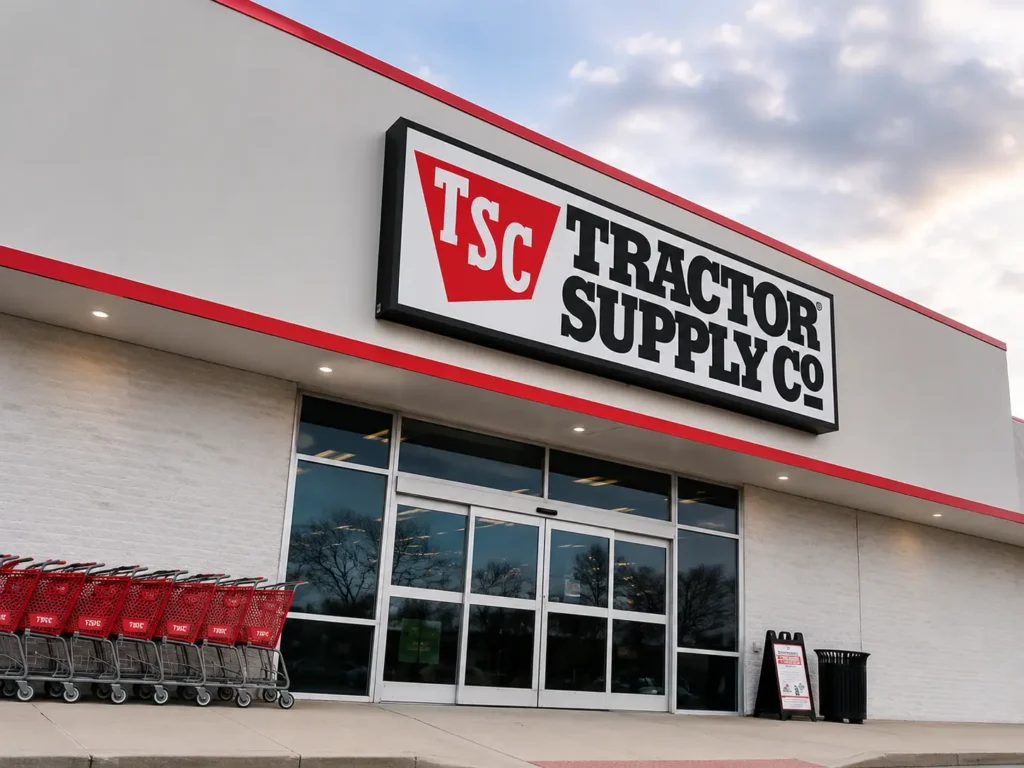
When Tractor Supply Company released its second-quarter earnings, financial headlines seized on a single number: the rural lifestyle retail giant was cutting its full-year outlook and closing roughly 75 underperforming Petsense stores.
To casual industry observers, store closures look like an admission of retreat. To corporate strategists and portfolio managers, however, the Tractor Supply Petsense store closures represent a textbook example of capital discipline under economic pressure.
As consumer spending cools across discretionary categories, Chief Executive Officer Hal Lawton chose to prune nearly a third of Petsense’s 209-store footprint. The goal was straightforward: eliminate locations with negative four-wall cash flow and reallocate those resources into higher-margin growth engines, including core store modernizations, local fulfillment logistics, and integrated veterinary services.
This analysis examines the strategic rationale behind the decision, the broader retail economics driving it, and the capital allocation lessons executive teams can draw from Tractor Supply’s restructuring.
The Macroeconomic Context Behind the Decision
Understanding Tractor Supply’s pivot requires examining the headwinds shaping retail. Following several years of aggressive physical expansion, large-format retailers face a challenging mix of elevated operational overhead, shifting shopper behavior, and cautious household budgets.
For the second quarter, Tractor Supply reported net sales of $4.54 billion—a modest 2.3% increase driven almost entirely by new store openings. Comparable store sales slipped 1.5%, impacted by a 1.7% drop in customer traffic. While core agricultural and livestock consumables remained steady, high-ticket discretionary purchases slowed significantly.
Rather than masking those headwinds behind store-count expansion, management zeroed in on the company’s structural weak point: small-format specialty pet stores operating in crowded suburban markets.
When unit margins compress across an entire banner, high-performing corporate leaders do not wait for market conditions to improve on their own. They evaluate assets based on return on invested capital rather than vanity expansion metrics.
Key Strategic Takeaways for Business Leaders
Tractor Supply’s decision to restructure Petsense highlights four core principles of corporate resource allocation that apply far beyond retail.
1. Overcoming the Sunk Cost Fallacy
Tractor Supply acquired Petsense a decade ago to capture a larger share of the fast-growing specialty pet category. Over time, however, shifting consumer preferences altered the standalone economics of those locations.
Taking $71.7 million in non-cash impairment and restructuring charges to exit unprofitable leases takes discipline. In corporate strategy, recognizing when an asset no longer meets its hurdle rate is the first step toward preserving enterprise value.
2. Shifting from Physical Assets to Ecosystem Integration
Closing standalone stores does not mean Tractor Supply is walking away from the pet industry, which generates nearly a fifth of its revenue. Instead, leadership is shifting from an isolated store model to a unified service ecosystem:
- Inventory Consolidation: Moving premium pet lines directly into primary Tractor Supply locations where customer traffic is already established.
- Margin Expansion through Services: Expanding veterinary offerings through the recent VIP Petcare transaction rather than relying solely on product markups.
- Fulfillment Efficiency: Utilizing regional store hubs and delivery partnerships to serve rural customers without carrying the fixed overhead of standalone storefronts.
3. Managing Wall Street Expectations During Strategic Shifts
Managing stakeholder perception during a strategy pivot requires transparency. Alongside the closure announcement, Tractor Supply adjusted its full-year guidance, anticipating flat to slightly negative comparable store sales, while trimming its 2027 new store buildout target from 100 locations down to 85.
By pairing a reduced sales outlook with a concrete plan to remove non-performing cash drains, management provided institutional investors with a clear path toward protecting operating margins.
4. Protecting the Core Brand Identity
During periods of market uncertainty, resilient organizations reinforce their core strengths. For Tractor Supply, that means prioritizing the farmers, tradespeople, and rural property owners who form its primary customer base. Streamlining non-core ventures allows executive leadership to concentrate capital and management focus where the company holds its strongest competitive advantage.
Managing Asset Restructuring: A Leadership Framework
When evaluating an underperforming business unit, product line, or regional operation, executive teams can apply a structured process to determine the best path forward.
Conduct Isolated Unit-Level Audits
Assess every asset on a standalone basis rather than relying on consolidated divisional performance. Focus specifically on standalone cash contribution and whether the asset generates genuine cross-channel value for the broader enterprise.
Evaluate Customer Migration Patterns
Determine whether exiting an asset will permanently forfeit revenue or if customers will simply shift to your other channels. In Tractor Supply’s case, rural shoppers can purchase pet supplies at a nearby core store or order online for home delivery.
Reallocate Capital to Proven Growth Drivers
Exit decisions should always be tied to a clear reinvestment strategy. Redirecting capital from underperforming locations into high-return initiatives—such as store modernizations or supply chain automation—turns a defensive measure into a long-term advantage.
Execute Decisively
Prolonged restructuring erodes team morale, creates vendor friction, and distracts executive focus. Absorbing necessary adjustments in a single, well-defined window allows the organization to move forward with clarity.
For additional insight into long-term capital strategy, review our analysis on Corporate Restructuring & Resource Allocation. To explore broader industry research, visit the Harvard Business Review.
Strategic Considerations for Executive Leadership
When reviewing your firm’s operational portfolio, consider these essential questions:
- Capital Allocation: Are resources currently tied up in legacy assets that fail to meet your minimum return targets?
- Synergy Evaluation: Do secondary product lines actively drive growth for your primary business, or do they operate as isolated cost centers?
- Execution Speed: Is your leadership team prepared to make uncomfortable operational adjustments early to protect long-term operating margins?